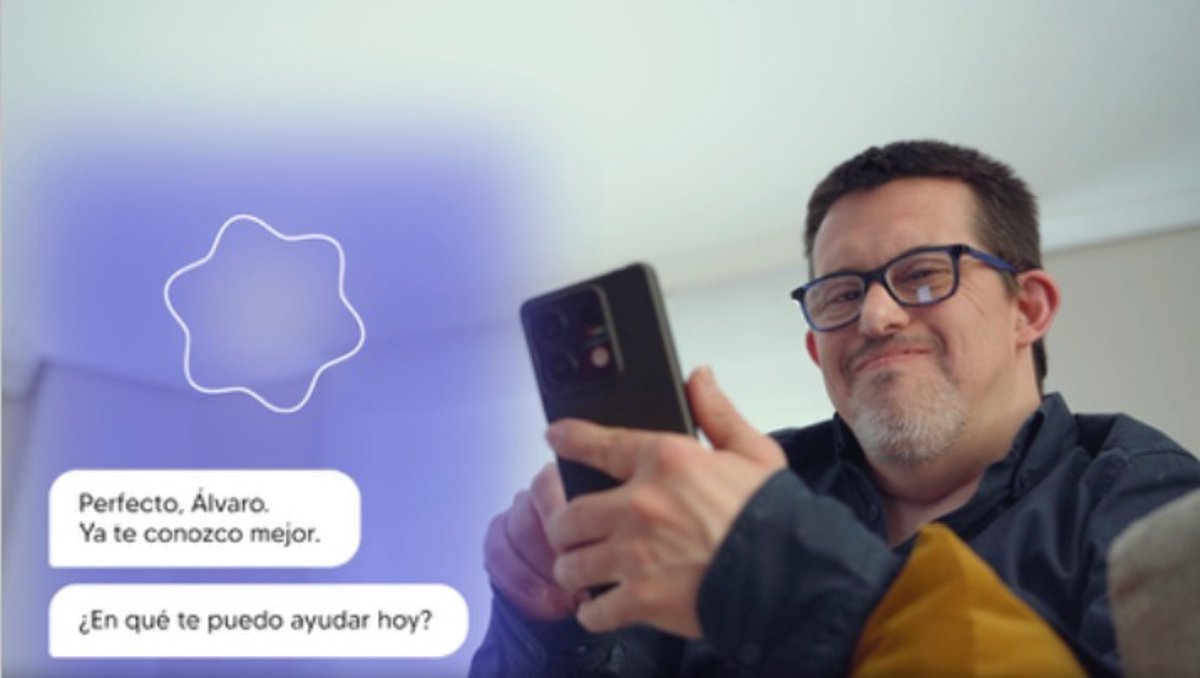
Peter has arrived in the Google and Apple stores as the first voice assistant powered by artificial intelligence developed in Spain to promote the autonomy of adults with intellectual disabilities through accompaniment.
45.5 percent of adults with intellectual disabilities would like to become independent, but 72 percent continue to live with their relatives due to the problems they encounter in accessing housing, the scarcity of economic resources and the lack of specific support to develop their autonomy.
These data, which come from the report ‘Building homes’, by the PwC Foundation, reflect a real need of a part of the population, which the project developed by the Álex Rivera Foundation, named after Peter, seeks to respond to.
It is a voice conversation assistant in real language, which has been expressly developed to accompany its users in their daily lives, through agenda management, step-by-step explanations for carrying out household tasks or planning leisure and outdoor activities, in addition to offering emotional support.
To this end, Peter is designed so that his answers are clear and easy to understand, respecting the users’ rhythm and carrying out repetitions or reformulations if necessary, as explained in a press release.
It works with several advanced language models, and selects the most appropriate one for each task, based on a modular architecture that does not depend on a single artificial intelligence provider. The Álex Rivera Foundation highlights personalized memory, which continuously remembers users’ routines, preferences, relationships and context in the long term.
Peter has been designed for and with people with intellectual disabilities, their families, support professionals, and follows a privacy by design approach throughout its architecture. It can be downloaded on Google Play and App Store for free.