American researchers have developed a microscopic robot that can swim underwater like a fish to collect lithium from seawater.
Theo Interesting Engineering, a project by Dr. Shiren Wang and Jingjing (Jenny) Qiu at Texas A&M University in College Station aims to more efficiently collect lithium from seawater with a $1 million grant from the US Department of Energy (DOE). Instead of relying on traditional mining or extraction from underground brine, the new technology uses microscopic robots that automatically seek out and capture lithium ions from seawater. This solution can turn seawater into a stable supply of lithium for electric vehicles (EVs), batteries and energy storage, supporting domestic supply chains, while reducing the environmental impact associated with conventional mining methods.
The research team at Texas A&M designed a nanometer-sized mobile robot (one nanometer equals 0.000001 millimeter), which operates using external stimulation sources such as light and actively searches for lithium ions while swimming. After completing their task, they can be retrieved using magnetic fields and reused. According to Qiu, unlike mining or pumping brine from underground, microrobots move freely in seawater, leaving hardly any traces.
Although this is a promising technology, the research team admits that there are still many technical barriers that need to be overcome before it can be applied on an industrial scale. One of the biggest challenges is separating lithium from other dissolved natural minerals in seawater.
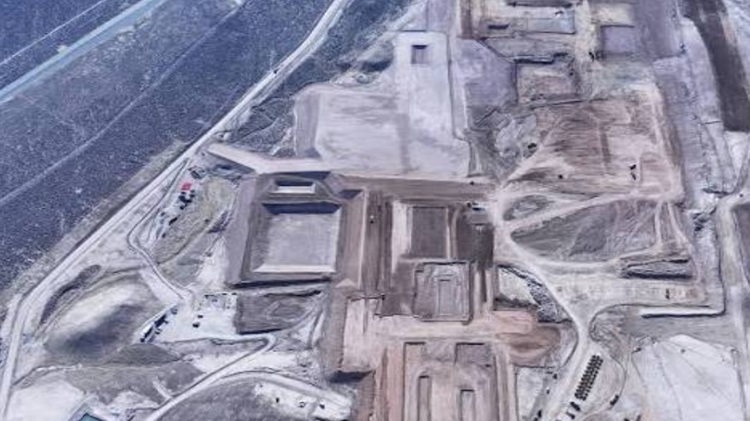
Thacker Pass lithium mine in Nevada, USA. Photo: USGS
To demonstrate that the robots can operate continuously and cost-effectively despite harsh marine environments, researchers will focus on improving their performance, testing lithium recovery efficiency, and developing methods to scale up the technology.
Lithium-ion (Li-ion) batteries are the top choice for electric vehicle production due to their high energy density, long cycle life, and fast charging capabilities. However, traditional lithium mining methods are having difficulty meeting growing demand. Global demand is expected to triple by 2030 and 4.2-fold by 2035, compared to 2024 levels. Electric vehicles and battery storage currently account for about 61% of lithium consumption and are expected to exceed 90% by 2040.
The project is one of 19 initiatives selected by DOE to develop technology that strengthens America’s critical minerals supply chain. Theo Forbes, most minerals essential to the U.S. economy and national security are vulnerable to supply chain disruptions due to imports, making boosting domestic supply a top priority for the current administration. The federal government is seeking domestic sources of critical minerals from recycled materials, exploring new mine sites on land and ocean.