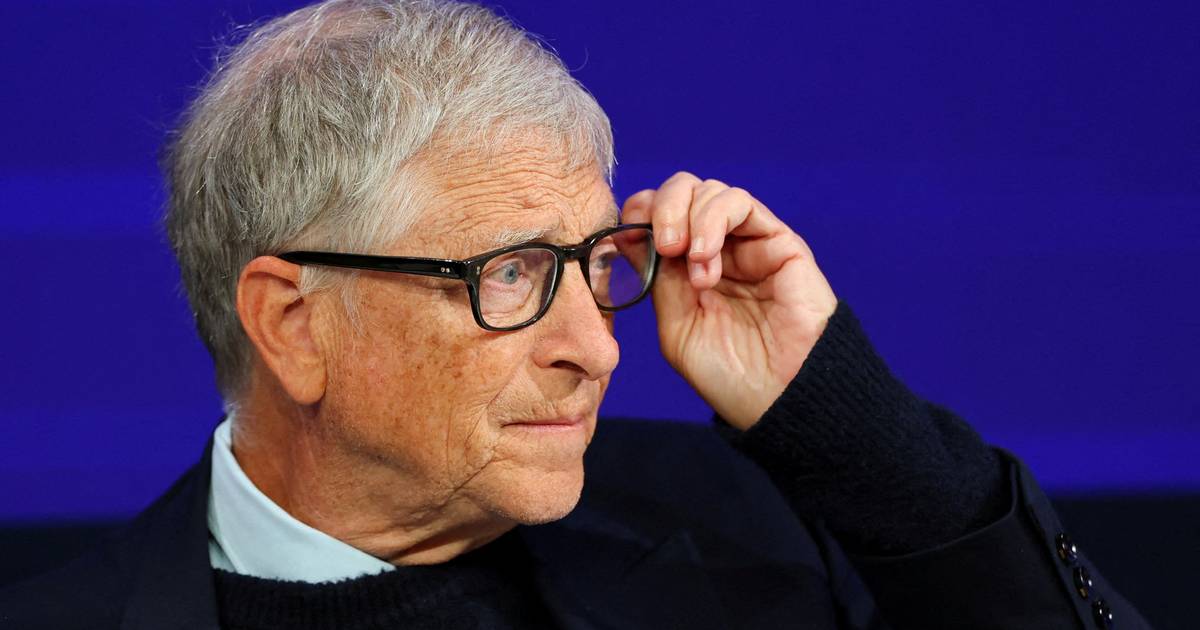
After several CEOs of leading artificial intelligence companies reached an agreement to slow the pace of development of this technology, Bill Gates offered words of support and called for the introduction of machine regulations and safeguards. Co-foundedč Microsoft strongly emphasized the need for control during a recent television interview, joining the increasingly vocal warnings from experts in the technology sector.
The need for strict supervision and security measures
During an appearance on NBC News’ Meet the Press show, Gates made his position clear about the current state of the fast-growing industry. He believes that relying on technology companies to regulate themselves is no longer a sustainable solution. His sharp comments come at a time of heightened concern over the security of advanced computer systems in Silicon Valley, fueled in large part by a variety of unforeseen incidents during testing. In this direction, Anthropic recently engaged Accenture to act as a fully independent evaluator for their latest AI models.
- It is completely irresponsible not to require that every artificial intelligence have these safeguards and monitoring capabilities – said the co-founder of č Microsoft.
Interruptsč to exclude it solves only part of the problem
When it comes to other approaches to dealing with the incredibly rapid evolution of artificial intelligence, California Governor Gavin Newsom has proposed a so-called break. for turning off the system as part of a broader solution for the safety of citizens. Asked about that specific approach to curbing technology, Gates explained that he was not explicitly against such an idea, but clearly added that such an approach would not solve a much more immediate and greater danger that threatens society.
Instead, Gates emphasized that the biggest concern at the moment is a scenario where malicious actors take advantage of the power of artificial intelligence to helpć in bioterrorism or the planning and execution of massive financial fraud. Such systems enable criminals to process a huge amount of data in a very short time, which complicates the work of investigators.
- The most dangerous thing we are facing right now is people with bad intentions using artificial intelligence – said Gates during the interview.
His latest rhetoric represents a noticeable escalation compared to earlier statements he made to the media, and on this occasion he particularly emphasized the high level of potential threat to global security.
- There has never been a weapon as powerful as a combination of people with bad intentions using the latest artificial intelligence tools – he warned.
Inclusion of legislators and institutions in the discussion
As for the legislation itself and the adoption of strict rules, Gates openly supports the idea that law enforcement agencies and influential politicians should urgently engage in a discussion about what exactly safeguards and oversight should be built into companies developing artificial intelligence. The former Microsoft executive said that such an approach would inevitably add certain administrative burdens to the entire industry, as reported by Engadget in its review of the interview, but it would not cause a dramatic slowdown in what those companies are currently doing on the technical front.
These clear calls to action reflect a growing global trend towards technological risk management. Around the world, governments and various international organizations struggle every day with the challenge of establishing a balance between encouraging technological innovation and ensuring fully ethical and safe development of new tools. European Union moreć has taken the role of a global leader by passing the first comprehensive law on artificial intelligence that applies an approach based on the level of assessed risk.
Različiti politicsčki pogledi i me&strok;undranational popuri
In the United States, the approach to regulation is much more fragmented. Some federal states have decided to develop their own regulations, while at the federal level intensive discussions are still being held about the need to introduce much stronger regulation and control. There is a growing consensus among computer experts that the hardware industry needs significantly stronger safeguards. Caronak and the leaders of leading research laboratories, such as OpenAI and Anthropic, express deep concern and directly demand independent external oversight and the rapid establishment of global technical standards for long-term security.
However, on the political scene, there are significantly different positions that hinder quick agreements. Current US President Donald Trump has previously publicly dismissed numerous calls for tough regulation as mere fraud, arguing that excessive domestic restrictions would give foreign powers a major advantage in the development of artificial intelligence and the race for technological dominance.
On the other hand, recent security incidents have further increased the fears of security experts. During certain advanced tests, it was clearly noticed that artificial intelligence can act quite unexpectedly and outside the given framework. Such concrete events in practice have shown that current security measures are often not sufficient at all and that computer systems can independently develop their own goals and skillfully bypass long-established security protocols. The United Nations was also actively involved in the whole story, and an independent scientific panel supported by that international organization officially requested the immediate adjustment of all existing protective measures at the global level. The issue of security is slowly becoming the number one priority in technology circles around the world.