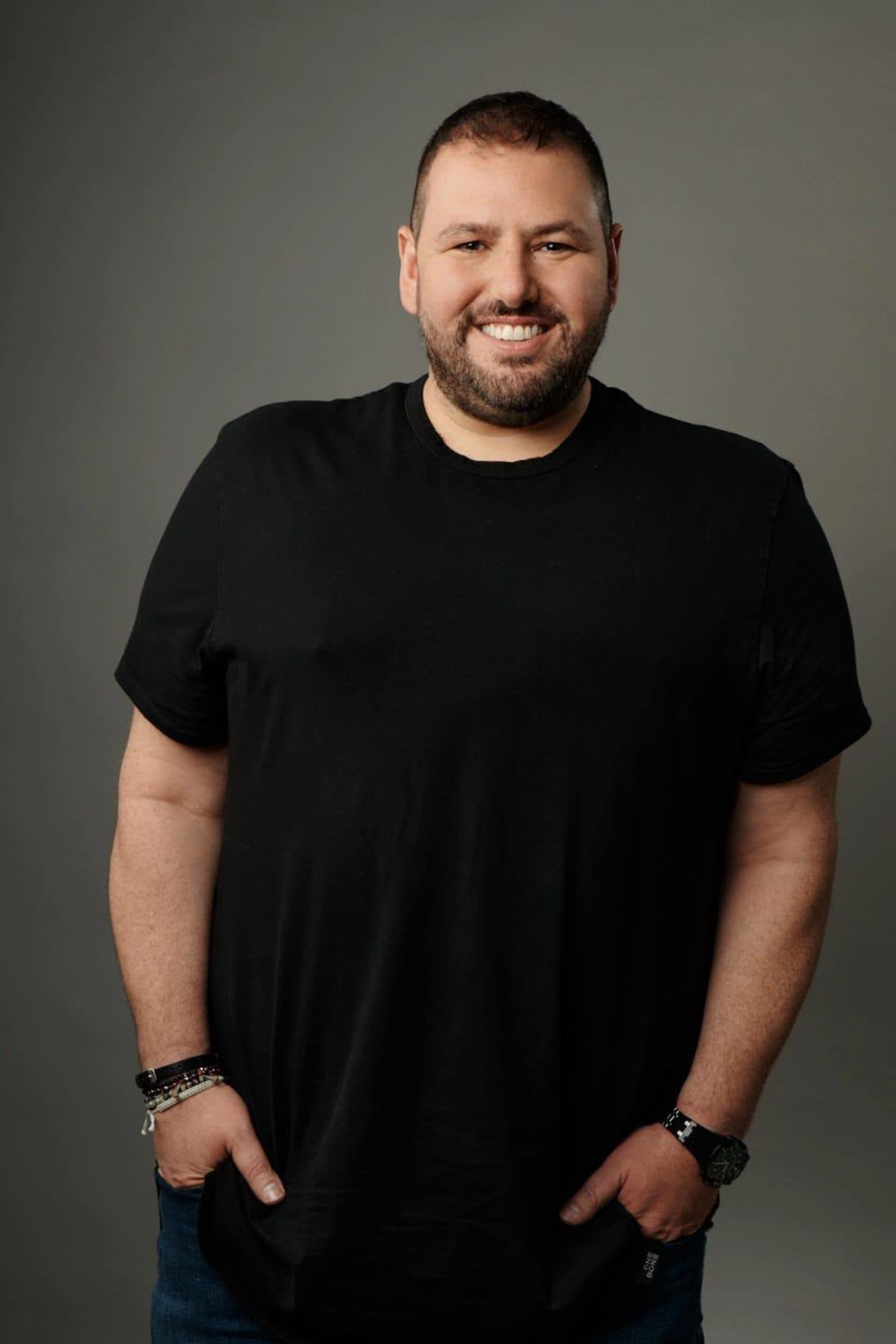
“Each government should have its own model,” Julio said. “They must not take the risk that one day someone will wake up and decide to close the model for them, because artificial intelligence is a critical infrastructure. You want to control your own artificial intelligence.”
Julio’s words reflect the new direction towards which he turned who was once considered one of the most prominent and controversial figures in the offensive cyber industry. Today he is behind the company Dream, which offers governments tools to protect the most sensitive information in their possession and utilize it through artificial intelligence systems adapted to their needs.
But the new vision comes precisely from someone who built his name during the previous decade as the co-founder and CEO of NSO, the Israeli spy software manufacturer that has received severe international criticism. Julio himself has faced difficult claims over the years regarding the use of the Pegasus software, and in 2020 the UN’s special report on freedom of expression even called on him to take more significant steps to prevent the use of the software as a means of surveillance and repression in certain countries.
Despite the criticism, the 45-year-old Julio does not express regret for his previous activities. On the contrary, he sees the experience he gained in selling spy technologies to governments as a significant advantage for his new company.
“Despite public opinion, governments have been able to prevent terrorist attacks and save hundreds of thousands of lives over the years using NSO’s products,” he claimed. “I actually see my past as a huge advantage.”
From selling spyware to protecting governments
Julio said that when he presented the idea to American investors in December 2022, the reactions were far from enthusiastic. “The American venture capital funds thought we were crazy,” he recalled.
“I told them that within five years the cyber attacks will be completely autonomous, and that the only way to prepare for this is to build autonomous defense systems,” he said. “They told me, ‘Listen, you’ve lost your mind.'”
The company’s first product, Sphere, is marketed as a national-scale cyber defense system that uses artificial intelligence tools to protect governments and critical infrastructure from attacks by hostile states. Another product, Hero, uses artificial intelligence to autonomously detect and repair security holes in software.
In August, Dream researchers located evidence of what they described as the first cyber attack that was carried out completely autonomously, from start to finish, against a government target.
“We predicted it would take five years. In practice it took three and a half years,” Julio said.
The next challenge: artificial intelligence that does not depend on the technology giants
After Julio and Kurtz initially focused on protecting government information from cyber attacks, the two decided to expand the company’s activities to the field of using the information itself. In June, they launched a third product called Atlas, an artificial intelligence platform designed to allow governments to develop and run dedicated models on top of their infrastructures, independent of external cloud providers.
Unlike large and multi-purpose language models, such as OpenAI’s ChatGPT or Anthropic’s Claude, the solution offered by Dream is based on the government’s own information and adapted to specific tasks, such as analyzing classified intelligence information or improving government procurement processes.
According to Julio, focusing on limited tasks makes it possible to reduce operating costs and adapt the system more precisely to the government’s needs.
“We tell entities within the government that they need a very narrow, but very smart model that can run quickly on one, two or three graphics processors,” explained Julio, referring to the chips used to run artificial intelligence systems.
This approach is at the center of his new business vision: instead of countries relying on external systems to process sensitive information, they will be able to own an independent artificial intelligence infrastructure and directly control the information on which it is based.
The past in NSO continues to accompany its patients
Julio left NSO in 2022, after a decade in which he headed it. His retirement came after a particularly stormy period for the company, which began, among other things, with the disclosure by the “Financial Times” in 2019, according to which NSO exploited a security weakness in the messaging service WhatsApp to install the Pegasus software on iPhone and Android devices.
NSO, which at its peak was valued at up to $1.5 billion, was blacklisted by the United States government in November 2021. The company later lost a precedent-setting lawsuit filed against it by WhatsApp following the hacks.
But according to Julio, it was precisely the experience he gained during this period that gave him a significant advantage in accessing governments around the world. “I think governments really appreciate the relationship we’ve had in the past,” he said.
Dream, whose company headquarters is in Tel Aviv and which also operates offices in Vienna and Abu Dhabi, has grown in three years to approximately 350 employees.
One of the first investors in the company described Julio’s international connections as a major asset. “His has a fantastic contact book,” the investor said, adding that the combination of Julio’s “brazenness” and Kurtz’s government experience seemed like a “good combination.”
The company does not disclose the identity of the governments it works with, but it says it has sold its cyber security solutions to more than a dozen countries, including eight countries in Europe, five in Asia and two in the Middle East. According to Julio, its sovereign artificial intelligence product has already been implemented in two countries.
For Julio, the main advantage of Dream does not come down to the technology it offers, but also to the relationships built over the years with decision makers.
“When you work with the government, you need a lot of trust and confidence,” he concluded. “I think this is what we bring to the table even before technology – trust and security.”