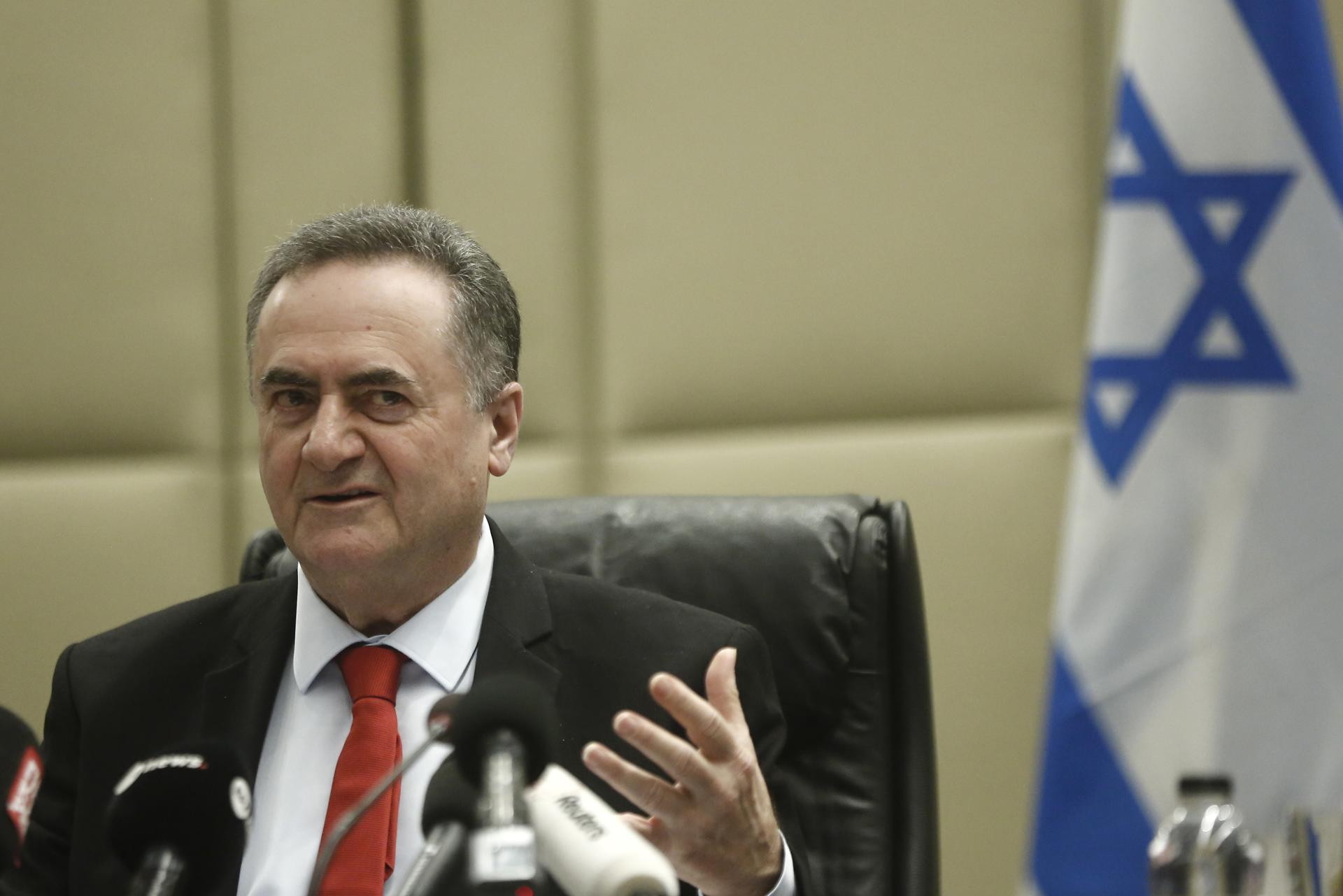
Israeli Defense Minister Israel Katz said on Monday (6) that Israeli fighter jets attacked Iran’s largest petrochemical plant, located in Asaluyeh, in an operation that, he said, left fundamental facilities in the country’s energy sector out of service, already the target of an ultimatum from United States President Donald Trump.
In a video message published by his office, Katz assured that the attacked plant represents “approximately 50% of Iranian petrochemical production” and that, after a previous attack against another facility last week, both infrastructures – responsible, according to him, for around 85% of Iran’s petrochemical exports – were disabled.
“This represents a severe economic blow to the Iranian regime, with losses of tens of billions of dollars,” said the head of Israeli Defense.
Iranian media outlets confirmed that the South Pars petrochemical facilities, which house the world’s largest reserves of natural gas, were hit this Monday by an Israeli-American air strike.
“A few minutes ago, several explosions were heard coming from the South Pars petrochemical complex in Asaluyeh,” reported the Fars news agency, linked to the Iranian Revolutionary Guard.
The attacks targeted the companies Mobin and Damavand, responsible for supplying electricity, water and oxygen to petrochemical plants in the area. Therefore, the electrical supply to all petrochemical plants in Asaluyeh will remain interrupted until these companies are repaired, reported the Tasnim agency, which claimed that South Pars suffered no damage and remains operational.
In his message, Katz added that both he and Israeli Prime Minister Benjamin Netanyahu ordered the continuation of attacks on the Iranian regime’s infrastructure, and warned that Iran’s actions against Israel “will worsen the economic and strategic damage” suffered by the country until “the collapse of its capabilities.”
Over the weekend, Trump stated that Iranian energy facilities and bridges will be bombed if the Strait of Hormuz is not reopened by 9 pm (Brasília time) on Tuesday (7).
This represented a new postponement of the American ultimatum for the passage to be unblocked – previously, the Republican president had established that the deadline would expire on March 27th and then postponed it until Monday night.
This passage, almost completely closed by Iran since the start of the war, transported around 20% of the world’s oil and liquefied natural gas (LNG) before the conflict.
https://mylife.forumpolish.com/t466-topic#885
https://neofitsiino.forumotion.me/t576-topic#1093
https://mamuli.club/forum/topic/51774/#post-225984
https://forum-wm.at.ua/forum/27-5442-1#10391
https://www.oleksandriya.pp.ua/viewtopic.php?p=1968#p1968
https://gorod.kr.ua/forum/showthread.php?p=319090&posted=1#post319090
https://mriya.forumotion.me/t614-topic#1174
https://kinology.ucoz.ua/forum/15-2039-1#9177
https://www.okhtyrka.pp.ua/viewtopic.php?p=1643#p1643
https://svobodnye-ushi.forumpolish.com/t1808-topic#3883
https://stud.ukraine7.com/t846-topic#2885
https://bahchisaray.org.ua/index.php?showtopic=38515&st=0&gopid=94204&#entry94204
https://balaclub.forumotion.me/t471-topic#954
https://shabastivka.ukraine7.com/t585-topic#1334
https://balakanka.forumotion.me/t716-topic#1444
https://www.zaporizzya.pp.ua/viewtopic.php?p=1788#p1788
https://www.odessaforum.biz.ua/viewtopic.php?f=25&t=26927&p=52395#p52395
https://kiyivskij.forumotion.me/t1300-topic#2689
https://odessacity.ukraine7.com/t508-topic#967
https://www.sumyforum.pp.ua/viewtopic.php?p=2383#p2383