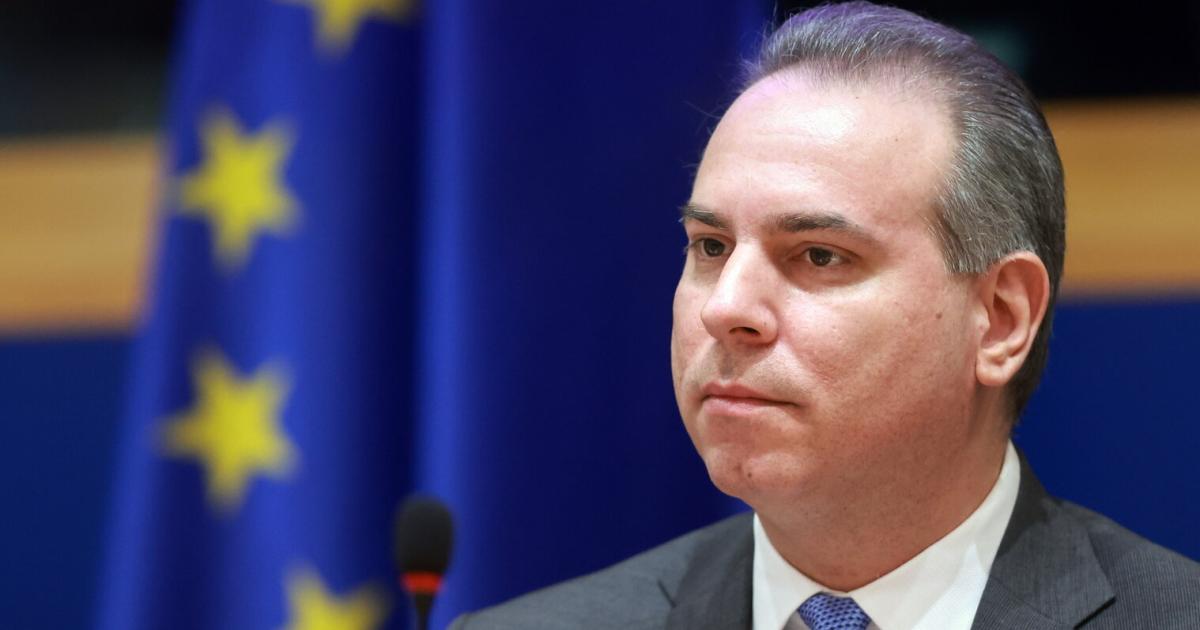
Montenegro’s Deputy Prime Minister Filip Ivanovic sees considerable resistance within the EU against his country’s rapid accession. “Many EU states say that the Union must first reform before it can accept new members. Two years ago there was a clear statement from the EU institutions that EU states should be able to do this by 2030. But we hope that this will happen faster for Montenegro,” Ivanović told the daily newspaper The press (Tuesday edition).
There is an “agreement with the EU Commission that – if we stick to our path – a conclusion of the talks at the end of 2026 is almost certain.” Then EU accession could be completed in 2028. A change to the EU statutes for Montenegro is not necessary, “because after Great Britain leaves there would be room for a new 28th member,” argued Ivanović. Montenegro is also a small country with only around 600,000 inhabitants. “But the internal reform process is a matter for the EU members, we cannot interfere with that. Our job is to meet all the criteria by the end of the year.”
Montenegro is considered a pioneer among the six candidate countries in the Western Balkans. Ivanović reported that the current government has closed almost half of the negotiating chapters with the EU. There is a broad commitment to European integration.
“Russian attempts to influence have failed.”
Ivanović emphasized that Montenegro is also clearly oriented towards the EU in terms of foreign and economic policy. “Russian attempts at influence – if any – have failed,” he emphasized. Montenegro is different from other countries in the region not dependent on Russian gas. “The weaker the EU is, the stronger other actors like Russia are. The smaller the EU’s presence in the Western Balkans, the greater the influence of other countries,” Ivanović called for “a strong presence” of the EU in the region.
The Montenegrin deputy prime minister also tried to allay concerns about excessive Chinese influence in his country. It is “not the case” that a Chinese loan for highway construction in the country would be too great a burden. “We see China as a partner, but we do not forget our foreign policy priorities: these are the EU and NATO,” emphasized Ivanović.
https://hedgedoc.musikinformatik.net/s/QmX58jFZr
https://mapacultural.lagoasanta.mg.gov.br/agente/709/
https://hedgedoc.catgirl.cloud/s/hSOq0h6lbx
https://epceducacion.cl/profile/veterinariomarbella/
https://hackmd.iscpif.fr/s/Sk3ktnlibg
https://zumpadpro.zum.de/ZL56Z5TBREOT_NWZ4J8WBw
https://doc.projectsegfau.lt/s/e-y-brY-p
https://pad.ccc-p.org/s/PqXKw8kWxg
https://md.swk-web.com/s/mXNGxaa_7
https://edit.leiden.digital/s/3iaXlilRR
https://hedge.grin.hu/s/LW0-Mf_Oy
https://pad.p2p.legal/s/xkETsqF3k
https://www.seoinpractice.com/viewuser.html?userid=2c88b1233441de94928166b5c5c3b635
https://md.darmstadt.ccc.de/s/DopXKdk0Zb
https://md.eris.cc/s/2q2FxGF3Yn
https://pad.degrowth.net/s/srw7Gkpec
https://blessingword.com/decision-fatigue-in-day-trading/
https://dadosabertos.ufma.br/user/por-que-optar-por-una-compra-ecologica-por-internet
http://178.128.34.255/en/user/beneficios-del-jabon-intimo-arbol-de-te
https://doc.micr0.dev/s/q7kf7tjqi
https://hedgedoc.syyrell.com/s/9HQ4vMJPx3
https://pad.fablab-siegen.de/s/1_Lyc3Z3a
https://knowhow.brainbot.com/s/ydz5iu1Ov
https://pad.nik.mx/s/9m7tUoZtr-
https://md.coredump.ch/s/Xy_9AQ9u-