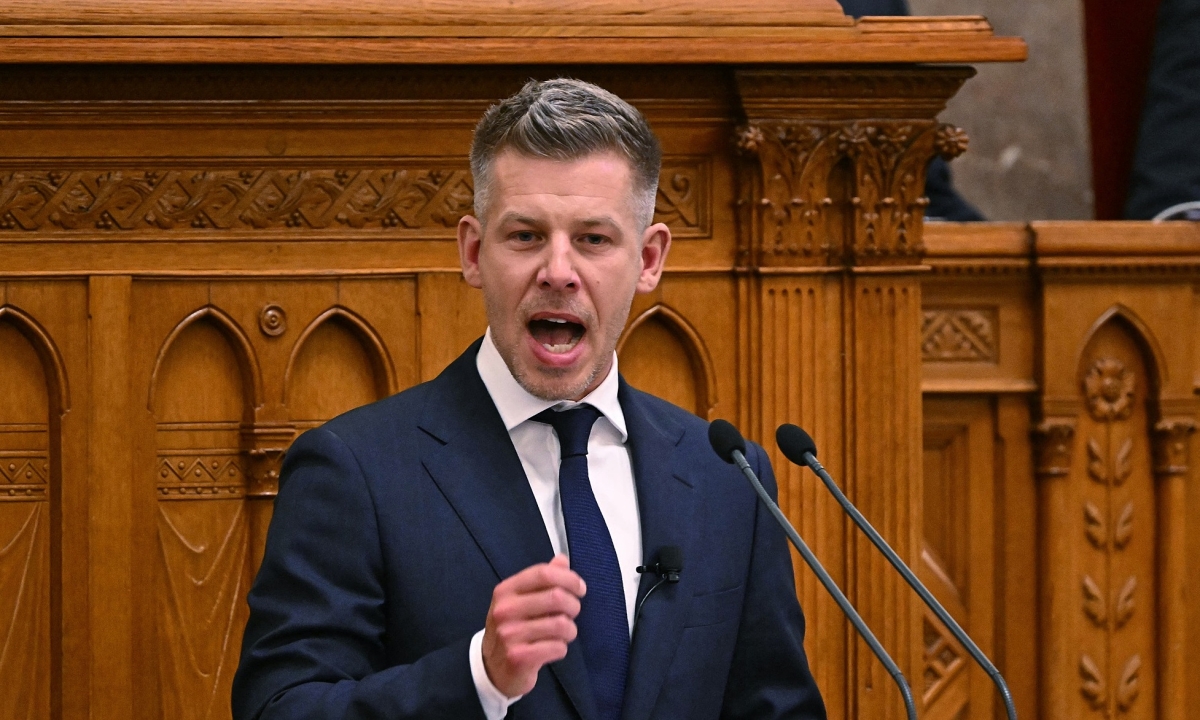
New Prime Minister Magyar asked the Hungarian President and a series of officials to resign before May 31, in order to radically change the leadership from the era of his predecessor Orban.
When Mr. Peter Magyar, 45 years old, stepped up to the podium to speak at the parliament on May 9 as Prime Minister of Hungary, one of the messages he sent out was that the 16 years in power of former prime minister Viktor Orban had ended. The European Union (EU) flag was returned to the Hungarian parliament, while Ode to Joythe EU’s “national anthem”, rang out before tens of thousands of people gathered in Budapest.
Mr. Magyar immediately announced an ultimatum to President Tamas Sulyok and a series of officials appointed by Mr. Orban who hold key positions in the Hungarian judicial system and public agencies.
“It’s time to leave honorably, while it’s still possible,” Mr. Magyar said, setting a deadline of May 31 for President Sulyok and these officials to voluntarily leave office.
Mr. Magyar, leader of the center-right Tisza party, won a resounding victory in last month’s election, ending Fidesz’s leadership after many years. He did not hide his intention to destroy the power model that Mr. Orban and the Fidesz party have built for nearly two decades.
New Hungarian Prime Minister Peter Magyar during his inauguration ceremony at the parliament on May 9. Image: AFP
Zsolt Kerner, journalist at Hungarian news site 24.husaid Mr. Magyar entered the election with the promise of bringing justice and now he is determined to do it at all costs.
“He seems to be an extremely tough person. Officials at the first, second and third levels of Mr. Orban’s network should be wary,” Kerner said.
New Prime Minister Magyar also announced that under his leadership, Hungary will no longer be a “safe haven” for corrupt foreign politicians.
Former Polish justice minister Zbigniew Ziobro was one of the first to seem to take this warning seriously. Less than 36 hours after Mr. Magyar took office, Ziobro confirmed on May 10 that he had left Hungary for the United States.
Ziobro was granted asylum by Hungary last year, after facing a series of charges in Poland, including abuse of power, leading an organized crime organization and embezzling public funds to buy spy software to spy on political opponents. If convicted, he could face up to 25 years in prison.
According to media, it was President Donald Trump who granted Mr. Ziobro a visa to enter the US.
Journalist Kerner believes that Ziobro will likely be among the first targets that Mr. Magyar targets, especially because the new Hungarian Prime Minister wants to mend relations with pro-EU Polish Prime Minister Donald Tusk, as well as the Visegrad group (including 4 countries: Poland, Hungary, Czech Republic and Slovakia). Relations in Visegrad have deteriorated significantly under Mr. Orban due to this leader’s pro-Russian stance.
“If Poland requests the extradition of former corrupt officials, Magyar has made it clear that he will hand them over,” Kerner said, referring to both Ziobro and former Polish deputy justice minister Marcin Romanowski, who was also granted asylum by Hungary under Mr. Orban.
Kerner said those who amassed large fortunes under the previous administration could also soon face pressure. In the weeks leading up to Mr. Magyar’s inauguration, Guardian reported that many former allies of former Prime Minister Orban have begun transferring assets abroad because of concerns about the anti-corruption campaign that the new leader pledged to carry out. Some people even try to apply for US visas.
However, according to political analyst Zsuzsanna Vegh at the German Marshall Fund, the bigger challenge for Prime Minister Magyar will be Mr. Orban’s large network of allies, with powerful positions such as the President, the head of the prosecutor’s office and the state audit agency.
Hungarian President Tamas Sulyok attended an event in Germany in January. Photo: AFP
“Mr. Magyar calling for these people to resign does not mean they are forced to follow suit. If they do not resign, I think we will witness a legal battle. Constitutional amendments will need to be made to remove them from office,” she commented.
However, one thing Mr. Magyar proved even before taking office is that he likes to act quickly. According to Ms. Vegh, this could create a turning point.
“With Prime Minister Magyar issuing an ultimatum for these officials to resign at the end of May, I think the Tisza party must have had a very clear roadmap for the next step if those people continue to be in office,” she said.
According to this analyst, the system that Mr. Orban once built to consolidate power has begun to crack.
“The election in April showed that Mr. Orban’s strategy to maintain power was no longer effective. That system was partly based on the belief that he could not be defeated. And then that belief collapsed when reality proved the exact opposite,” Ms. Vegh added.
https://londonincmagazine.ca/2026/05/08/full-stack-development-services/
https://researchsnipers.com/understanding-the-difference-between-a-vin-check-and-a-vehicle-history-report/
https://nichegamer.com/different-types-of-car-damages-how-to-detect-them/
https://www.arcadepunks.com/how-to-choose-a-used-car-a-comprehensive-guide/
https://orah.co/how-to-perfect-rolling-shots-in-car-photography/
https://www.meredithplays.com/affordable-holiday-gifts-for-kids-creative-ideas-for-every-ages/
https://www.zandax.com/management-blog/employee-benefits-what-to-include-in-your-hr-onboarding-checklist
https://www.mothersalwaysright.com/adventure-sports-for-kids-when-is-your-child-ready-for-more/
https://thesecretofthetarot.com/symbolism-of-dreaming-about-cars/
https://longhornmenuprice.com/news/the-five-slide-decision-brief-how-leaders-land-choices-in-ten-minutes/
https://www.talkandroid.com/518951-5-ways-to-free-up-storage-space-on-your-android/
https://ukrtime.co.ua/what-invisible-tech-means-and-why-it-matters/
https://squardle.net/nj-police-theft-prevention-tips-protect-car/