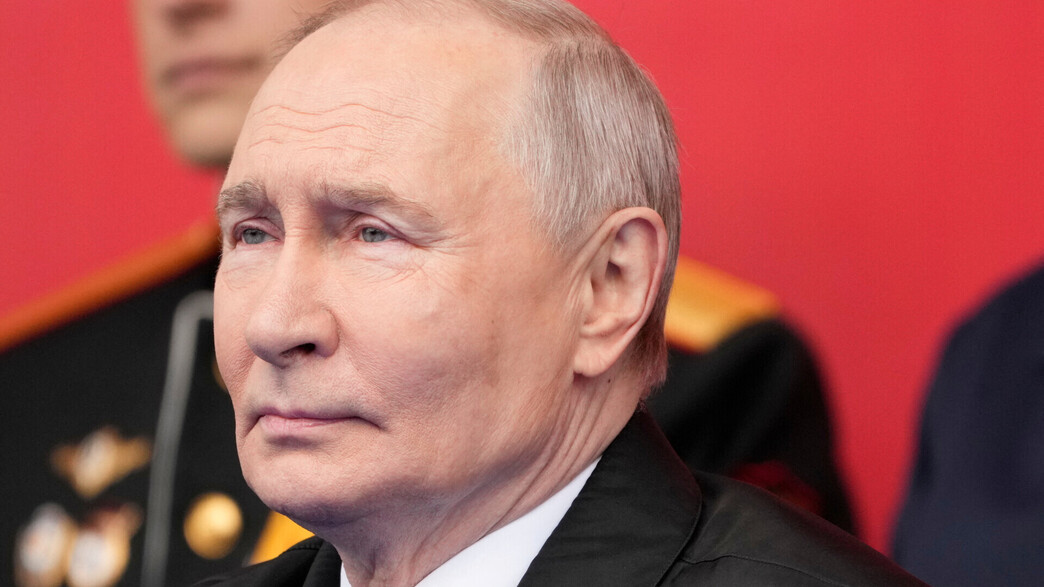
Extremist and nationalist elements in Russia are calling for a serious escalation of the war • Unusually: Putin publicly acknowledged the damage caused by the attacks • Full military mobilization, the elimination of Zelensky and the use of nuclear weapons: the extraordinary calls at the top
- Putin admitted for the first time and in an unusual way the damage of the attacks on Ukraine.
- Extremist elements are escalating the pressure on the Russian president.
- The Russian president is facing unusual political pressure, for the first time in the war.
- “What else needs to happen for us to really start fighting,” attacked an influential source.
- In the Crimean peninsula: an unusual de facto closure that prevents access to the region.
Ukraine’s widespread attacks deep in Russia are putting Russian President Vladimir Putin under increasing pressure, not only on the battlefield but also at home. While the Kremlin continues to state that it adheres to the possibility of a diplomatic solution, nationalist and extremist voices in Russia demand that the negotiations be abandoned and the war significantly escalated. At the same time, Putin had to admit in an unusual way that the Ukrainian drone attacks are causing real damage to Russia’s energy infrastructure and even leading to fuel shortages.
Nationalist elements in Russia are outraged by the UAV attacks that have hit Moscow, St. Petersburg, the Crimean Peninsula and oil and military industry facilities in recent months. According to them, the United States’ attempts to promote a political settlement have not led to any achievements from Moscow’s point of view, and therefore they are calling on Putin to abandon diplomacy and escalate the fighting.
Calls for the escalation of the war have also been heard in the past, but according to reports they have increased significantly following the recent attacks by Ukraine. Among the proposals made by nationalist parties: a full military mobilization of the economy and the army, the bombing of the government centers in Kiev, the assassination of the President of Ukraine Volodymyr Zelensky, attacking UAV factories in Europe and even the use of tactical nuclear weapons.
Nationalist billionaire Konstantin Malofaev, for example, wondered after a Ukrainian attack that set fire to a refinery in Moscow “what else needs to happen for us to really start fighting”, and even asked why Russia is not using the nuclear weapons it has been developing for decades. The Reuters news agency quoted other nationalist bloggers who called for making central cities in Ukraine uninhabitable through bombings and for an end to all US-mediated peace talks.
According to sources close to the Kremlin, Putin is able to tolerate this rhetoric as long as those bloggers and public figures do not exceed the limits that the government sets for them. However, there is concern in Russia that the public pressure exerted by the extremists may make it difficult to make decisions, because it raises the expectation of a wider military campaign precisely at a time when the Kremlin still wants to leave an opening for a political settlement.
So far, the Kremlin has rejected calls to abandon the negotiations, although three senior Russian government officials have claimed that talks with the United States are not making progress and have accused Washington of failing to keep promises made at the Putin-Trump summit in Alaska last year. Putin himself also refrained from adopting the most extreme proposals, although in April the Russian Ministry of Defense published the addresses of factories in several European countries that it claims are producing drones for Ukraine, in what appears to be a warning that they could become targets – in an unusual step against NATO countries.
At the same time, the Russian Foreign Ministry signaled the escalation of attacks last month when it announced that Moscow would carry out “systematic attacks” against military targets in Kiev. Later, heavier waves of bombing were indeed carried out, and in one of the attacks a thousand-year-old monastery in the capital of Ukraine was even damaged. Even before that, Russia published an unusual call for foreign citizens to leave Kyiv before an unusual attack in scope, but such an attack did not occur.
Despite the pressure, Putin continues to display confidence in his strategy. According to him, Russia is getting closer to taking over the city of Kostiantynivka in the Donetsk region in eastern Ukraine as part of the attempt to take over the Donbas region. He also claimed that parties are getting stronger in Europe that he says are interested in renewing relations with Russia and stopping the attempt to bring about its “strategic defeat”, referring to the rise of many far-right parties on the continent.
Alongside the political pressure, Putin also had to deal with the direct consequences of the Ukrainian drone attacks. In an interview with state television yesterday, he admitted in detail for the first time that the attacks damaged Russia’s energy infrastructure and created a fuel shortage. “The attacks on our infrastructure sites are creating problems, that’s clear,” he said. According to him, Russia is suffering from a “certain shortage” of fuel, although according to him it is a “non-critical” situation. And the authorities are working to restore the supply to the series.
This is an unusual admission on the part of Putin, who for more than four years of war tried to present to the Russian public an image according to which life in the country continues almost as normal. Since May, Ukraine, using the capabilities of the UAVs it develops and produces on its own, has succeeded in hitting refineries in the heart of Moscow and even in the Ural Mountains region. Putin has announced that Russia will increase fuel imports to reduce the shortage, strengthen the air defense systems around the refineries and speed up the reconstruction work. km.
The Crimean peninsula, which was annexed by Russia in 2014, has also become a major target of attacks. Ukraine attacked electricity and fuel facilities, leading to power outages, severe gasoline shortages and the declaration of a local state of emergency. Russian authorities have promised to increase fuel supplies to the peninsula by land and sea, while Putin has claimed that the purpose of the attacks is to divert Russia’s attention from continued fighting in the Donbass. In practice, Ukraine controls fire on all access routes to the region and manages to de facto cut it off from the rest of Russia and the occupied territories in Ukraine.
Despite the admission of damage to the infrastructure and the growing pressure from the extremists, Putin emphasized that the attacks will not stop the military operation. He claimed that Russia’s long-range attack capabilities are “much more powerful, accurate and destructive” than Ukraine’s, and made it clear that Moscow will continue its attack despite the difficulties, and threatened that the Russian army is determined to continue advancing in an attempt to achieve its goals to end the war.