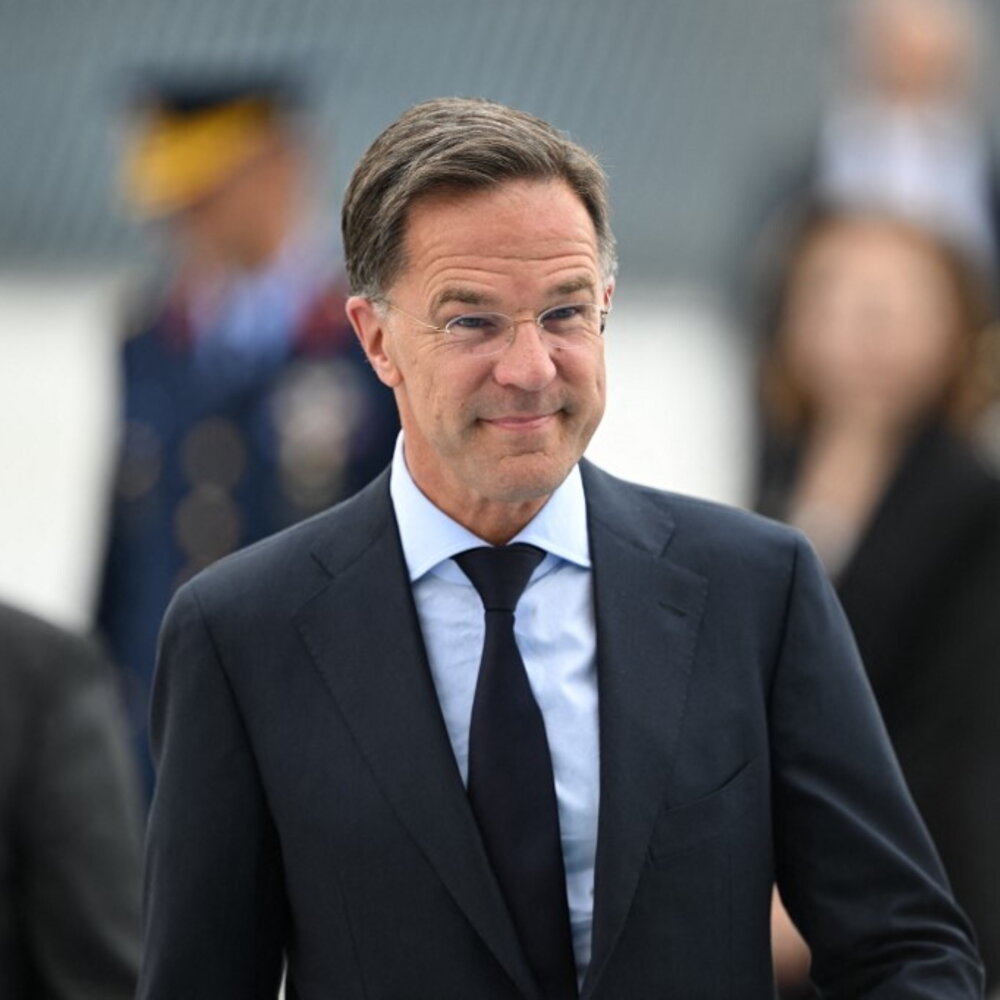
leaders of the 32 NATO countries will meet tomorrow and Wednesday in Ankara to take stock of the increase in defense spending, strengthen cooperation with the military industry and confirm a new support package for Ukraine, in a context marked by pressure from the United States for European allies to take on greater responsibilities in the continent’s defense.
Towards 5% of GDP: NATO’s change of pace
Europe is increasing defense spending, aiming to rebalance the weight of investments with the United States and is also doing so thanks to pressure from Donald Trump. Presenting the NATO summit in Ankara (tomorrow and Tuesday), the Secretary General of the Alliance, Mark Rutteclaimed the change of pace of the European allies and Canada, underlining that the path towards 5% of GDP in defense and security by 2035 is now underway.
Rutte explained that, one year after the Hague summit, the allies will have to present to Ankara “clear, concrete and credible plans” to achieve the new objective. According to the secretary general, Europeans and Canadians already invest around 4% of GDP in defense and security and in 2025 they increased spending on traditional defense by almost 20% compared to the previous year. Considering the two-year period 2025-2026, he added, the additional investments amount to 258 billion dollars.
“Europeans and Canadians are now on the trajectory for match U.S. defense spending“, said Rutte, speaking of a “real change of mentality” and of “a stronger Europe in a stronger NATO”. But the increase in funds, he warned, is not enough: it is necessary to transform “money into capabilities”, moving “from defense plans to drones, from money to missiles and interceptors”.
The role and leadership of Donald Trump
The secretary general also gave part of the credit to the American president. “Trump was extremely strong in encouraging us to do this“he said, arguing that the tycoon can be considered “the first president of the United States since Eisenhower” to have led Europeans and Canadians to spend on par with the Americans. “This rebalancing has been a dream for 50 or 60 years and now it is happening, largely thanks to his leadership,” he observed.
“It was because of Russia. It was because of Ukraine, but if you look at last year, countries like Spain, Italy, Belgium and Canada, therefore larger economies, all reached 2% and this was partly thanks to Trump”, the Dutch leader further highlighted.
Rutte rejected the idea that American pressure is dividing the Alliance. On the contrary, he argued, Washington is pushing NATO to become more robust and sustainable. The model that existed until now, he explained, was no longer sustainable in the long term: a country of 350 million inhabitants, eight hours away by flight, cannot be asked to bear the main burden of European defense, while 600 million people live on the continent in the richest part of the world.
The new model and the pressures on member countries
The rebalancing, according to Rutte, does not mean a retreat of the United States. Washington will continue to secure the nuclear umbrella and crucial conventional support, while European allies will have to assume greater responsibility for the continent’s conventional defense. “A stronger Europe means a stronger NATO“he insisted.
And to those who are not yet convinced to increase spending, the secretary general sent a clear message: “If one or two still need to be convinced, we have ways to do it.” A formula that confirms the political pressure in view of the summit, where the objective will be to transform the commitments made in The Hague into concrete and verifiable national plans. In the spotlight are those countries on the 2% threshold: Italy, Spain, Belgium and Canada.
Defense industry and support for Ukraine
The strengthening of the defense industry is also on the table. Rutte announced that new contracts worth tens of billions of dollars will be presented at tomorrow morning’s NATO Industry Forum, intended to provide the Alliance with the equipment necessary for deterrence and defense. “We have to produce more forces, more resources and a much stronger industrial base,” he said.
Support for Ukraine remains the other major chapter of the summit. Rutte called on allies to continue supplying Kiev with what it needs, in particular air defense systems, interceptors and munitions. “All allies must do their part,” he said, reiterating that Ukraine’s security is “closely linked” to that of NATO.
Home.Php
New Hot tub
One-bedroom apartment listings for rent
root by yqmyxu best
casino – Ezega Forums
Has anyone dealt with solar panel recycling before? I have a
What features make a mobile game feel smooth?
How important is fast loading time for you?
Do you prefer simple or complex game interfaces?
What motivates you to try a new online platform?
VB Save Help
LL POSTCARDS – ALGERIA – postcard.co.uk
Worksheet Title
U4GM How to Upgrade Arknights Endfield Fast Without Power Crashes – GWFM
"Warm and Fuzzy" Matters: The Myth of "Soft Skills"
Youth of Canada Mental Illness Awareness Week Entry #3: All the "what ifs"
What to Expect with Chiropractic Care
smt cool
World of Longplays
Gracesss
Forum – Sugar Defender Scam||Sugar Defender Amazon|| – LikePets.co.uk
Shine on Mélanie Mathieu
What role do bonuses play in your decision?
Title
Obituary – Nabil Hassan Said Toussoun