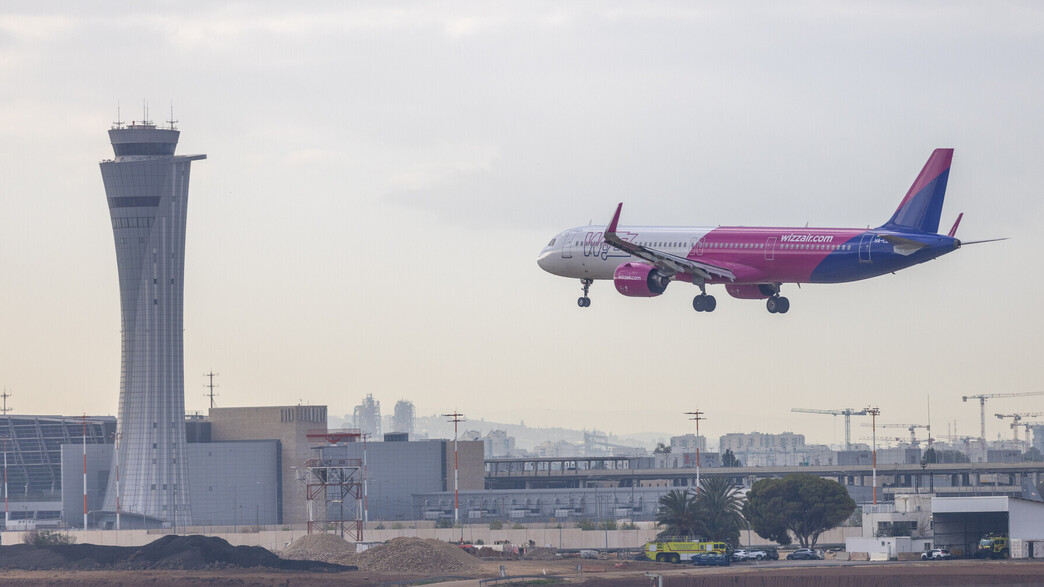
The difference between a low-cost flight and a regular flight is not only a matter of price, it is a matter of an entire business model. Low cost companies sell basic flight tickets whose price usually covers only a seat and a small hand bag that goes under the seat in front of you. Want to choose a specific seat, add a suitcase, eat on the flight or change the ticket? Each such service will cost you an additional fee separately.
Regular airlines, on the other hand, often include a wider service package that is already included in the ticket price. This does not mean that one is better than the other, it means that they are suitable for different travel needs. Here’s everything you should know before booking your next flight.
Low cost versus a regular company – what is included and what is not?
| Service | Low cost | regular company |
|---|---|---|
| Small hand bag (under the seat) | usually included | usually included |
| Backpack / trolley (top shelf) | usually with an additional fee | usually included |
| A suitcase for the trunk | with an additional fee | Often included in international flights |
| Select a seat in advance | usually with an additional fee | usually included |
| Meal / drink on the flight | with an additional fee | Often included in international flights |
| flight change | Possible for a fee, sometimes expensive | Generally more flexible |
| card cancellation | Strict restrictions for the most part | Depends on the type of card, usually more flexible |
| Connections | usually does not exist | usually exists |
| the airport | Sometimes a secondary field, far from the center | Mostly main field |
| Club is always traveling | limited or non-existent | usually exists |
*clarification: Conditions vary between airlines, destinations and ticket types. It is always recommended to check the conditions of the specific card before ordering.
How exactly do the low cost companies save?
The low price of low-cost flights is not marketing magic, it is the result of some calculated business decisions that significantly reduce operating costs. To understand why the card is cheaper, it’s worth understanding how this model works behind the scenes.
Secondary airports
One of the biggest savings of low cost companies is the use of smaller and less busy airports. The fees charged by secondary fields are significantly lower compared to primary and sought-after fields, and this translates directly into the price of the ticket. The obvious disadvantage is that sometimes these are fields that are an hour or more outside the city, which may affect the costs of getting to the destination and flexibility in times. When closing a low-cost flight to a lesser-known field, it is recommended to also take into account the cost of the trip from there to the final destination and the traffic situation, especially if you are on a tight schedule.
Uniform and basic aircraft fleet
Low-cost companies often have a fleet of aircraft consisting of only one model, usually narrow-body aircraft suitable for flights of up to a few hours, like most European destinations. It’s not accidental. When all aircraft are identical, maintenance costs are reduced, spare parts are simpler to manage, and air and ground crews only need to be certified on one type, saving time and expensive training. Beyond that, the planes themselves are designed with as many seats as possible and without different classes. There is no first class, no business – only crowded rows that generate income from every possible meter in the passenger cabin.
Direct sales and minimal service
Low-cost companies sell most of their tickets through the direct website, thus saving the fees charged by agencies and booking platforms. Costs in the traditional model are embodied in the price of the ticket. Within the flight itself, the service is reduced to a minimum: fewer flight attendants in relation to passengers, no permanent service cart and no equipment that requires storage and logistics. Those who want a meal, drink or headphones can purchase them separately. The result is a model where the price you pay reflects exactly what you get – no more, no less.
Income from additions
It’s no secret that part of the business model of low-cost companies is based on the fact that you will purchase a basic card at a low price, and compensate for it with extras that increase the company’s revenues. Baggage, seat selection and the flexibility of the ticket, all of these help the company enable the low base price without breaking the bank. If you know in advance that you want to reserve a seat or fly with a suitcase, it is worth calculating the final price in advance. Sometimes the cheapest is actually the most expensive.
How much does it actually cost? Examples that will sort you out
Example A – solo traveler with only a small bag
Basic price one way (Tel Aviv-Athens): €70 (about NIS 231) a small bag under the seat without a trolley and without a suitcase. In such a scenario that also does not include choosing a particular seat, this is a winning model! Those who know how to pack wisely and settle for a small bag will benefit from a price that is difficult for a regular company to compete with.
Example B – a couple who flies with a trolley and wants to sit together on the flight
Base price per person for the direction: (Tel Aviv-Athens): €70 (about NIS 231) | Total for two: €140 (approx. NIS 462) Trolley to the passenger cabin: €20-€30 per person (approx. 66-99 NIS) Choosing a seat next to each other: €8-€16 per person (approx. 26-53 NIS) Final price for two: €196–€232 (about NIS 647–766) The gap with a regular company is starting to narrow significantly. At this stage you should seriously compare before closing.
Example C – a family of four, flying with luggage in the trunk and choosing seats
Base price per person: ~€70 (about NIS 231) | Total for four: €280 (about NIS 924) Two 20 kg suitcases: €19-€60 each (about 63-198 NIS) Seat selection: €8-€16 per person (about 26-53 NIS) Final price: €354-€532 for four (about 1,168-1,756 NIS) At this point, a regular company that includes Luggage and seats in the price of the ticket may not only be more convenient, but also completely competitive in price.
*remark: Base prices are based on flights Wizz Air From Tel Aviv, as of summer 2026. The costs of additions are based on the company’s official price lists. The exact price varies by destination, date and season. The conversion to shekels is calculated according to an exchange rate of about 3.3 shekels to the euro.
When is a low-cost flight worthwhile and when is it better to consider a regular flight?
There are people for whom the low-cost model was created exactly. Those who are used to flying with only a backpack, it is not critical for them to sit next to a partner or children and do not need anyone to serve them a glass of wine with a smile – will enjoy this model very much. For such passengers, flying is a means of getting there, not an experience. If you can get from Tel Aviv to Athens for less than the cost of lunch in a restaurant – there is no reason to pay more. It also works great for business travelers who fly for one sitting with a laptop and don’t intend to stay long, or for young couples who are looking for a spontaneous trip and know they’re getting by on a budget as long as the price is low.
The incompatibility begins when the trip requires luggage, the need to sit next to family members (especially small children), and planning to eat something on the flight. For such passengers, the temptation of a cheap plane ticket is irrelevant because once you add all the extras, the price jumps significantly.
There are also parameters that people don’t always emphasize as mentioned here before. The airport is close to the vacation destination, connecting flights are included in the ticket price or customer service is available in case something goes wrong. Scheduled airlines often operate multiple aircraft on the same route, and have more ability to arrange an alternative flight and handle passengers who need an efficient real-time solution. A low-cost airline, with a tight schedule and a relatively small fleet, is often less flexible in such situations, so if the flight is delayed or canceled, the handling experience may be very different.
Bottom line: before you decide, it’s worth calculating a real final price, which includes luggage, a seat, food and drink and travel to and from the field. Only then can you know what really pays off and make an informed decision accordingly.
When is a low cost flight better?
- Flying to a relatively close destination (up to 3-4 hours)
- Fly with minimum luggage: backpack or trolley only
- Looking for the lowest price and willing to give up some comfort
- Fly alone or as a couple without having to coordinate seats
- No changes are expected on the card
When is a regular flight better?
- Traveling with children and lots of luggage
- A connecting flight to a distant destination is required
- Prefer flexibility to change or cancel
- Prefer to land at a central airport without getting involved with long journeys (usually on city breaks)
- Flying for a long flight where basic comfort and meals are important
- We want security in case something goes wrong
FAQ
What is low cost??
An aviation model where the base price of the ticket includes only a seat on the flight. Any additional service such as: luggage, seat selection, food and order change, is sold separately, in order to offer a starting price as low as possible.
What is a low cost flight?
A flight that is operated in a model where most non-basic services come at an additional cost. For those who fly with a small bag and without extras – there can be a significantly cheaper option compared to a regular flight.
What is the difference between a charter flight and a low cost flight
A charter flight is often operated as part of a vacation package, and sometimes some of the services are included in advance. Low Cost is a regular line that operates throughout the year, where each additional service costs separately.
Which low cost companies fly to Israel?
The prominent companies that operated and operate from Israel are Ryanair, Wizz Air and-easyJet, Mainly to destinations in Europe. The activity changes depending on the season and the security situation, so it is recommended to check directly on the companies’ websites.
Is low cost really cheaper??
In many cases yes, especially on short flights with minimum baggage. But as soon as you add a suitcase, a seat and a meal, the price may approach the level of a regular company and even exceed it. The safe way is to compare final price, not opening price.
Is it possible to take a suitcase on a low cost flight??
Yes, but luggage is not included in the base price. The ticket usually only includes a small hand bag that goes under the seat in front of you. A suitcase for the trunk and sometimes also a trolley for the passenger compartment, are purchased for an additional fee.
With which company is it better to fly with a family??
Depends on the style of the trip. A short and easy low-cost flight can be an excellent choice. For families with children, a lot of luggage or connecting flights, a regular company may be more convenient and more affordable in the end.
What is low cost standing?
A theoretical idea that came up in the past in the industry, that talked about lowering prices using semi-standing style seats. As of today, there are no commercial flights that operate in such a format.
When do the low cost airlines return to Israel?
The return of companies and the availability of flights are constantly changing and depend on commercial decisions, the security situation and market conditions. It is recommended to update directly on the companies’ websites or the official flight schedule in real time.
https://provinciyka.rv.ua/23797-audioknigi-na-angliyskom-prekrasnoe-podspore-v-izuchenii-yazyka.html
https://uquest.net/pochemu-stoit-uchit-anglijskij-v-rezhime-onlajn-preimushhestva-etogo-sposoba.html
https://www.sama-mama.com/kursy-angliiskogo-yazyka-v-zaporozhe
https://mamaipapa.org/stati/intensivnyj-kurs-anglijskogo-yazyka-onlajn.html
https://primat.org/angliiskii-po-skaipu-onlain-kursy-zanyatiya-cherez-skype-i-sravnenie-s-zoom-meet-i-teams
https://www.ukrlib.com.ua/pub/article.php?articleid=4433
https://kramtp.info/novosti/mimohodom/full/83828
https://womanchoice.net/kursy-anglijskogo-yazyka-v-dnepre.html
https://treba-solutions.com/kak-proverit-otzyvy-o-shkolakh-angliiskogo-yazyka-onlain-chtoby-ponyat-stoit-im-doveryat-ili-net/
https://www.linkedin.com/pulse/top-10-best-answer-engine-optimization-tools-ivan-sharyi-qsekf/