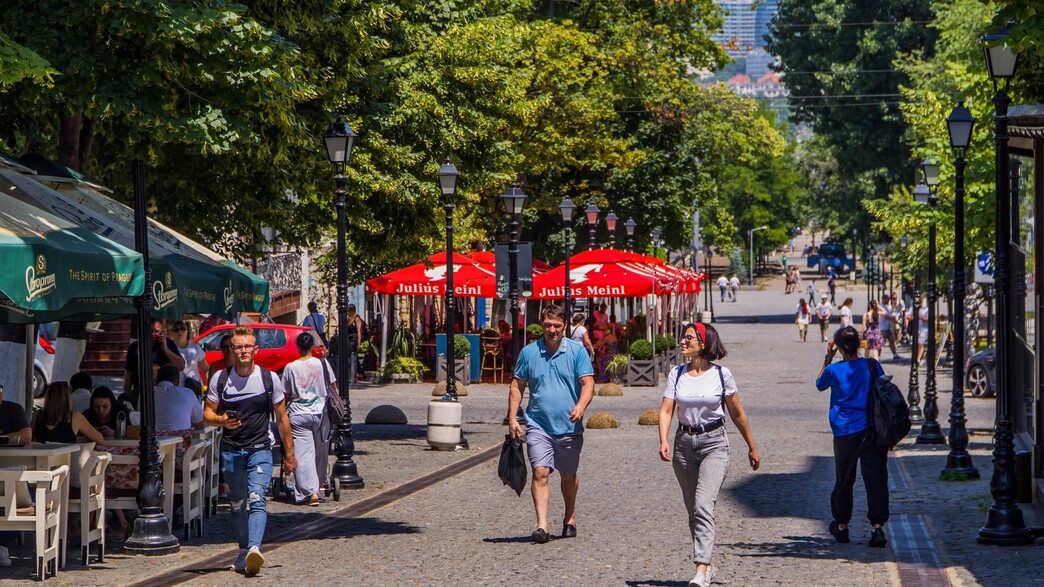
For years, the Republic of Moldova has been unfairly stigmatized as the poorest corner of the continent, a dangerous and forgotten book region, defined under the shadow of the ongoing war in neighboring Ukraine and under its own frozen internal conflict in Transnistria. This is how it actually “won” the title of the least visited and most visited country in Europe.
But in 2026, the reality on the ground tells a completely different story: Moldova is experiencing a dramatic tourism breakthrough and is gaining unprecedented international recognition. This is a real tourist renaissance, where the country is quickly becoming a popular and highly sought-after destination. For the first time in its history, local tour guides are reporting a huge and unprecedented surge in interest from travelers from all over the world. It is no longer just about visitors from neighboring countries, but a wave of tourists coming especially from remote and distant corners of the globe such as Chile, New Zealand and Australia, experienced travelers who have already marked “V” on the rest of the European continent, looked at the map, and realized that they missed this hidden gem.
Much of this growing recognition comes from “friend bringing friend” and word-of-mouth recommendations from enthusiastic returning travelers. The tourists of 2026 are looking for authenticity, tranquility and picturesque landscapes, and Moldova provides exactly this unique experience. The travelers who arrive with low expectations because of the same old stigmas, quickly discover a fascinating country, and leave it fascinated and full of admiration.
The official tourism figures of the National Bureau of Statistics prove that this increase is not a passing trend: just between the months of January and March of 2026, the accommodation facilities in the country hosted no less than 68,600 foreign visitors. The main attraction of this revival lies in the combination between cultural authenticity and economic accessibility, with Chisinau increasingly positioning itself as one of the most affordable and accessible capital cities in Europe, allowing travelers to extend their stay for a week or more without financial pressure. Although local price levels have risen in recent years due to demand, and the average daily expenses today range from 70 to 400 euros depending on the level of indulgence and activities, Moldova is still considered a winning destination for those looking for a deep, culinary and cultural experience at a reasonable price.
Underground wine city and street smarts are essential
However, while the government-controlled central and western regions are completely safe and stable, navigating this evolving tourist landscape still requires a measure of modern street smarts. Global diplomatic bodies, including the US State Department and the British Foreign Office, are issuing severe “do not come” travel warnings to the unrecognized eastern separatist republic of Transnistria, due to the presence of Russian military forces and the complete lack of Western consular protection. Travelers are also warned not to approach political demonstrations along Stephan Chel Mara Boulevard in Chisinau, to give up independent ATMs that are placed in the streets and tend to suffer from sophisticated card copying devices, and to completely avoid drinking the local tap water, which suffers from outdated sanitation infrastructure.
Even navigating the transportation infrastructure requires adaptability. Instead of hailing street taxis that tend to extort prices, travelers are urged to use local travel apps like Letz or Yandex Go to get pre-determined digital fares. For the more adventurous, the main rural mode of transport remains the “marshrutka”, horrendously crowded private minibuses that depart from stations resembling makeshift parking lots only when they are full. They offer minimal legroom but provide a glimpse into local life, sometimes accompanied by rhythmic and jarring pop music emanating from one of the passengers’ phones.
For those willing to look beyond the headlines, the reward is exceptional. Driving north leads to Soroca, an intriguing town with a medieval fortress overlooking the Dniester River, with the Ukrainian border visible on the other side of the bank. To the west lies Orheiul Vechi, a breathtaking historical and archaeological complex where active cave monasteries are carved directly into the limestone cliffs overlooking the Răut River, as well as the peaceful Curchi Monastery, whose shining domes stand in stark contrast to the country’s secular Soviet heritage.
The culinary stamp and wine culture of Moldova are equally monumental, and they are a huge attraction for the increase in the attractiveness of the country. In Cricova, travelers board underground trains to navigate an underground city dedicated entirely to wine, featuring over 100 kilometers of sprawling tunnels and streets named after grape varieties. South of there, Chateau Purcari (Chateau Purcari), the oldest winery in Moldova, founded in 1827, presents a centuries-old winemaking tradition that has supplied wine to European royalty throughout the ages.
Soviet mosaic, open market and traditional blood sausage
Still, to find the real Moldovan tourism front, you have to go further south to Gagauzia, a small autonomous region integrated within Moldova. The region includes only three cities and a dwindling population of less than 160,000 residents, and is home to the Gagauz community, a Turkish-speaking Orthodox Christian group. In Comrat, the capital of the district, life is faithful to a slow agricultural rhythm. The city’s bus station is full of advertising posters offering high-paying manual labor jobs in France and Germany, a stark reminder of the economic hardships that are pushing the younger generation out of the country.
A walk along Lenin Street in Komrat reveals a fascinating mosaic of modern life and preserved history: a trendy beauty spa for laser treatments sits just steps away from the phosphorescent yellow, gilded onion-domed St. John’s Cathedral, built in the early 19th century. In the open and sprawling market of Victory Street, the real heart of the community beats. Here, friendly local street vendors sell everything from freshly picked cherries and giant heads of garlic, to large river fish, rolls of traditional blood sausage and old Soviet-era telephones.
A short walk away, the Gagauzian National Museum of History and Ethnography in Besalma offers a particularly effective window into this unique minority culture. Visitors are led past intricate wood carvings, traditional costumes and historic carpets, visits that often end with spontaneous musical performances by the local village women. This is a place where the locals openly admit that almost every family still raises at least three types of farm animals at home to survive, yet they welcome the rare foreign face with warm and humble hospitality.