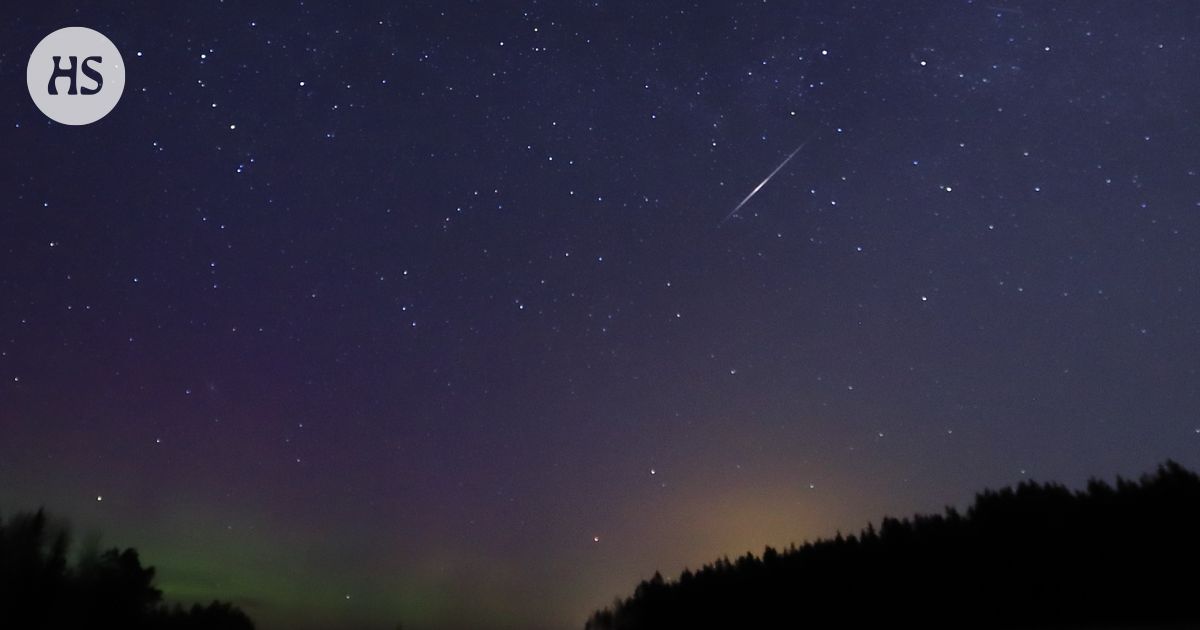
Space|The last flock of shooting stars of the spring will be active next week. The best observation time is the evening of Wednesday, April 22.
The Lyrid shooting star swarm will be active next week, and the best shooting stars can be seen in the evening on Wednesday, April 22.
According to Ursa, in southern Finland you can see a few lyrids per hour at best, but the growing Moon disturbs observations with its light.
The Lyrid shooting stars are caused by the dust and debris left by Comet Thatcher drifting into the Earth’s atmosphere.
Lyridian Meteors from the shooting star cluster can be seen in Finland next week, although infrequently. The swarm is active from the 14th to the 30th. April, and the best observation time is the evening on Wednesday, April 22, the astronomical association Ursa says in its announcement.
The relatively unassuming Lyrids are the last flock of shooting stars in spring in Finland, as the nights become brighter and brighter as we move towards summer. The waxing Moon will disturb Lyrid sightings with its light this year.
The most shooting stars can be seen in the evening on Wednesday of next week, and you should start observing after eleven in the evening. On the peak night, you can see a few lyrids every hour in southern Finland.
The more you can see the shooting stars of the Lyrids, the further south you are in Finland, because in the north it no longer gets properly dark at night.
You should turn your head so that the Moon in the western sky does not hit your field of vision, or shade your eyes from its brightness with your hand, for example, Ursa advises.
Loft got its name from the fact that its meteors appear to come from the direction of the Lyra constellation.
During the most active phase of the Lyrids, you can also see exceptionally bright shooting stars, i.e. fireballs. However, according to Ursa, the Lyrids are not usually accompanied by larger bodies that could fall as meteorites all the way to the Earth’s surface.