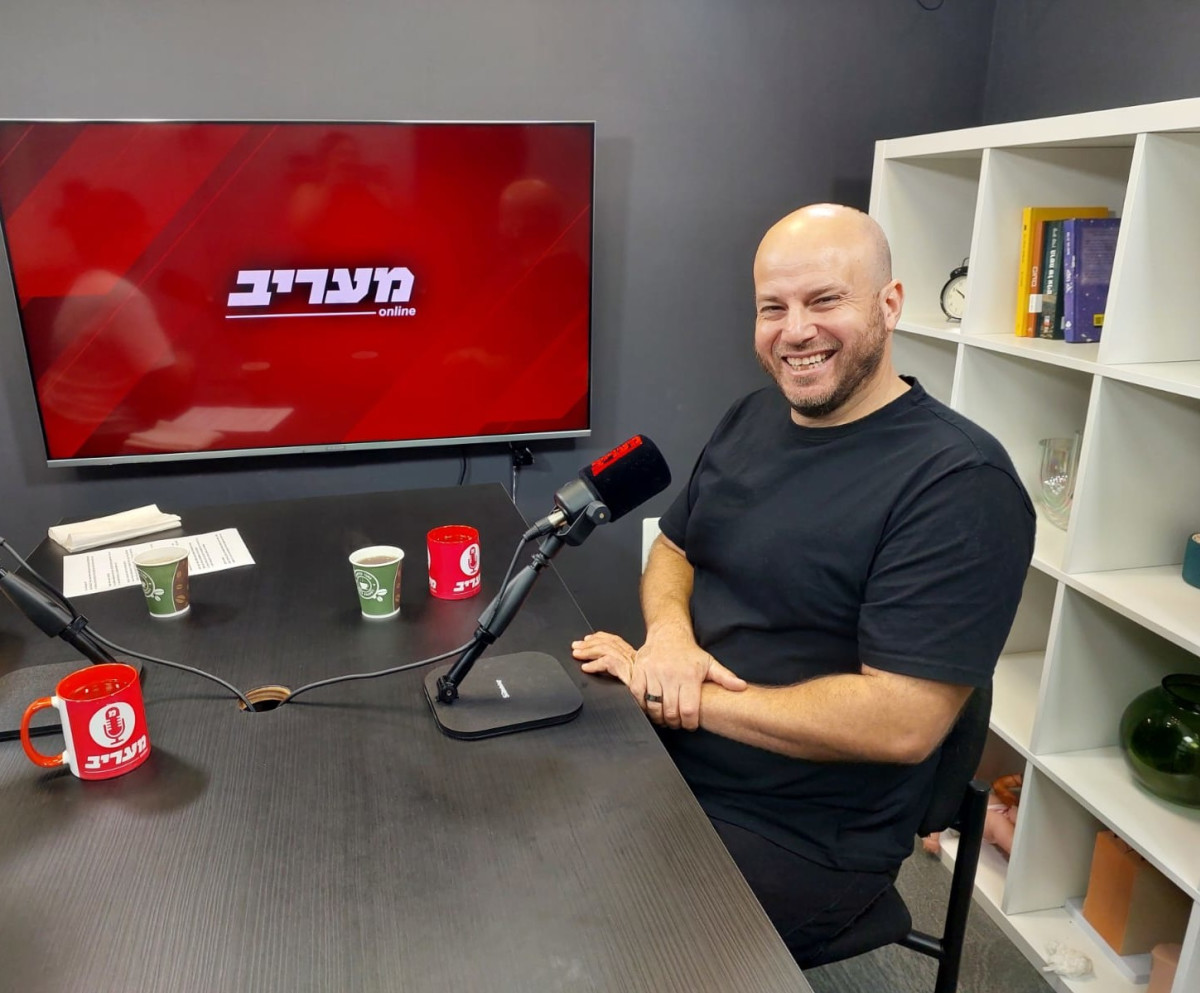
The cyber world changes at the rate of quarters, maybe even less. While companies like Entropic repel thousands of attacks per minute and identify loopholes that even the developers didn’t see, the human mind is left behind. In a special episode of the “Maariv” cyber podcast, Einat Miron hosts Professor Oz Guterman for a conversation that goes beyond security protocols.
This is a journey into the psychology of the decision makers – those who choose to ignore the invisible threat, those who only play “attack”, and those who need an entirely different motive to act. From learning disabilities in high school to a secret hideout built 15 years ago, Gutterman explains why the ability to contain threats is the key to business continuity in a world where dictatorships never stop.
Oz, you came back to us. Half a year has passed since the last conversation and in the cyber world that is an eternity. Look at that, half a year and the “Entropic” company was able to identify huge loopholes with the help of an AI agent called “Mithos”. What amazed me was that they were so afraid of a rapid escalation of the event, that they simply stopped everything. This brings us back to the question of the ability to stop the development of dangerous technology.
The essential point is that you can’t really stop. The Chinese are working on AI all the time, and they are not stopping. If the whole world were democracies, we could make an agreement and stop. But in a world where you’re up against a dictatorship, you just can’t stop. If you stop, it will just come from the direction of China, and then the situation will be very bad.
And that brings us to the concept with which we ended the previous conversation that dealt with mental flexibility. I thought that was the main thing, but you claimed that it was something completely different. You explained that it was a ‘difficulty containing threats’.
right. There is a profound difference. Mental flexibility is the tool of the 21st century. It is critical when something doesn’t work – have you failed in a marketing process? Mental flexibility will help you pivot and change job positions. I, for example, graduated from high school without matriculation because back then they didn’t know how to work with learning disabilities. If I didn’t have the mental flexibility to understand that it was possible to prepare and find detours, I would have been in trouble. But in the context of cyber, it is less relevant.
15 years ago I built a secret hiding place for the children at home. People thought I was crazy, but my perception is that there is not one “future”, there are “futures”. Everything can collapse, can be a ‘Mad Max’ scenario. Most people see a straight line of routine, they don’t see the “black swan”, the jumps in the line. To prepare for these jumps you have to be able to accept threats, and this is something we are not comfortable doing.
This is exactly the face that most CEOs give me when I talk to them about cyber. A feeling of “It won’t happen to me”. Even Dr. Yuval Steinitz, who was here last week, surprised me. The man who established a cyber system in the Ministry of Energy and led tremendous reforms, told me: “I do what the Ministry of Defense tells me and that’s it.” I expected him, as chairman of Rafael, to say “I’m on it”.
It doesn’t surprise me. It has to do with the difference between an offensive player and a defensive player. Steinitz, and most good CEOs, are offensive players. They ask “where is the next opportunity?”. They learn to take calculated risks and run forward.
I, on the other hand, am a defensive player. From the age of 21 I started saving for retirement. why? Because I always thought about the worst case scenario. How to prepare for a situation where I won’t have money. I teach my children to invest from the age of 12. They take an investment course for adults and put 80% of their money in investments. It comes from fear, from playing defensively. When you come to an offensive CEO and talk to him about threats, he puts it aside because that’s not his mindset.
If you talk to an innovative CEO in the language of threats and defense, you’ve lost him. Talk to him about innovation and how this preparation will make him a market leader. It’s interesting, because when I look at myself – I’m perfecting myself. I have to know how things work. As soon as I understood the scientific rationale of how weights change the composition of the body, I got into it 200 percent.
And here again is the difference between us. We were both at the gym this morning. My goal was one: not to get injured. I’m a defensive player. I work on subtleties of a millimeter in technique so that I can continue to function until the age of 100. You are looking for the “grind”, the heavy weight, the achievement. When you come to sell preparedness for cyber risks to the CEO, you need to recognize if he is like you – wants to win and conquer, or like me wants to make sure he doesn’t get injured (or collapse). Proactivity means understanding that it’s “up to me”. Not what the state will do or what the MLA will say. What am I doing inside my lot?
https://europeanbusinessmagazine.com/5-best-prop-trading-firms-in-india/
https://gazeta.nash-mir.kz/
https://nash-mir.kz/
https://almaty.pin-up-kz.cn.com/
https://almaty.pin-up-kz.cn.com/online-kaz/
https://www.better-tourism.org/where-to-drink-wine-in-florence-authentic-places-beyond-the-usual-tourist-stops/
https://www.travel-rs.com/wine-bar-florence-how-to-enjoy-tuscan-wine-in-the-historic-center/
https://www.traveltourisminfo.com/wine-tasting-florence-a-more-authentic-way-to-discover-the-city/
https://diez4.com/guiding-ontarians-through-lifes-uncertainties-with-smart-insurance-solutions/
https://coralcea.ca/future-proof-your-home-insurance-tips-for-ontario-homeowners/
https://architectureforhumanity.ca/protect-your-business-liability-challenges-facing-ontario-contractors/
https://edmontonautoinsurance.org/ontario-auto-insurance-for-beginners-save-more-on-your-first-policy/
https://calgarycarinsurance.net/smart-ways-to-lower-your-car-insurance-costs-in-ottawa/
https://argentummortgages.ca/finding-the-right-insurance-broker-in-ontario-for-your-needs/
https://lunarama.net/car-insurance-in-ontario-what-you-need-to-know-before-you-buy/
https://iaphare.org/top-car-insurance-claims-in-ottawa-and-how-to-prevent-them/
https://sonjajobson.com/how-location-impacts-your-car-insurance-premium/
https://salescoachworld.com/does-contractor-insurance-cover-property-damage/
https://www.socfoot.com/how-deductibles-affect-home-insurance-costs/
https://windowswave.com/how-home-security-systems-lower-insurance-costs/
https://artistery.net/does-home-insurance-cover-home-businesses/
https://www.ressud.org/tips-to-speed-up-your-car-insurance-claim/
https://laurenceanyways.ca/what-documents-do-you-need-to-register-a-vehicle/
https://robertsplace.ca/how-often-do-you-need-to-renew-your-vehicle-registration/
https://atelier1a.com/do-you-need-insurance-to-renew-your-vehicle-registration/