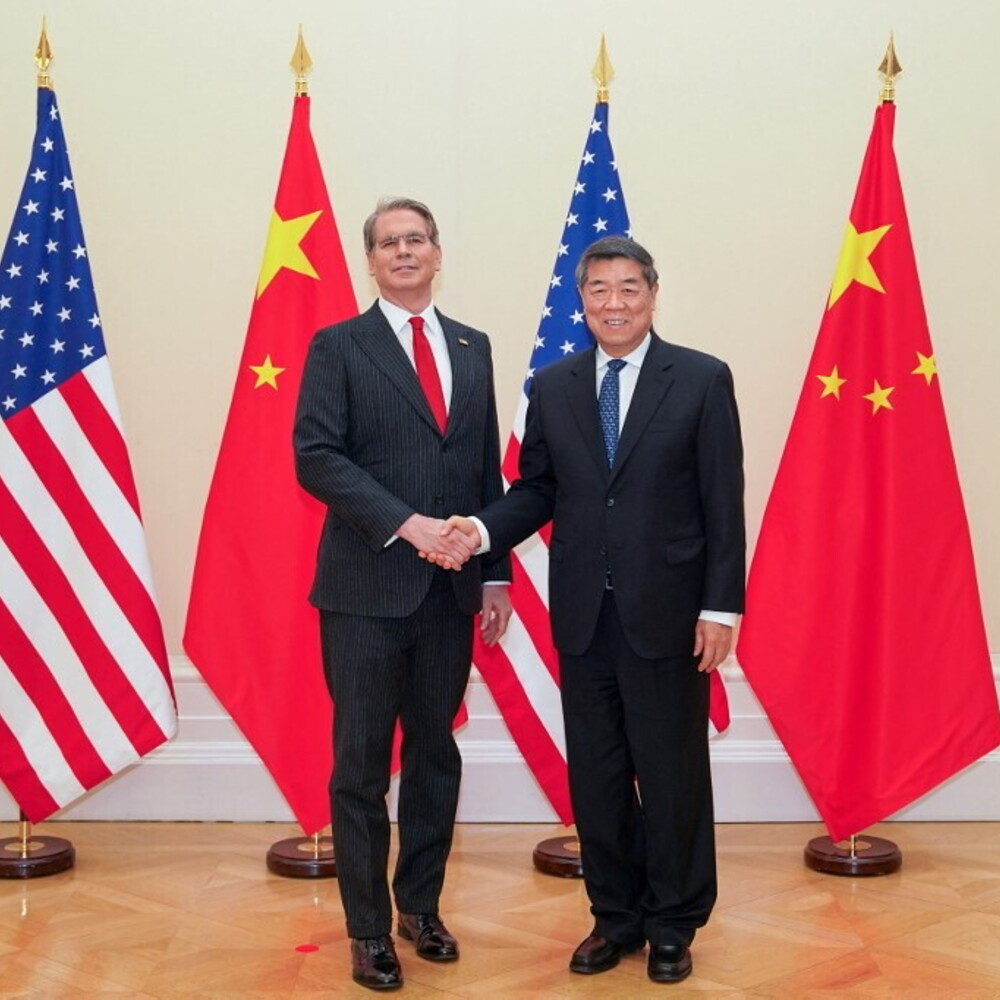
The trade war among them United States and the China begins in 2018, during the first presidency Trump with the American president announcing on January 22 of that year duties between 20% and 50% on solar panels and washing machines imported from China. The push and pull continues until January 2020 when a “phase one” deal is signed leading to a reduction in tariffs and commitments from Beijing to increase the purchase of American goods. Tensions continue even under the presidency of Joe Biden which increases tariffs to 100% on electric vehicles50% on solar cells and 25% on batteries for electric vehicles, critical minerals, steel and aluminium.
New duties at the beginning of the mandate
We arrive at the second Trump presidency. As soon as he took office, on February 1, 2025, the tycoon increased tariffs on Chinese goods by 10%. Beijing’s response was immediate, announcing tariffs of 15% on coal and liquefied natural gas-based products and 10% on crude oil, agricultural machinery and large-engined cars on February 4th.
The American response and Chinese countermeasures
One month after the American response: increase of a further 10% of customs duties on Chinese goods, bringing them to a total of 20%. On March 4, China imposes a 15% tariff on chicken, wheat, corn and cotton from the United States and 10% tariffs on sorghum, soybeans, pork, beef, seafood, fruits, vegetables and dairy products from the United States.
April 2, 2025 is the Liberation Day with the American president announcing new global tariffs. Those about Chinese goods are increased by a further 34%. There White House confirms that the tariffs would be in addition to previous impositions, with an effective rate of 54% on all Chinese imports in United States starting from the following week. After a back-and-forth that brought tariffs on some Chinese goods up to 245%, the two countries reached an agreement on May 12 to reduce tariffs in an effort to ease trade tensions. The United States accepts a 30% level on products made in ChinaWhile Beijing responds with reductions on US products of 10%. Both parties agree to evaluate the situation after 90 days.
THE “TRUECE” UNTIL NOVEMBER 2026
After the agreement of Geneva of May 2025, i mutual duties of Trump fall from 145% to around 30% (depending on the goods), while China reduces its countermeasures from 125% to 10%. They remain in force sectoral duties additional on steel, aluminium, motor vehicles and specific categories. In October 2025, the two powers agreed to extend the temporary trade “truce” by one year, which will expire in November 2026. The focus now is on the extension of this truce, also in view of Trump’s visit to Beijing which begins tomorrow.
Exports grow despite tariffs
Despite the duties, in April 2026 the Chinese exports towards the USA increased by 11.3% on an annual basis, a sign that the duties had a limited impact on the Chinese “export machine”. In summary, the situation is much more relaxed compared to the critical phase of 2025, when duties reached 145%, but it remains a basic level significant around 30% for most products.
https://registeredagentalabama.us/llc-registered-agent/
https://registeredagentalaska.us/llc-registered-agent/
https://registeredagentarizona.us/llc-registered-agent/
https://registeredagentarkansas.us/llc-registered-agent/
https://registeredagentconnecticut.us/llc-registered-agent/
https://registeredagentmississippi.us/llc-registered-agent/
https://registeredagentmissouri.us/llc-registered-agent/
https://registeredagentnorthcarolina.us/llc-registered-agent/
https://registeredagentnewmexico.us/llc-registered-agent/
https://registeredagentoregon.us/llc-registered-agent/
https://registeredagentwisconsin.us/llc-registered-agent/
https://nvregisteredagent.us/llc-registered-agent/
https://registeredagentkansas.us/llc-registered-agent/
https://registeredagentnebraska.us/llc-registered-agent/
https://registeredagentnewhampshire.us/llc-registered-agent/
https://registeredagentnewyork.us/llc-registered-agent/
https://registeredagentoklahoma.us/llc-registered-agent/
https://registeredagentpennsylvania.us/llc-registered-agent/
https://registeredagentiowa.us/llc-registered-agent/
https://registeredagentmaine.us/llc-registered-agent/
https://registeredagentsouthdakota.us/llc-registered-agent/
https://registeredagentmontana.us/llc-registered-agent/
https://registeredagentnewjersey.us/llc-registered-agent/
https://registeredagentnorthdakota.us/llc-registered-agent/
https://registeredagenthawaii.us/llc-registered-agent/
https://registeredagentvermont.us/llc-registered-agent/