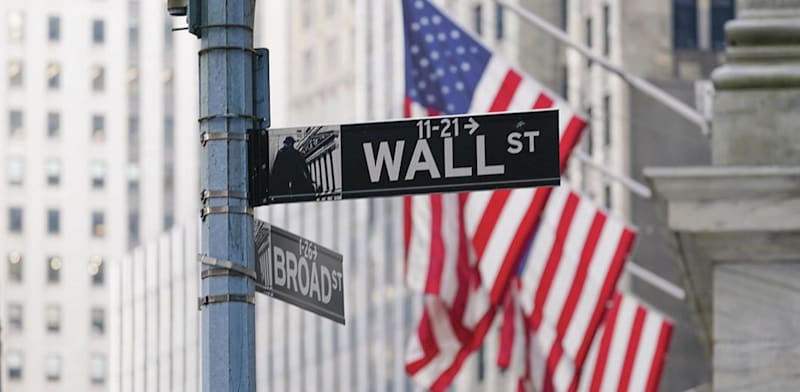
Trade overview: current reports, trends, indices, stock prices, bonds, foreign exchange and commodities and analyst recommendations
17:00
The negative trend on Wall Street continues – the Nasdaq falls by about 0.7%, the S&P500 index loses its value by about 0.5% and the Dow Jones registers a decrease of 0.4%.
At the same time, the cyber security company Check point under the management of Nadav Zafarir, announces the launch of an AI-based autonomous network security system platform for the management and security of corporate networks – an architecture that, according to the company, will allow the corporate network to operate in a continuous, secure, accurate and compatible manner with the organization’s needs, without the need for constant human intervention.
As part of the move, Check Point acquires the technology and staff of Deepchecks, which developed a platform for monitoring, testing, evaluating and improving LLM applications and AI agents throughout the development and production phases. This is a purchase that is estimated at a low double-digit amount of millions of dollars, while according to finder data the company has raised 14 million dollars so far.
Meanwhile, Check Point is up about 2% on the Nasdaq.
16:35
Against the backdrop of security tensions with Iran, the trading day on Wall Street opened with a negative trend. The Nasdaq falls by about 0.5%, the S&P500 index loses its value by about 0.5% and the Dow Jones registers declines by about 0.8%.
At the same time, the increases in Europe also moderated a little – the DAX rises by about 1%, the CAC adds to its value by about 0.2% and the Posti trades stably.
15:40
The European trading day follows a positive trend – the German DAX rises by about 1.5%, the French CAC adds to its value by about 0.8%, and the Postie registers an increase of about 0.7%.
At the same time, in the US the futures are in a negative trend – the Nasdaq is down about 0.8%, the S&P500 index is losing its value about 0.5% and the Dow Jones is down about 0.2%. This is, among other things, following the continued sale of Shabbavim shares – Maniyat Micron for example, is down about 2% in early trading, marking its fourth consecutive day of declines.
12:56
Macro in Europe today –
The unemployment rate in Great Britain rose to 5% in the three months that opened the year (until March), compared to 4.9% in February. Economists expected the unemployment rate to remain stable.
Jack Kennedy, a senior economist at the Indeed platform, noted that the war with Iran is expected to severely cloud growth in the UK in the coming quarters, and further limit the demand for hiring. He added that the volatile local political background “adds uncertainty that businesses would prefer to do without.”
“For the Bank of England (BOE), the unemployment data will not do much to resolve the differences of opinion within the monetary committee,” he said. “An interest rate increase in June remains on the agenda in view of the inflationary pressures arising from rising global energy prices, but since the monetary policy is already restraining, the committee has to balance this against the significant risks of further deterioration in the labor market.”
At the same time, the meeting of finance ministers and central bank governors of the G7 countries was closed in Paris. The meeting marked the war with Iran and the ways to reduce the global economic shock from the conflict.
The French Minister of Finance, Roland Lascor, who serves as the chairman of the G7 meeting this week, told CNBC yesterday that it is important to understand the impact of the crisis on growth, inflation and budget deficits before making decisions.
In the corporate sector, the German government announced its intention to re-privatize the energy group Uniper, which was bailed out by the state during the European energy crisis in 2022 at a cost of €13.5 billion ($15.71 billion) to taxpayers.
The government, which owns a 99.12% stake in Unifer, has announced its intention to sell the group or float it on the stock market, in what could be one of the biggest European deals of the year.
12:12
In contrast to Asia and the contracts on Wall Street – trading in Europe is on a positive trend. The Frankfurt Stock Exchange rises by 1.3%, Paris and London by 0.6%.
09:10
In Asia this morning, the South Korean stock market is down 2.5%, in Japan the Nikkei index is down 0.5%, Hong Kong and Shanghai are up slightly.
Wall Street futures are down slightly by up to 0.3%.
Yesterday in New York, the trading day was mostly down, when there was a moderation towards the closing. This, after Trump claimed on the TRUTH network that the attack on Iran was planned for tomorrow but he responded to the request of Qatar, Saudi Arabia and the United Arab Emirates to postpone it.
In the end, trading closed with a mixed trend: Nasdaq fell by about 0.5%, the S&P500 index fell by about 0.1%, while the Dow Jones rose by about 0.3%. The index of chip companies (SOX) lost 2.5%. The opposite and completely illogical relationship between the chip companies and the software companies continued yesterday as well. The IGV basket fund rose by 1.2%. Crowdstrike jumped.
The one who stood out in her decline was a friend Seagate which plunged by about 7%. This, after the company’s CEO Dave Mosley warned of difficulties in meeting the demand related to artificial intelligence. According to him, building new factories “will simply take too long”. Mosley’s words fueled investors’ concerns that the sector will not be able to increase production enough to meet the sales boom driven by artificial intelligence. The market reacted immediately: the stock of Micron chips fell by about 6% during trading.
Another stock that stood out negatively was Mobileye which fell by about 7%, after the Jefferies investment house set its target price per share at $8 and warned that the company is facing increased competitive pressure and is already pricing in potential from improving the autonomy systems.
also Tesla was in the headlines and fell by about 3%, after the owner Elon Musk suffered a significant loss yesterday (Monday) in a US federal court, the jury rejected the huge lawsuit he filed against OpenAI and the company’s CEO Sam Altman.
US government bond yields continue to rise. Against the background of a wave of sales in the global bond markets and the meeting of the finance ministers of the G7 countries in Paris. The yield on the 10-year US government bond, the main reference index for borrowing costs of the US government, rose to 4.601%, its highest level in 15 months. The 30-year bond yields at a 3-year high,
And globally, bond markets are collapsing, pushing borrowing costs to multi-year highs, while fears of war-driven inflation and government spending grow.
The yield on 30-year US government bonds is trading around its highest level since 2023, while the corresponding yield in Japan has surged to levels not seen in the bond’s 27-year history. In Britain, the yield is the highest since 1998.
When you put it all together, the average 10-year yield across the G7 countries (the seven richest countries in the world) is the highest since 2004, according to Torsten Slok of Apollo Management.
There are several reasons for the rising yields in the world – while inflation proved to be sticky already at the beginning of this year, it received a new stimulus following the US war with Iran, which has been going on for almost three months now, and the rise in oil prices.
The investment boom in artificial intelligence increases the demand for semiconductor chips which pushes their price up. In turn, this makes consumer electronics, cars and other products that depend on them more expensive – a phenomenon known as “chipflation”.
Politicians from Tokyo to Washington promise to spend more or cut taxes, and are under pressure from an increasingly populist electorate. But their countries have already borrowed heavily during the pandemic, so the question arises of how much further debt levels can rise. The International Monetary Fund (IMF) estimates that global public debt is on track to reach 100% of gross domestic product (GDP) by 2029, compared to 95% last year.
Investors fear that central banks are lagging behind in the fight against inflation. This prompts them to bet that key interest rates may remain high for longer. Higher interest rates make yields on existing bonds less attractive to investors, leading to lower prices.
In the commodities market, the fear in the markets about the renewal of the war with Iran, with the harsh rhetoric of US President Donald Trump in the background, raised oil prices to a level of more than $100 per Brent barrel. This completes the black gold’s 23% jump in the last month.
At the same time, the dollar strengthened in the past week against the basket of currencies (including the shekel) by more than 1%. According to Rafi Gozlan, the chief economist of the IBI investment house, this was due to “the renewed increase in oil prices and the increase in inflation expectations (the fear of an increase in inflation, NA) that led to the change in sentiment in the markets last week.
The exchange’s research unit added that “the continuation of the strengthening trend of the dollar in the coming weeks will depend mainly on three key factors: oil prices, inflation data in the US and the development of the Fed’s interest rate expectations. As long as bond yields in the US remain high and the markets continue to price a high interest rate environment over time – the dollar is expected to continue to benefit from strong global demand. On the other hand, geopolitical calm or a sharp drop in yields may lead to a certain correction in the American currency.”
Oil price increases moderated after Trump’s words. The price of a barrel of Brent oil now stands at $108, after already reaching $110 during trading. The price of crude oil stands at $103.
Macro – Inflation data in the US (annual rate of 3.8%), the highest level since May 2023, will likely influence the next interest rate decision there. Beyond that, Idan Azoulai, Chief Investment Officer, Sigma-Clarity Investment House claims that “the high index reminded the world that inflation is not born only from excess demand, high wages or expansionary monetary policy. Sometimes it is born from a physical deficiency, which was not felt until now because everything flowed. But it existed mainly as a result of prolonged underinvestment in infrastructure – such as refineries, metal processing facilities or electrical infrastructure.”
Therefore, he estimates that the USA, Europe and other countries will be required to reinvest in refining facilities, mineral processing plants and electrical infrastructure in the coming years. “This is a transition from a world where the question was who produces the cheapest, to a world where the question is who is able to produce even during a crisis,” Azulai concludes.
https://22bet-pl.pl/bonusy/kody-promocyjne/
https://22bet-pl.pl/bonusy/cashback/
https://22bet-pl.pl/bonusy/vip/
https://22bet-pl.pl/platnosci/
https://22bet-pl.pl/platnosci/wplata/
https://22bet-pl.pl/platnosci/wyplata/
https://22bet-pl.pl/platnosci/paypal/
https://22bet-pl.pl/kasyno/
https://22bet-pl.pl/kasyno/aviator/
https://bcgame.com.nl/bonus/welkomstbonus/
https://bcgame.com.nl/bonus/geen-storting/
https://bcgame.com.nl/bonus/gratis-spins/
https://bcgame.com.nl/bonus/promocodes/
https://bcgame.com.nl/bonus/cashback/
https://bcgame.com.nl/bonus/rakeback/
https://ggbett.de.com/about/
https://ggbett.de.com/login/
https://ggbett.de.com/registrieren/
https://ggbett.de.com/verifizierung/
https://ggbett.de.com/konto/
https://ggbett.de.com/support/
https://ggbett.de.com/affiliate/
https://ggbett.de.com/partner/
https://ggbett.de.com/karriere/
https://ggbett.de.com/app/