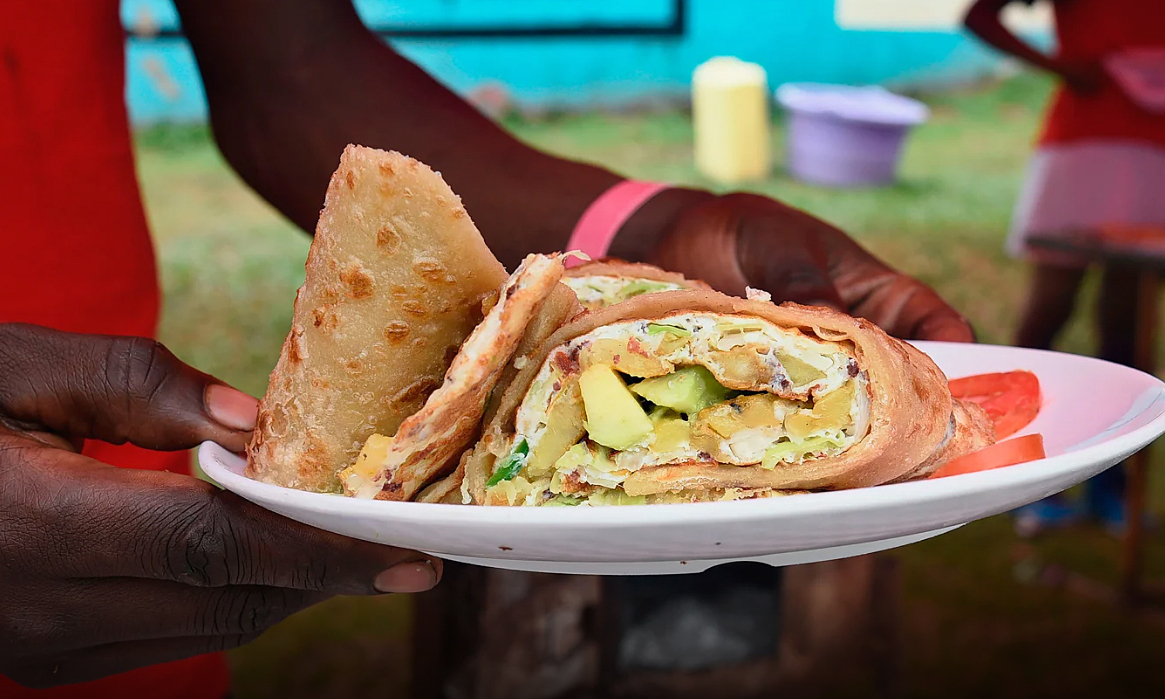
In Uganda, Rolex is not the name of a Swiss luxury watch brand, but a street food, considered the “national cuisine” in this East African country.
When Emmanuel Jonathan Okello decided to open a restaurant, he knew his menu had to include a Rolex. This local chef shares a familiar saying in Uganda: “We don’t wear Rolexes here, we eat them.”
The unique name of the dish actually has nothing to do with the high-end watch. This dish consists of a layer of fried egg rolled inside an Indian-style chapati flat bread. When pronouncing the phrase “rolled eggs” in English at a fast pace with the local accent, it sounds exactly like the word “Rolex”. This interesting homonym has since become the name for the dish.
Rolex dish with Indian bread crust and mixed fillings. Image: CNN
The ingredients for the crust are similar to paratha (a type of Indian flat bread): flour, salt, warm water and a little cooking oil. The dough is rolled into balls, thinly rolled and then pan-fried. The filling inside is beaten eggs, fried thinly, sprinkled with cabbage and tomatoes and then rolled up tightly.
Initially, this was just cheap food for workers in the east of the country. The popularity of this street food is largely driven by students. A portion of a Rolex on the street costs around $0.20, the perfect price for a college student’s tight budget while still keeping him full all day.
Author Jonathan Kabugo, who wrote the cookbook titled How to Rolexsaid this dish has brought great innovation to Ugandan cuisine, which favors meat and vegetables cooked in sauce served with potatoes or bananas. Rolex’s fast, convenient and easy-to-do characteristics also help many poor people start businesses to support themselves.
Rolexes are made and sold on the streets of Uganda. Image: CS Monitor
From the sidewalk, Rolex today has crept onto the menus of trendy cafes and luxury restaurants. Okello came up with the idea to upgrade the dish after a trip to the tourist town of Jinja, where he encountered a street vendor adding fried tripe to the filling.
His Rolex Guy restaurant in the capital Kampala currently serves dozens of variations such as: Rolex rolled with beef sausage, curry, bacon, butter or minced beef. A premium Rolex here costs $5.50. Okello is even experimenting with “Rolex pizza”, in which finely chopped chapati is mixed with eggs to make the crust.
Rolex dish served with french fries in a restaurant in Uganda. Image: CNN
At the Endiro cafe, diners can order Rolex’s twist on a Greek salad with sundried tomatoes, olives, spinach and feta cheese.
To date, Rolex carts have become popular in neighboring countries such as Kenya, Rwanda and Burundi. Realizing the huge potential, Uganda’s Ministry of Tourism has even included this dish in its national promotion strategy, organizing the annual Rolex Festival to attract international tourists.
Chef Fathi Reinarhz, owner of the Epicure rooftop restaurant in South Africa, compares going to a Ugandan restaurant and not eating a Rolex to going to an Italian restaurant and not ordering pizza.
“Nothing represents Ugandan cuisine more clearly than Rolex,” affirms chef Reinarhz.
Regarding the possibility of causing confusion with a famous watch brand, local culinary experts humorously said that the Swiss watch company should “feel proud” of this coincidence.
https://chicken-road-sk.sk/demo/
https://chicken-road-sk.sk/bonus/
https://chicken-road-sk.sk/bonus/promo-kody/
https://chickenroad-slovakia.sk/chicken-road-2/
https://chicken-road-sk.sk/aplikacia/
https://chicken-road-sk.sk/zodpovedne-hranie/
https://chicken-road-sk.sk/zmluvne-podmienky/
https://chicken-road-sk.sk/ochrana-sukromia/
https://gatesofolympusdemo.lv/kazino/
https://gatesofolympusdemo.lv/demo/
https://gatesofolympusdemo.lv/kazino/bezmaksas-spele/
https://ifortunask.sk/podpora/
https://gatesofolympusdemo.lv/kazino/reala-nauda/
https://gatesofolympusdemo.lv/bonusi/
https://chicken-roads-sk.sk/chicken-road-2/
https://gatesofolympusdemo.lv/bonusi/promo-kods/
https://gatesofolympusdemo.lv/lietotne/
https://gatesofolympusdemo.lv/lietotne/android/
https://gatesofolympusdemo.lv/lietotne/ios/
https://gatesofolympusdemo.lv/atbildiga-spelesana/
https://gatesofolympusdemo.lv/lietosanas-noteikumi/
https://gatesofolympusdemo.lv/privatuma-politika/
https://gatesofolympus.com.lv/kazino/
https://gatesofolympus.com.lv/demo/
https://gatesofolympus.com.lv/kazino/bezmaksas-spele/