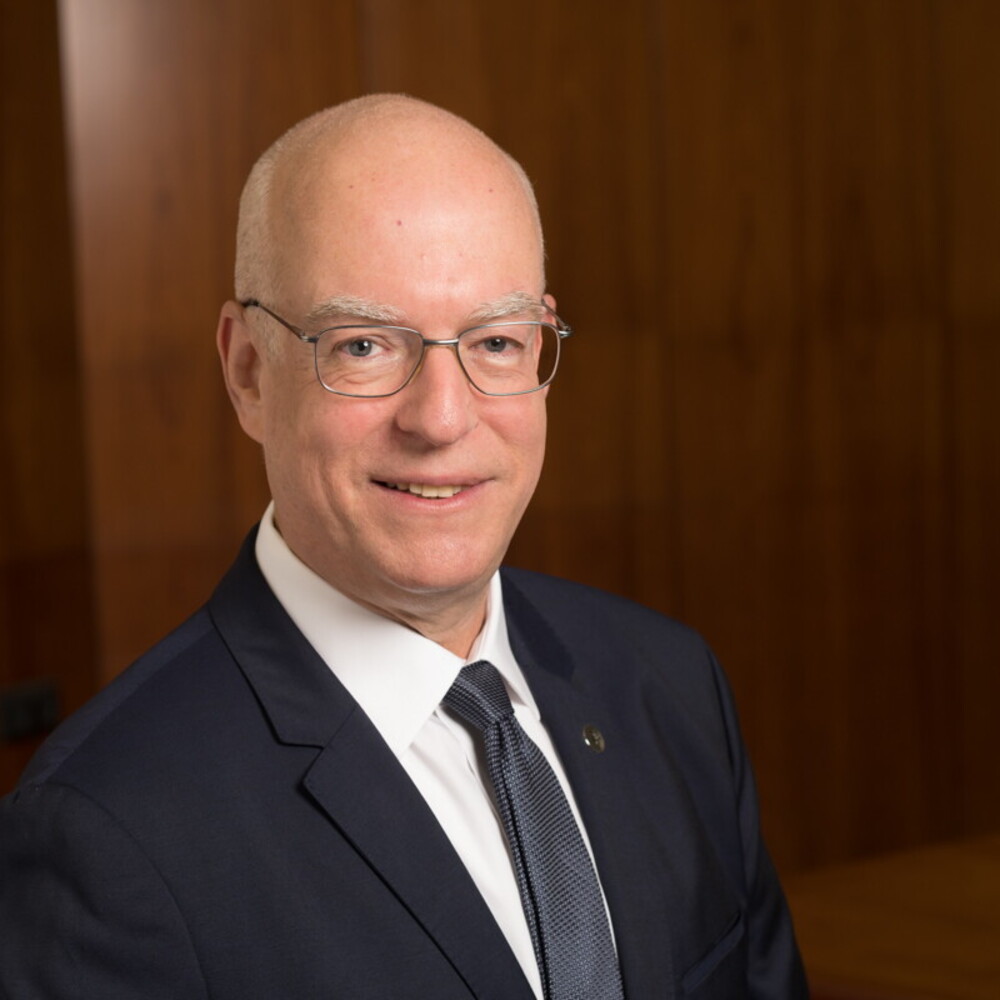
Israel experiences an existential threat that does not only come from the external war fronts, but which is internal, concerns his society and puts at risk the very nature of the Jewish State in its democratic and liberal form, as it has been since its foundation. Faced with this, we cannot remain silent but it is necessary to speak, putting aside the required neutrality, in particular of public figures and institutions. He is convinced of it Ariel Poratpresident ofTel Aviv University.
In “a worrying and unstable present” like the one Israel is experiencing, academic institutions have “the freedom, and sometimes the duty, to take a public position on issues of public importance, even when they go beyond the confines of the campus”, he underlines in an interview with AGI. Recognizing the importance for universities and their leaders to maintain the principle of neutrality with respect to controversial public issues, Porat argues that there are three exceptions: when the institution itself or the academic freedom is threatened, when it is the character that is in danger democratic of the State and when it comes to serious violations of human rights which the authorities are unable to prevent or even carry out. For the law professor, in these cases expressing oneself publicly and issuing “warnings against an existential danger for society entails a benefit that outweighs the harm of temporarily compromising neutrality”. “When a person is convinced, based on careful examination, that his country is in danger, how can he be prevented from expressing his opinion?”, he underlines to AGI.
In this regard, Porat refers to the struggle waged by Israeli government against the Supreme Court. “In liberal democracies, Israel understood since its foundation, it has never happened that the executive power has intentionally disobeyed an order of the Supreme Court”. If this were to happen, as repeatedly threatened by the prime minister Benjamin Netanyahu and by several ministers, “it would be a constitutional crisis. And in my opinion, in the most extreme situation, it could even degenerate into serious violence between citizens. And if this were to happen, I believe that public figures, including university presidents, should do everything possible to prevent it”, even going as far as “closing universities, which is the most extreme measure we can take”, he says.
Internal scenario and risks
This is a gloomy scenario that reflects the worrying internal situation. “Israel it is militarily strong, capable of defending itself, it has demonstrated this several times, but when it comes to internal rifts in society, the risk to Israel’s existence is far greater than anything else.” These are strong statements, certainly not made lightly by the president of the university, aware of his role, both inside and outside the campus.
Public role and responsibility
But precisely for this reason, he is keen to point out that his words are never generalised. “When I criticize, I do not criticize the government in general, but only specific behaviors or actions that violate the freedom ol’academic independencelo rule of law or human rights. I have my political opinions, which I keep to myself, aware of my role as president of a public university.”
Possible consequences
“Potentially – adds Porat – we could pay the price. We, like everyone else public universitieswe depend on government funding and donors; some of them may not appreciate our criticism of the government. But I am proud that our university is liberal, democratic and pluralist. And if someone doesn’t share our values, they can turn their support to another university that shares others.”
Position of the academic senate
An example was the statement released a few weeks ago by Academic Senate of the university, which warned against Jewish terrorism rampant in the West Bank and attributed moral responsibility to the government and security forces. In the document, the president recalls, it was underlined that “silence is a moral stain and that ‘the strength of the State of Israel is measured not only by the power of its weapons, but first of all byintegrity of its values‘”. And he concluded by asking the authorities for “more incisive measures to prevent this type of atrocity”.
Reactions and academic support
The reactions to these words have been varied, some negative, but I “am proud” of the Senate for this position taken, underlines Porat. And remember that in the following days, the Weizmann Institute adopted the same declaration and over half of the thousand professors at the Hebrew University of Jerusalem expressed their support for a very similar text in a petition.
Final appeal
“We cannot turn a blind eye and hope that these things don’t happen. This is the responsibility of all of us Israelis, including universities, and we do not have the privilege of remaining silent.” “We live in crucial times, in which Israel’s existence – not its physical existence, but its democratic nature – is at risk,” he concludes. “And I think more public figures should talk about it out loud.”
https://communityhub.sage.com/members/philq-tompskiy
https://www.behance.net/mishavan
https://www.zazzle.com/mbr/238559612937791526
https://www.sandhillpreservation.com/profile/philpcstart44228/profile
https://dodgeforum.com/forum/members/402426-kelvinwrithe63.html
https://www.aicrowd.com/participants/kelvin9
https://www.acreauburn.com/profile/mishavan734154/profile
https://twitback.com/77c1de6c3
https://projectnoah.org/users/mishavan
https://www.jointcorners.com/d9cb1f36f
https://delta72.at.ua/forum/101-37841-1
https://www.cyberpinoy.net/mishavan7
https://zomi.net/0fedd1d0b
https://monochrome-wolf-hq0fck.mystrikingly.com/
https://allaboutschool.activeboard.com/m3881833/profile/
https://www.hogwartsishere.com/1841318/
https://gamesslots1.blogspot.com/2026/05/sultangames-sultangames-vip.html
https://codeforphilly.org/people/mishavan7
https://akniga.org/profile/1423388-kelvin/
https://6a020ef4b9b58.site123.me/
https://app.smore.com/n/xpmvn-the-weekly-update-4
https://hackaday.io/mishavan
https://rf4game.ru/forum/index.php?/profile/104136-mishavan7/&tab=field_core_pfield_1
https://no.tripadvisor.com/Profile/philtF7422WE
https://www.weddingbee.com/members/Serg%20Nowaday/