Thanks to mastery of the supply chain and strong digital marketing capabilities, Chinese businesses can easily revive Western brands after acquisition.
In 2018, Chinese kitchen appliance manufacturer Joyoung announced that it would spend 12.49 million yuan (1.87 million USD) to buy a 51% controlling stake in vacuum cleaner manufacturing company SharkNinja (USA).
Joyoung and SharkNinja completed the merger in 2019, under the control of JS Global. Mr. Yuan Ding, Cathay Capital Accounting Professor, Former Dean of China-Europe International Business School, recalled that at that time many people predicted that cultural conflicts and diluted brand identities would eventually lead to a downturn for American brands.
However, SharkNinja then accelerated its product innovation cycle, adapting better to markets like Japan and the UK, surpassing many established rivals. In the past 5 years, SharkNinja shares on the New York stock exchange increased 359%, with capitalization currently at 17.47 billion USD.
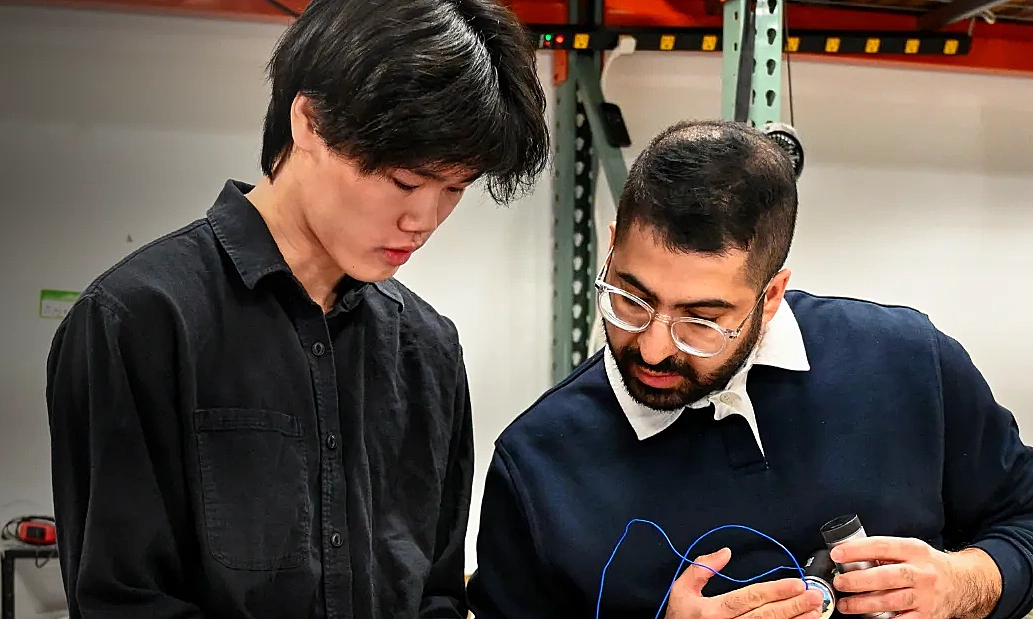
Personnel working at SharkNinja. Image: SharkNinja
According to professor Yuan Ding, the same thing happens when Chinese businesses acquire Western brands with hundreds of years of history such as Flex, SKIL or high-end dietary supplement company Swisse (Australia). “The businesses currently controlled by China are growing very well,” he said.
Summarizing after more than a decade of research, consulting and teaching about multinational businesses, especially cross-border mergers and acquisitions (M&A), Professor Yuan Ding and his colleagues point out the motivation for Western companies to sell themselves and how Chinese businesses “revive” them.
Specifically, there are two groups that often choose the path of “selling themselves”. One is the long-standing brands, built during the period when the West controlled the entire value chain, from production, design to branding.
With the desire to improve financial efficiency, they gradually expanded outsourcing in Asia, from manufacturing to design and product development. Over time, many of its suppliers rose up to compete, causing the Western brand’s advantage to erode.
The second group is startups from the US, UK or Australia, specializing in developing technology, brands and outsourcing production. After initial success, they hit limits when they wanted to expand the market, with rising costs and limited capacity to bring innovations to industrial scale and commercialization.
“Both of the above motives lead to Western businesses being acquired by Chinese companies,” Professor Yuan Ding pointed out. For example, Geely buying Volvo is the first group, while Joyoung buying SharkNinja is the second case.
After the acquisition, the expert group pointed out that Chinese businesses have combined gentle intervention with a long-term investment vision. Western management teams typically remain in place, brand identities are protected, and local market strategies are not immediately changed.
Notably, Chinese businesses bring what many Western companies have lost or never built, including the ability to deeply control production activities combined with design and marketing.
Unlike Western businesses, which depend on supplier networks that cause delays or inflexibility in coordinated implementation, the ability to control the entire value chain allows Chinese businesses to save on operating costs and respond quickly to changes in demand or product design.
For example, the CEO of hand tools and garden equipment company Chervon in Nanjing said the acquisitions of Flex and SKIL helped them reengineer their manufacturing processes, optimize factory utilization and control quality more closely. Thanks to its technical depth and production control capabilities, Joyoung speeds up the design cycle and adjusts products to suit each market’s conditions for SharkNinja.
In addition, many businesses from emerging markets like China operate in extremely competitive digital ecosystems. They are strong in data-driven product development, social media marketing and e-commerce implementation, which many Western brands find difficult to keep up with.
Following its acquisition of Swisse, H&H has applied these capabilities not only in China but also in Western markets. The revival of pet food brands Solid Gold Pet Food and Zesty Paws Pet Nutrition in the US is also driven by more effective online marketing and e-commerce strategies.
In the early 1990s, Acer founder Stan Shih mentioned the “Smiling Curve” in value chain management. This concept identifies upstream (R&D, design, innovation) and downstream (branding, marketing, customer service) stages that create high added value.
Meanwhile, the middle stage includes production and assembly, creating the lowest value. Many Western businesses choose to retain the design and brand, while outsourcing production to Asia. However, after decades of adoption, some brands fall into a situation where production capacity and product innovation fade away.
“It can be said that the capabilities of Chinese enterprises are restructuring the entire ‘smile curve’, not only creating value in the production stage but also in design and marketing,” said Professor Yuan Ding.
https://www.eventbrite.be/o/postilna-bilizna-121393220625
https://www.eventbrite.com.br/o/postilna-bilizna-121393220625
https://www.eventbrite.ca/o/postilna-bilizna-121393220625
https://commons.wikimedia.org/wiki/File:Bettwaesche.jpg
https://en.wikipedia.org/wiki/File:Bettwaesche.jpg
https://uk.wikipedia.org/wiki/%D0%A4%D0%B0%D0%B9%D0%BB:Bettwaesche.jpg
https://de.wikipedia.org/wiki/Datei:Bettwaesche.jpg
https://ru.wikipedia.org/wiki/%D0%A4%D0%B0%D0%B9%D0%BB:Bettwaesche.jpg
https://es.wikipedia.org/wiki/Archivo:Bettwaesche.jpg
https://ja.wikipedia.org/wiki/%E3%83%95%E3%82%A1%E3%82%A4%E3%83%AB:Bettwaesche.jpg
https://fr.wikipedia.org/wiki/Fichier:Bettwaesche.jpg
https://it.wikipedia.org/wiki/File:Bettwaesche.jpg
https://zh.wikipedia.org/wiki/File:Bettwaesche.jpg
https://fa.wikipedia.org/wiki/%D9%BE%D8%B1%D9%88%D9%86%D8%AF%D9%87:Bettwaesche.jpg
https://pl.wikipedia.org/wiki/Plik:Bettwaesche.jpg
https://ar.wikipedia.org/wiki/%D9%85%D9%84%D9%81:Bettwaesche.jpg
https://arz.wikipedia.org/wiki/%D9%85%D9%84%D9%81:Bettwaesche.jpg
https://nl.wikipedia.org/wiki/Bestand:Bettwaesche.jpg
https://pt.wikipedia.org/wiki/Ficheiro:Bettwaesche.jpg
https://ceb.wikipedia.org/wiki/Payl:Bettwaesche.jpg
https://sv.wikipedia.org/wiki/Fil:Bettwaesche.jpg
https://vi.wikipedia.org/wiki/T%E1%BA%ADp_tin:Bettwaesche.jpg
https://war.wikipedia.org/wiki/Paypay:Bettwaesche.jpg
https://af.wikipedia.org/wiki/L%C3%AAer:Bettwaesche.jpg
https://ast.wikipedia.org/wiki/Ficheru:Bettwaesche.jpg
https://az.wikipedia.org/wiki/Fayl:Bettwaesche.jpg
https://bg.wikipedia.org/wiki/%D0%A4%D0%B0%D0%B9%D0%BB:Bettwaesche.jpg
https://bn.wikipedia.org/wiki/%E0%A6%9A%E0%A6%BF%E0%A6%A4%E0%A7%8D%E0%A6%B0:Bettwaesche.jpg