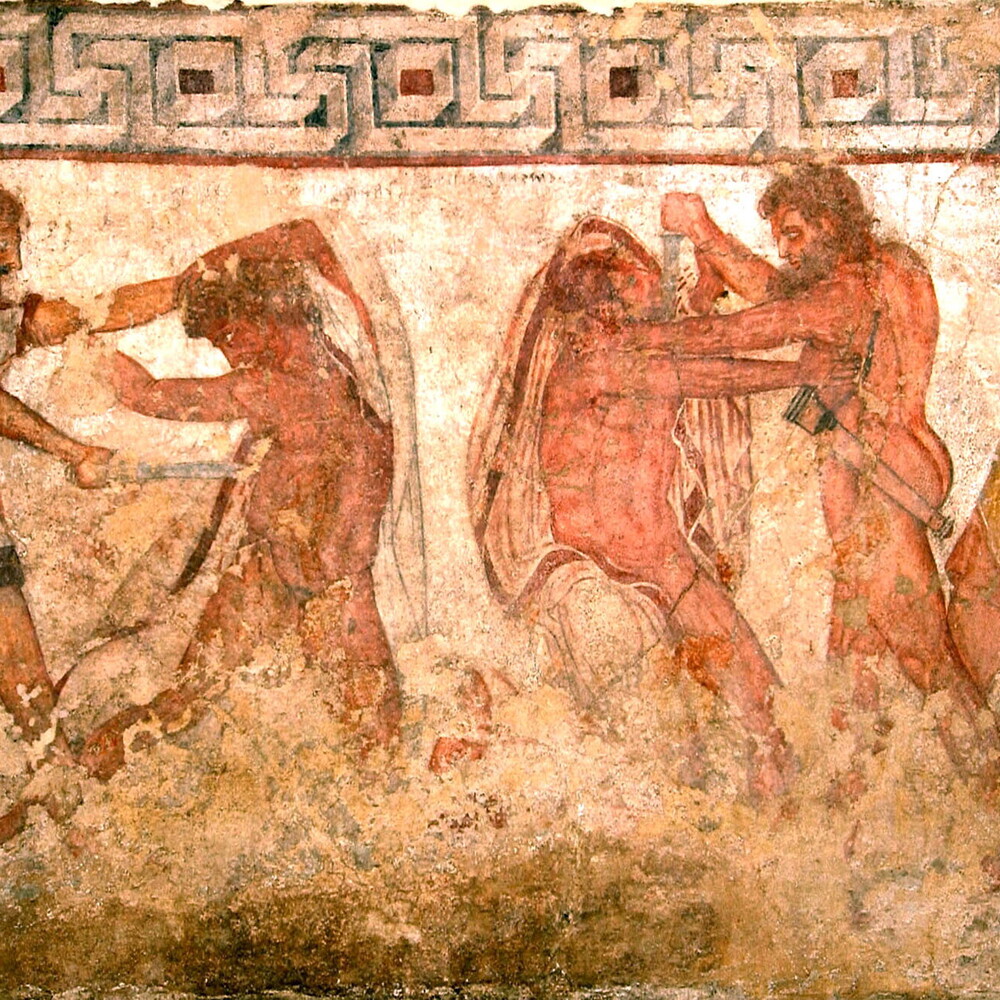
With the signing of the deed of sale, which took place today at the Ministry of Culture in the presence of the minister Alessandro Giulithe Tomb Francois di Vulci officially becomes part of the heritage of the Italian State. Mic reports this, underlining that “one of the most important masterpieces of Etruscan and ancient painting will thus be definitively delivered to full public enjoyment and will find a permanent location at the National Etruscan Museum of Villa Giulia“.
Thus comes to completion a path started over a century ago, when already in 1921 the State expressed its interest in the acquisition of the Francois Tomb, which “represents a result of extraordinary value for the cultural heritage national and testifies to the commitment of the Ministry of Culture in strengthening public collections through the return to the community of fundamental works of our history”, declares the minister Alessandro Giuli.
15 million euro operation
“With this act – adds Giuli – the State acquires one of the most important masterpieces of Etruscan painting and ancient Mediterranean art, definitively delivering it to public enjoyment and scientific research. The Francois Tomb is a testimony to the identity of the Etruscan civilization and the central role it had in the cultural formation of ancient Italy. This acquisition confirms the Ministry’s desire to invest in the protection, valorisation and accessibility of cultural heritage as a common good and an instrument of shared knowledge”. The operation, with a total value of 15 million euros, represents one of the most important investments made in recent years by the Ministry of Culture in the field of heritage acquisitions: the acquisition was made possible – explains Mic – thanks to the collaboration of the heirs of the Torlonia, Sforza Cesarini and Gaetani families, owners of the work and the joint work of the General Directorate of Museums, directed by Massimo Osanna and the National Etruscan Museum of Villa Giulia, directed by Luana Toniolo. Also present were the head of the Mic Cabinet, Valentina Gemignani, and the head of the Department for the Enhancement of Cultural Heritage, Alfonsina Russo.
Discovery and characteristics of the tomb
Discovered on May 1, 1857 by the archaeologist Alessandro Francois in the prince’s lands Alessandro Torlonia, in the necropolis of Broken Bridge in Vulci, the tomb is dug into the tuff and composed of thirty-seven painted panels and two stone stones found in the access corridor. Built between 340 and 320 BC, it represents one of the highest testimonies of the Etruscan painting and, more generally, of ancient painting that has come down to us.
Decorations and meaning
The pictorial decoration of the Francois Tomb constitutes an extraordinary interweaving of Greek mythEtruscan historical memory and construction of the aristocratic identity of Vulci: through inscriptions painted next to the characters, the scenes still allow us to recognize names, faces and episodes that intertwine history, legend and representation of power.
Symbolic scenes
Among the most famous images, the large panel with the sacrifice of the Trojan prisoners at the tomb of Patroclus: appears in the center Achillewhile the Greek myth is reinterpreted according to Etruscan sensitivity through the presence of Demon Charunwith bluish skin and armed with a hammer, accompanied by the winged figure of Vanth. On the opposite wall the liberation of is represented Celio Vibenna by his brother Aulus and Macstarna, identified by tradition with the future king of Rome Servius Tulliusin a scene of exceptional historical and political importance. To complete the cycle, the longest known animalistic frieze of antiquity, populated by griffins, lions, panthers, deer, wild boars and other real and fantastic creatures, testimony to the extraordinary artistic quality of the work.
Celebratory exhibition
To celebrate this important acquisition, next June 25th will be inaugurated at the National Etruscan Museum of Villa Giulia a large exhibition dedicated to the Francois Tomb: thanks to the collaboration of some of the most prestigious Italian and international museum institutions, it will be possible to ideally recompose the original context of the monument. The Louvreil British Museumthe Royal Museum of Art and History in Brussels, the Cantonal Museum of Archeology and History in Lausanne, the Vatican Museums and the German Archaeological Institute of Rome have granted loans that will make it possible to bring together finds, documents, historical copies and works from the tomb’s grave goods or connected to its collection history.
https://quickslot-no.eu.com/
https://quickslot-no.org/
https://quickslot.eu.com/
https://rabonacasino-no.eu.com/
https://rabonacasino-no.org/
https://rabonacasino.eu.com/
https://revolution-casino-no.com/
https://revolution-casino.eu.com/
https://revolutioncasino-no.com/
https://revolutioncasino-no.org/
https://ritzocasino-no.com/
https://ritzocasino-no.org/
https://ritzocasino.eu.com/
https://rizk-casino-no.com/
https://rizkcasino-no.eu.com/
https://rizkcasino-no.org/
https://rizkcasino.eu.com/
https://rizkcasino.org/
https://robocat-no.eu.com/
https://robocat6.com/
https://rocketspin-no.eu.com/
https://rocketspin.eu/
https://rocketspin.eu.com/
https://rollbit-no.eu.com/
https://rollbit7.com/