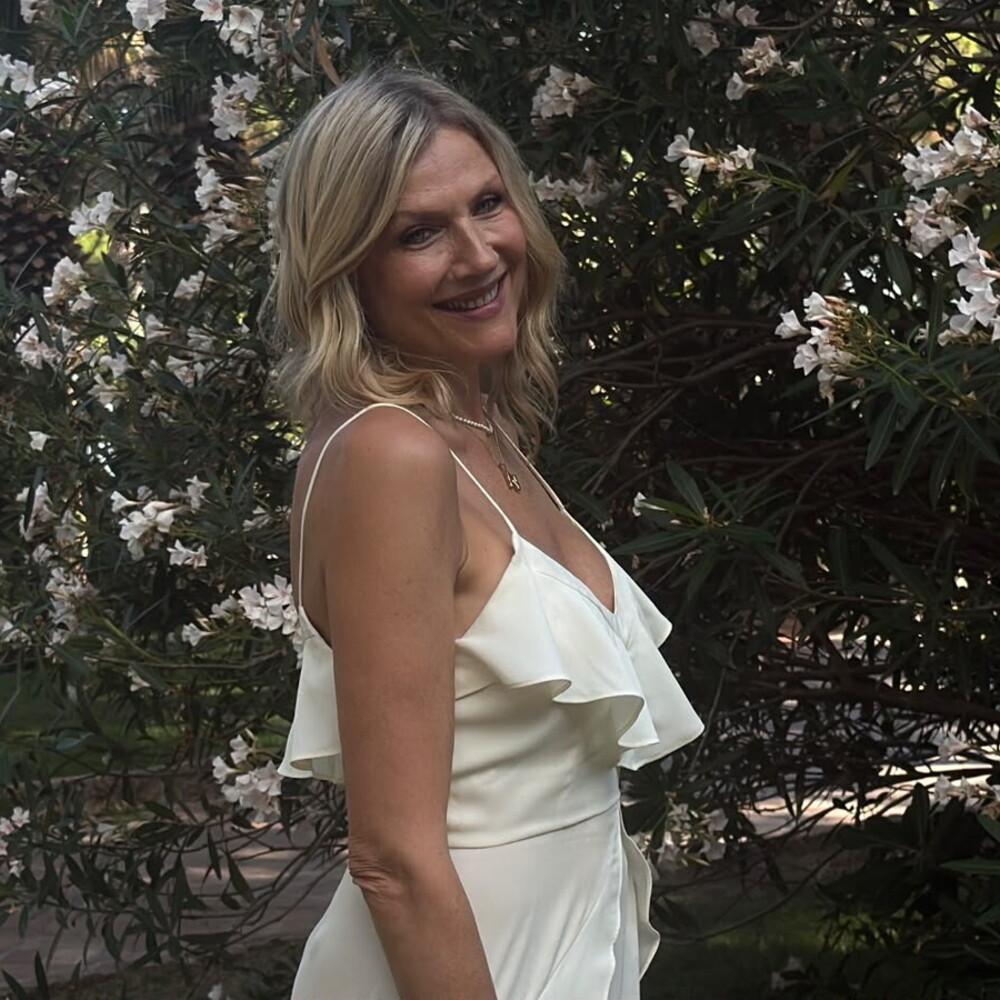
Natasha Stefanenko is at Filming Italy Sardinia Festival where he announced a documentary produced with the support of Marche Film Commission with a news story at the center involving the theft of a work of art. Born in Russiabut in Italy since 1993, the presenter and actress also returns to the conflict that is tearing her opposing country apart to Ukraine confessing with an open heart.
“For ten years I worked a lot in Russia. Every week I had my own program, I hosted three or four and I also shot a film.” Natasha Stefanenko thus retraces her long professional period in her country of origin, explaining that she never abandoned Italy but that she shuttled between the two countries, bringing the Italian television style to Moscow.
Experience in Russia
“The productions there are huge, with 800 people on stage, and the management was very cold. I brought my spontaneity, the direct way of relating to the public learned from great professionals like Iva Zanicchi e Simona Ventura. At first they thought I was crazy, then it worked.”
The documentary on the theft
“I will tell, as a ‘Piero Angela’ narrator, a sensational historical event that occurred in Urbino in 1975“, he then said about his next project which he announces at the event in Sardinia. At the center of the story, an extraordinary theft: “They stole a masterpiece of Raphael and two of Piero della Francesca. At first we thought it was a major international conspiracy, but instead it was a common petty thief. He had gone to the museum with his girlfriend and, seeing that she was making sweet eyes in front of Raphael’s painting, he decided to give her a ‘little present’ by taking advantage of the guards’ uncovered shifts.” The documentary, shot in five days, should be broadcast on Rai.
Conflict and personal roots
It was impossible to ask her about the Russian-Ukrainian conflict, which Stefanenko speaks about with measure but without hesitation. “My life has become complicated, I suffer like everyone else. I have two hearts, one Italian and one Russian, and it hurts me a lot to see this separation, sometimes forced by‘European Union“, he declared. His family history reflects the deep intertwining between the peoples of the former Soviet Union: “I have a Belarusian father, a Russian mother and a Ukrainian surname. Every family has a close connection with Ukraine or Belarus. At first it was even embarrassing to talk to the friends I have in Ukraine because we all suffer.”
Perception of war
On the perception of the war in Russia, he observed: “The people are sorry, they feel the burden of waging a war with their ‘brothers’. There is a lot of tiredness, there are young boys who are going to die. Sometimes we should put world pride aside, just like a husband and wife do in order to live together.”
Sanctions and daily life
On sanctions imposed on Russia by the EU, Stefanenko reported what she personally saw while underlining that she is not a political scientist: “I have observed that the sanctions have pushed Russia to self-organise. Previously we bought water or Italian and European cheeses in supermarkets out of inertia or security; today they are no longer there, but they have developed a very high level of internal production. My mother herself told me not to bring cheeses from Italy because theirs are very good now.”
Relationship with Italy
When asked about a possible “Russophobia” suffered in Italy, the answer is clear. “No, I have never faced a direct refusal for this reason even if lately I can’t say if it has been more difficult for me. The truth is that they see me very much as Italian. I have been here since 1993 and the Italian people have always welcomed me with immense love”, declared Stefanenko, adding that he still pays “very much attention” to how he expresses himself publicly.
Books and the Marche
In between projects, Stefanenko also wrote his first novel, “Return to the nameless city“, published by Mondadori. It is a largely autobiographical story: “I tell my childhood in a secret city that did not exist on geographical maps, the figure of my father and the period of 1991-1992, when the Soviet Union collapsed, completely changing our lives. There is very little fiction, around 10-15%.” The second is a sentimental guide to the Marche, a region where he has lived since 2000 and which, he said, “I love madly”.
The position on talent shows
“They have been calling me for many years Dancing with the starsbut I say no. I’m not a dancer, I’m made of wood.” Natasha Stefanenko thus comments on her detachment from the main Italian talent shows, criticizing today’s television mechanisms. “The program is beautiful, but it has become too competitive, a physical competition in which you get seriously hurt. At 57 I don’t want to kill myself, I preferred the times of Fabrizio Frizziwhen everything was more playful and natural”. A competitive drift that the former model also finds in other formats: “Also Pechino Expresswhich I did with my daughter, is going in that direction. On TV I want to do things where I can give something, I’m not interested in existing on the channels just to be there.”
Kullanıcı: celerybanker1 – Matematik Kafası
mileweek1 – PukiWiki
Public profile – bowlwalrus8 – Architects & Designers in UK – Archeter.co.uk
My Humble Abode
Milemaria0
dancepanda7 » KARAYAZ
User sharkrail1 – Puffin Pub
tipruth7 » AtomCraft – Майнкрафт сервера с модами
tipoak4 » Информационно-развлекательный портал Молчановского района
ServoDriven
Public profile | bowlocean6 | Advertise Free Spanish Properties, Sell, Rent Real Estate
PennyGaff
thyssenmalmberg478630 – PukiWiki
tipocean3 » СИБЗЭ – изучение адыгского (черкесского) языка
Korisnik drawerneed0 – Iskustva.net
Dreevoo.com | antbanker1
dugoutruth2 » SunDayNews
beastchange6
winterdimple6 » 🔫Кримінальний огляд 👮
Public profile – antpanda1 – Pikidi – Buy And Sell Online In Nigeria
matchdimple9 » DataLife Engine
کاربر beachpoison1 – پرسش و پاسخ اداری و استخدامی
Public profile – beachmodem8 – DLX Free Classifieds in Pakistan
123.Marketing
CITIZEN Ana Digi Temp