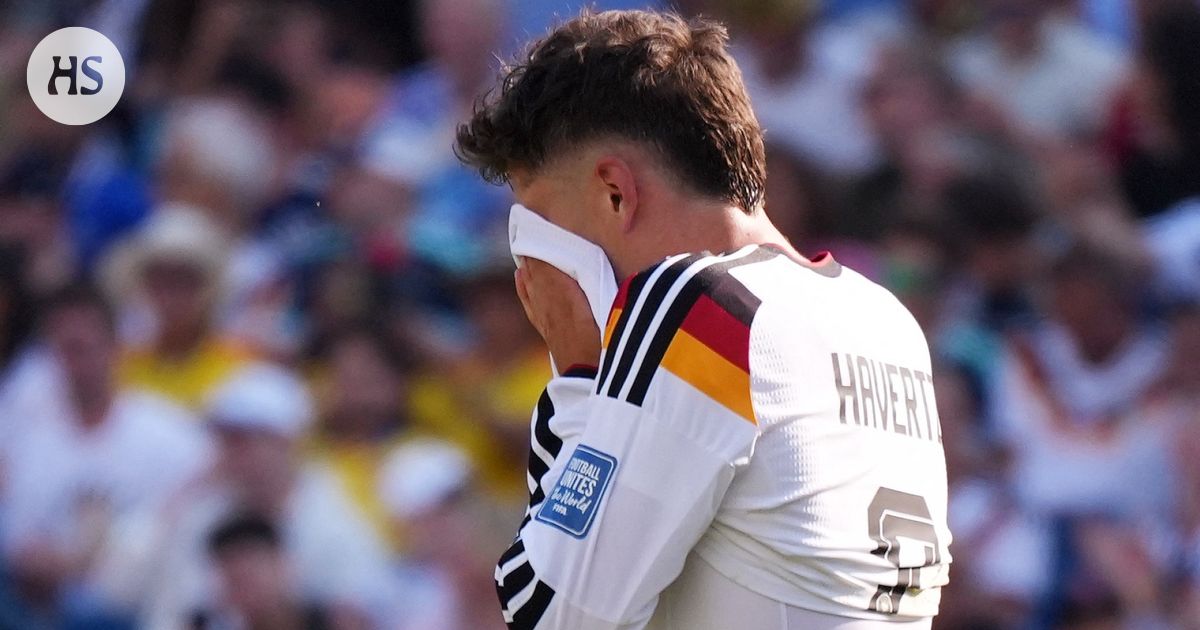
German topper Jonathan Tah puts the ball on the penalty spot and walks backwards. The referee’s whistle blows, Tah sets off – and kicks the ball over the goal.
Germany is staring defeat straight in the eye. If Paraguay Jose Canale succeeds, Germany’s World Cup streak ends.
Canale sinks his own kick. Paraguay is celebrating. The Germans look at the opponent’s jubilation in dismay.
Germany have not won a World Cup knockout match since winning the 2014 World Cup.
The machine no longer coughs. It doesn’t even exist anymore.
The Germans don’t even succeed in penalty kicks anymore. What the hell is going on?
“We the players failed and we bear the responsibility. It wasn’t about the coach, the media, the referee or the opponent. It was about us,” Germany captain Joshua Kimmich said after the defeat. “We lost to teams that weren’t world class. We deserved to go down.”
Expert Tuukka from Kotimäki no sympathy for Germany. The team did not have the ingredients for a success story.
“Germany got what it deserved. Even if the team had pushed itself to the next round, the pick-up would have come in the next round, says Kotimäki, referring to the fact that Paraguay will probably face France in the quarterfinals.”
Kotimäki saw a setup in the match against Paraguay, which has been repeated several times in the World Cup.
“If the underdog is well-organized, disciplined, physically durable and mentally tough, the favorites are going to be rattled. At least if they don’t have the means to break the bus defense. Germany didn’t.”
There are several reasons for the inability. One of them can be found in the profiles of the players selected for the tournament.
“Explosively fast players who tore apart the opponent’s defense were hardly included. The super-fast players were left at home. They wouldn’t have had big spaces to run into either. However, they would have passed the defender in one-on-one situations and concentrated,” says Kotimäki.
Florian Wirtz (17) and Jamal Musiala (18) could not play to their strengths. “Wirtz and Musiala go into small spaces and turn there. It was really difficult against Paraguay. There weren’t many spaces,” says Tuukka Kotimäki.
Right after, he adds that a team like Germany should not have to rely on only concentration.
“The picture of the game was quite similar to that of Brazil against Japan. They beat their heads against the wall in the first half. Then the favorites increased their crosses, and Germany got a goal from that. Still, it says something if a skilled team has to rely on crosses.”
“It’s far from maximizing the offensive threat.”
Germany’s lack of imagination and toothlessness surprised, because the coach Julian Nagelsmannin the teams at the club level play a completely different kind of game.
“He has shown that he knows how to build a way of playing for his team that breaks through the middle with ball control and combinations. But it has been too ambitious a plan at the national team level. Creating such a thing takes a lot of time.”
Julian Nagelsmann knows how to create effective attacking structures for his teams, but he couldn’t do that with Germany.
“The issue may be that Nagelsmann is purely a club team coach. The national team is not the right environment for him,” Kotimäki punted.
In the bigger picture, it’s also about Germany’s player production.
“The gold group 12 years ago had top players in their prime, future legends. How many players in the same category did Germany have now?”
“Perhaps Florian Wirtzbut he is also having a weak season below. Kai Havertz is a good player but not world class. Jamal Musiala has not lived up to the expectations placed on him”, Kotimäki lists.
Then he loads his diagnosis on the table.
“In Germany, the production of absolute super players has withered.”
Internet Archive: Digital Library of Free & Borrowable Texts, Movies, Music & Wayback Machine
Daniel Kiptoo | CRC Network
Kenya Athletics Data Analysis, Live Sports Scores and Performance Reporting
Member Publicrt Profile
RashadMammadov – watch faces for Apple Watch, WearOS, Galaxy Watch, Pixel Watch, Huawei Watch, and more – Facer
Rashad Mammadov | MagCloud
Tawk to RashadMammadov
Azərbaycan Futbol Təhlili, Canlı Hesablar və Stati
MonirHaque | Profit.ly
Youtube Icon
Iron Bear
BrickLink About Me Pages – About RashadMammadov
FelipeArancibia
Felipearancibia
FelipeArancibia | Players list | Bandori Party – BanG Dream! Girls Band Party
LabelRadar
RashadMammadov
Poser – 3D Rendering & Animation Software
Cobertura Deportiva en Vivo y Análisis Post P
Matiascofres
MatiasCofre (MatiasCofrese) – Profile | Pinterest
Matiascofre
Joaquin 6556
Bio
++| A M V – Member Profile: MatiasCofre