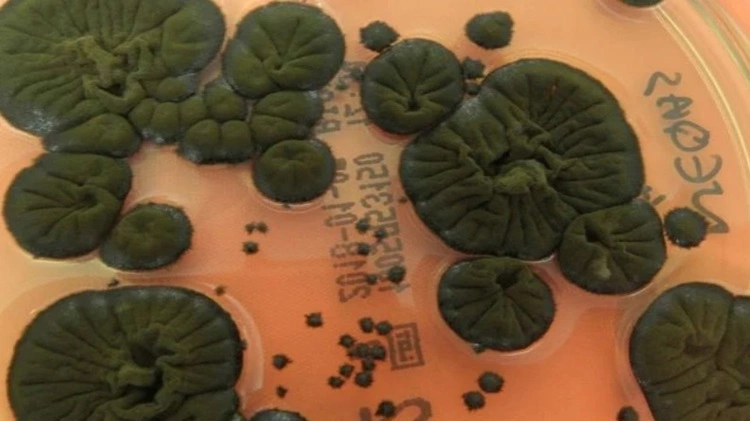
Black fungus growing on walls near the damaged reactor at the Chernobyl nuclear power plant appears to thrive in a highly radioactive environment.
Theo Science Alertnearly 40 years since reactor No. 4 at the Chernobyl nuclear power plant exploded, researchers found a strange black fungus growing well and clinging to the walls of one of the most radioactive buildings on Earth. It’s possible that the melanin pigment in Cladosporium sphaerospermum helps it take advantage of ionizing radiation through a process similar to how plants use light for photosynthesis, called radiosynthesis.
However, researchers have not yet been able to determine exactly how or why C. sphaerospermum thrives in ionizing radiation environments. The mystery began in the late 1990s when a team of experts led by microbiologist Nelli Zhdanova of the National Academy of Sciences of Ukraine conducted a field survey of the Chernobyl Exclusion Zone to find out whether any life forms existed around the destroyed reactor. There, they unexpectedly discovered a mushroom population of 37 dark or black species, rich in melanin pigment. C. sphaerospermum accounts for the majority of samples, and has one of the highest levels of radioactive contamination.
In an article published in May 2007 in the magazine PLOS Oneradiopharmacologist Ekaterina Dadachova and immunologist Arturo Casadevall working at the Albert Einstein College of Medicine in the US led a research team that discovered that ionizing radiation is not as harmful to the C. sphaerospermum fungus as it is to other organisms. Ionizing radiation is the process of emitting particles with enough energy to knock electrons out of atoms, turning them into ions. This process can break molecules, affect biochemical reactions, and even destroy DNA. According to BBCthe research team found that fungi with melanin like the type found in Chernobyl grew 10% faster in an environment containing radioactive cesium than when grown under normal conditions. According to them, mushrooms with irradiated melanin appear to use that energy to boost metabolism and growth.
C. sphaerospermum fungus contains melanin. Image: Rui Tomé/Atlas of Mycology
The next paper by Dadachova and Casadevall in 2008 showed that the fungus C. sphaerospermum can use a biological mechanism similar to photosynthesis. It harvests ionizing radiation and converts it into energy, where melanin functions like the light-absorbing pigment chlorophyll. At the same time, melanin acts as a protective shield, against the more harmful effects of radiation.
A study that brought C. sphaerospermum to the International Space Station in December 2018 found that it also grows well in space. Nils Averesch, a biochemist working at the University of Florida, and his colleagues found that compared to samples on Earth, C. sphaerospermum mushrooms exposed to cosmic radiation for 26 days grew an average of 1.21 times faster. However, Averesch suggests that this difference in growth rates could be the result of weightlessness. The team also tested the protective potential of melanin in the fungus C. sphaerospermum by placing sensors under fungal specimens on the ISS. Compared to specimens without fungus, the amount of radiation blocked increased during fungal growth.
However, since then, scientists have not been able to demonstrate metabolic benefits from ionizing radiation or clearly determine how black mushrooms harvest energy.
Characters
Leroyfields
Academic CV – Julio Vargos | Impactio
El Éxito del Azar
Un análisis de los casinos en línea modernos: nuevos estándares de la industria
BDMBet: Una nueva perspectiva del entretenimiento digital moderno
Bdmbet Casino
Bdmbet Casino
Play
Chordie Guitar Chords and Lyrics
Free Checklists By Perez Waylen
Profile | POTOFU | POTOFU
500px
97148
Robert Kelly | Vocal
Fundable | Startup Fundraising Platform
Mod The Sims Member: ChloeSanders
Marcus Page | MagCloud
Carlosbuuly
juego fluida
Highflybet
13224969 Casino Online
13337552 Como Puedo Jugar Sin Problemas
Juegos en línea y tragamonedas
Becky Fay | Concept2 Logbook