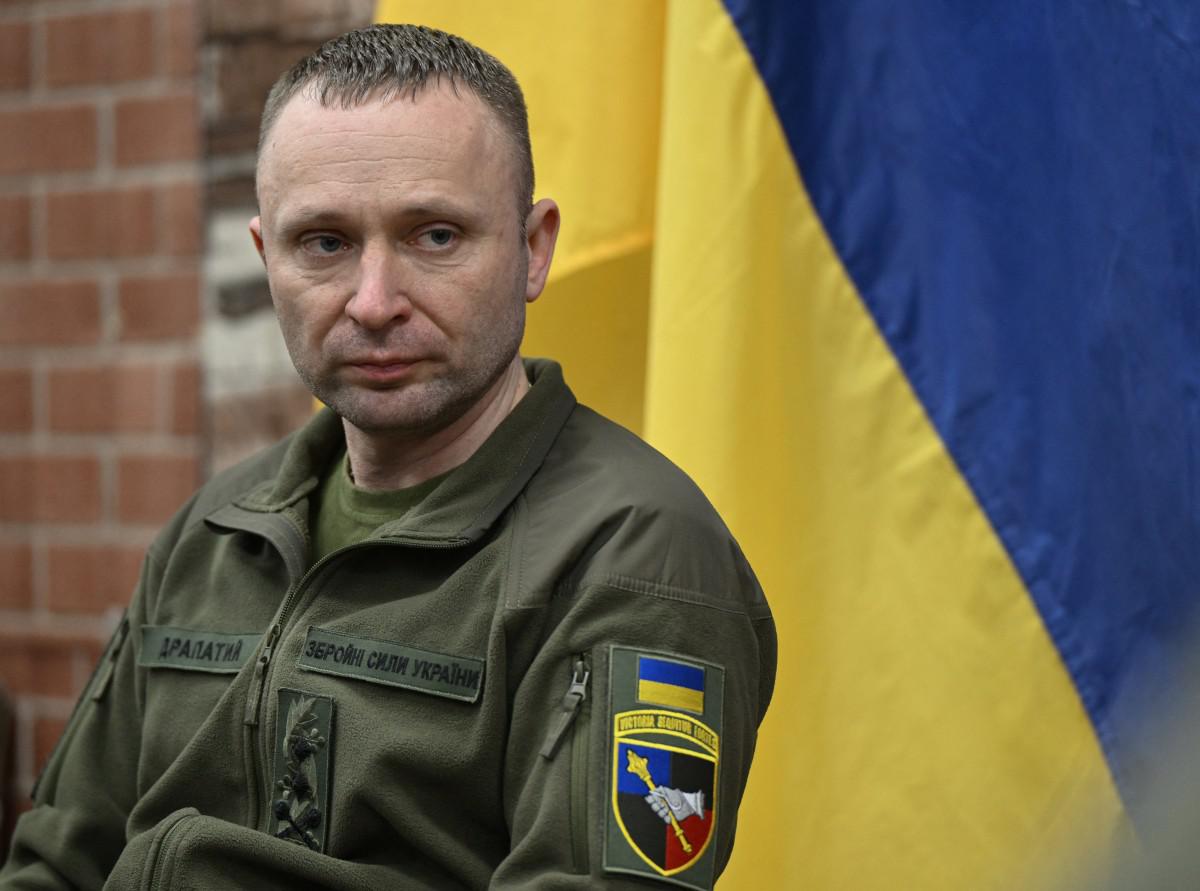
The replacement of the commander-in-chief of the Ukrainian army, Oleksandr Syrskyi, with the younger Mykhailo Drapatyi was “expected by many” within the Ukrainian Armed Forces. Leo Litra, Senior Policy Fellow of the European Council on Foreign Relations, declared this to Adnkronos, adding that in his opinion the Ukrainian president Volodymyr Zelensky would not have wanted to change the commander in chief now. However, after the dismissal of the popular Defense Minister Mykhailo Fedorov, who later spoke of a conflict with Syrskyi, it would be “politically unwise” for the head of state to oust one and keep the other in his place.
“I think Syrskyi has had enough time to demonstrate his abilities” in solving the problems facing the Armed Forces, continues Litra: “some he has solved, on others there has not been much progress. And this has created the conditions for a new appointment”. The analyst calls Syrskyi one of the key figures in the Ukrainian resistance against the Russian invasion, “especially in the beginning, then in the Kharkiv counteroffensive. But if you look from 2022 to today, the nature of war has changed a lot“. The Ukrainian armed forces have also changed, Litra continues, but not at the same pace: therefore today there is an ongoing “attempt to chase reality, not only in terms of how Ukraine repels Russian attacks, but how the Armed Forces can create a command and control system that precisely reflects the current nature of the war”.
According to Fedorov, Ukraine simply does not have enough resources to be on a par with Russia: to win one asymmetric warfare “you have to be creative, inventive, have a very rapid innovation cycle, be agile, distribute production and fragment it into small parts so that Russia can’t destroy it with a single attack.” “I think this was exactly what Ukraine needed, and I give credit to Minister Fedorov for what he did,” Litra continues, emphasizing that within the Armed Forces “there was a sense that this strategy had not been fully adopted“. The Ecfr expert recognizes the difficulty in bringing together different departments, dealing with different operational theaters and led by heterogeneous personalities.
Paradoxically, Litra notes, theUnmanned systems unitwhich according to several observers has the merit of having developed the use of drones that changed the fate of the conflict, was created during Syrskyi’s mandate and before the arrival of Fedorov, who was very favorable to technological innovation on the battlefield. That “is a good example of how the Armed Forces were trying to adapt to the new realities of war,” but that adaptation “did not reach all military units to the extent necessary.” In this view, Syrskyi’s “lack of agility” “worked against him”.
Drapatyi ‘more agile but will not overturn the army’
The new commander in chief is more agile and open to new approaches than his predecessor, but he is unlikely to fundamentally change the army’s operations, Litra explains. Zelensky gave him similar goals to Syrskyi, such as strengthening the army and devising new counteroffensive measures, as well as new operations against the Russian rear and on Russian territory, to move the war as close to Russian territory as possible. “The difference is how you achieve your goals“.
“Drapaty is known for being a person who is very open to new approaches, but I don’t think it will completely change the way the military operates“, continues the analyst, underlining that in addition to the need to enhance the “crucial” role played by drones, “artillery, infantry, and many other things are still needed to make the system work”. His prediction is that Drapatyi will be “more open, more agile, will implement more new ideas, but the foundations will not change much. Yes to a shorter decision-making chain, yes to new ideas, but the army is a very large living body and certain things cannot be done too quickly.”
Fedorov ‘will remain tied to government and defense’
As for Fedorov, he is “out of question” that he will return to his role as defense minister. However, it is very likely that “he will maintain a link with the Ukrainian power structure”, observes Litra. The analyst explains that Fedorov was highly respected by the international community in the role of minister and considered a fierce opponent of corruption. The solutions he proposed “seem to work well in practice, and the fact that people took to the streets in his defense also gives him a small political boost”: conditions that should push Zelensky to reserve an important role for him, if he intends to maintain unity and avoid shocks. The Ukrainian leader said he had offered his former minister some positions, Litra recalls: “it is still being discussed, nothing has been decided, but this gives the impression that Fedorov will remain tied to the Ukrainian defense effort one way or another.”
The analyst highlights that the protest in favor of Fedorov’s reinstatement and Syrskyi’s resignation “was not massive. In the sense that it was a few hundred people, but it was rather horizontal: not only in Kiev, but in many other regions. Which means that Ukrainians, despite the war, they share a deep sense of democracy and the knowledge that their involvement in the decision-making process really matters.” The fact that Zelensky, after three days of protests, said he had listened to the message coming from the streets indicated the existence of a direct channel, as well as a “common understanding of the terms of this debate”, which reassured the protesters that their requests were being taken into consideration.
However, according to Litra, Zelensky also had to ensure that any changes were well received in the army: “that’s why he has conducted consultations with all key figures in the Armed Forceson all fronts: a very comprehensive hearing to ensure that his decisions reflected not only his point of view and that of the protesters, but above all that of those who deal with the war on a daily basis.” The expert believes that the Ukrainian protesters saw their demands satisfied “to a large extent”: most of them asked for Fedorov’s return to the ministry, “but I think this is not possible”, he concludes.