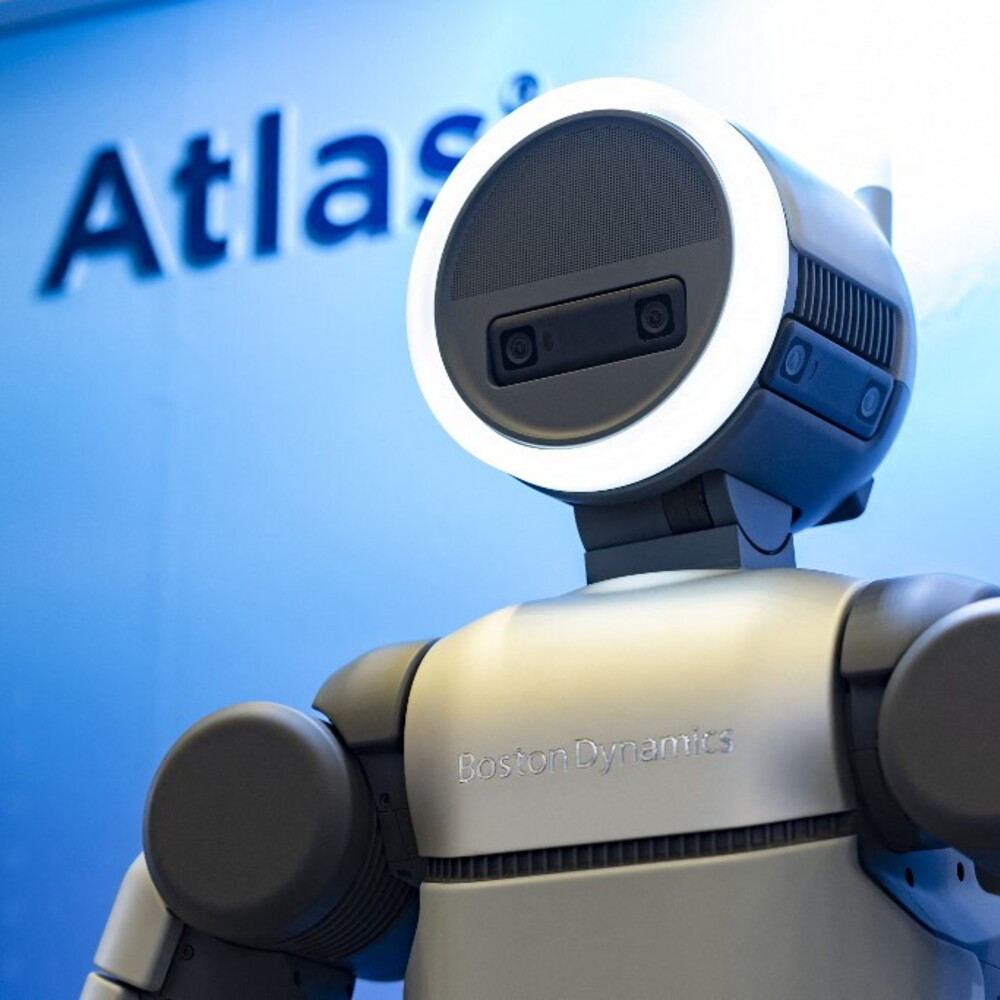
Hyundai Motor showed its robot humanoid Atlas at the 2026 World Cup, showcasing the project’s technical progress as the Korean company prepares for mass production and deployment in factories.
During the round of 16 between Brazil and Norway, at the New York/New Jersey Stadium, on Sunday, Atlas, developed by the division Boston Dynamics of Hyundai, ran through the players’ tunnel and performed several goal celebrations, including the Brazilian forward’s surfing celebration Matheus Cunha and the South Korean star’s camera gesture Son Heung-minbefore handing the ball to the referee.
Atlas’ first live appearance
The appearance marks the robot’s first live public demonstration since its production-ready version was unveiled at January’s CES in Las Vegas. Hyundai Motor Group unveiled Atlas on January 5, 2026, as part of its AI robotics strategy titled “Partnering Human Progress.”
The robot has 56 degrees of freedom, human-sized hands with touch sensors and can lift loads of up to 50 kilograms. Hyundai plans to produce up to 30,000 humanoids per year in the United States starting in 2028, mostly for the Hyundai Motor Group Metaplant America plant in Georgia. The introduction will take place gradually: from 2028 Atlas will be used in the sequencing of components, while by 2030 its use will extend to assembly.
The robot at the center of the ‘School of Football’ campaign
The performance also represents the culmination of the campaign School of Football from the company, a series of videos that chronicle how Atlas learned complex athletic maneuvers, including the “Ghost Rabona,” a deceptive shot mastered by legends such as Brazil’s Pelé and Argentina’s Diego Maradona. Hyundai has sponsored the tournament since 1999 and is FIFA’s official robotics partner for this year’s edition.
The campaign aims to demonstrate how advanced robotic technology can move out of controlled laboratories, allowing humanoids to perform sophisticated tasks while adapting to unpredictable environments, according to Hyundai.
I test ai mondiali
Testing Atlas in an outdoor stadium provided useful technical data for future factory uses. Operating on grass, for example, forces the robot to deal with variables such as the softness of the surface and the risk of slipping, which are absent on the concrete floors of laboratories.
“Atlas has now learned to perform and imitate that movement reliably, so that it can adapt to whatever happens in a real situation,” he said in an interview with Bloomberg News Alberto Rodriguez, director of robotic behavior at Boston Dynamics. “The way this system works in simulation is quite scalable.” Another goal, he added, is to improve public understanding of robotics and show that the technology is poised to transform first manufacturing, and then daily life over the next decade.
https://www.noticiasdecoimbra.pt/carlos-prates-nocauteia-della-maddalena-e-agita-apostas-no-ufc/
https://oresultado.com.br/a-selecao-mais-titulada-da-copa-do-mundo-e-as-apostas-esportivas/
https://www.enterat.com/articulos/por-que-vacaciones-mas-caras.php