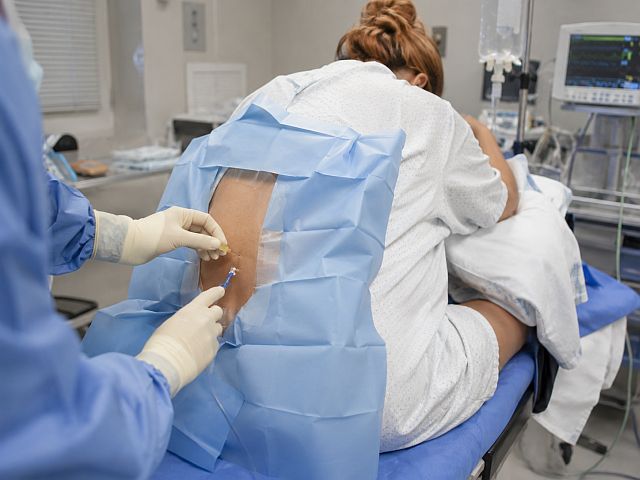
A study involving nearly half a million women in labor found that epidural anesthesia during labor does not increase the risk of serious complications in newborns or affect their later health. The findings may allay common concerns among expectant parents about the safety of this method of pain relief.
Scientists analyzed data on 495,695 births that occurred in Scotland from 2007 to 2019. The study included women with singleton pregnancies who delivered vaginally or by emergency caesarean section between 24 and 42 weeks’ gestation. The analysis took into account the mother’s age, diabetes or preeclampsia, smoking, gestational age and other factors that could affect the outcome of the birth.
About 23% of women received an epidural during labor. Researchers found no association between its use and an increased risk of severe neurological damage in infants, sepsis, severe breathing problems, low Apgar scores, death within the first 28 days of life, or future development of cerebral palsy. All of these complications were equally rare regardless of whether an epidural was used or not.
The authors note that epidural anesthesia is considered one of the most effective forms of pain relief during labor and may reduce the risk of some maternal complications. However, many women fear that the procedure may harm the child. The new results provide strong reasons to believe this method is safe for newborns.
The study was observational in nature, so it cannot definitively prove a cause-and-effect relationship. Additionally, it was only conducted in Scotland, where the majority of the population is of European descent, so the findings may not fully generalize to other countries and populations. Nevertheless, a large amount of data and long-term observation of children make the results quite reliable, the authors of the work believe.
Onlayn Əyləncəyə Yeni Baxış: Rahat Oyun, Sərfəli Bonuslar və Maraqlı İmkanlar
Mansur Tagiyev
What is important when choosing a platform for a new gaming experience?
Donojof728Apdtax Com
Viewing donojof's profile | Profiles v2 | Gaia Online
Jexife
Jexife3617
Rasul (xokino54) on Myspace
diaro | Mezink
Daniel Alves's profile | Daniel Alves
Профиль xokino – Аудиокниги Клуб
User TolgarTalibo on maxforlive.com
Pinup AZ Mobil Təcrübəsi: Əyləncəni İstənilən Yerdə Davam Etdirin
My Personal Gaming Experience and Relaxing Fun with Bonuses
BrickLink About Me Pages – About jexife
Discover Digital Entertainment with a Different Perspective with Pinup AZ
XJMR – Forum for Economics, Math, Sociology and Political Science
Mirza (1 link)
Xokino5424
User Ramin
Guliyev (Guliyev)
Oyun platformasında yenilənən imkanlar niyə maraq yaradır?
Gajarov – Channel on Coub
Disqus Profile – disqus_9xUeUxf18W
User Babayev on maxforlive.com