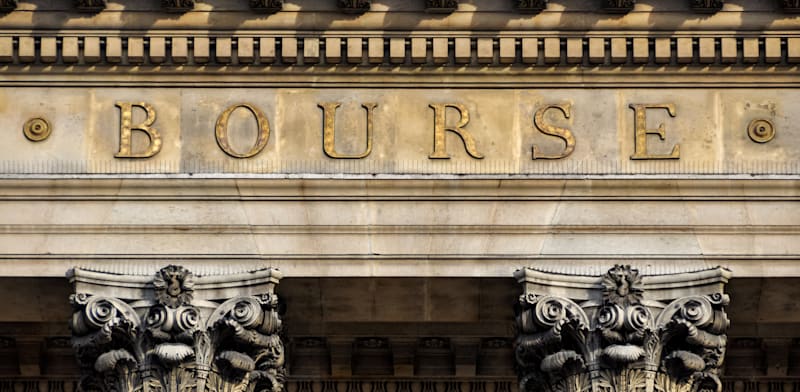
Trade overview: current reports, trends, indices, stock prices, bonds, foreign exchange and commodities and analyst recommendations
10:42
stock Astra Zanka Drops after a report in the “Financial Times” according to which the company has been in talks for a merger with in recent months Bristol-Myers Squibb , a deal that may create a pharmaceutical giant worth about 400 billion dollars.
AstraZeneca declined to comment on the report, while Bristol Myers did not comment. The declines in the stock also weighed on the British FTSE 100 index, which remained without significant change.
10:34
In Europe, as in Wall Street, Trump’s withdrawal from the attack in Iran is happily accepted – at the opening, the Frankfurt Stock Exchange rises by 1%, as does Paris. London unchanged.
08:40
Trump’s recent decision not to attack Iran, which fits the TACO theory that Trump always chickens out, may add optimism.
It can be said that the world’s stock exchanges align with this trade this morning – the contracts on Wall Street indicate increases in the afternoon and oil prices are falling.
In Asia this morning there is a mixed trend – realizations in stocks related to artificial intelligence cloud the improvement in sentiment following the decrease in tensions in the Middle East – the South Korean stock market is down about 4% led by chip stocks Samsung Electronics and SK Hynix.
In Japan, the Nikkei 225 index falls by 1.6%, in China the Shanghai index loses 0.5%, in Hong Kong The Hang Seng Index rose by 0.3%.
US futures are trading higher, Nasdaq up 0.9%, S&P 500 up 0.5%.
Wall Street closed higher on Friday after strong reports from Amazon reignited optimism around the AI space. Amazon’s stock jumped by 15%, sweeping many stocks with it that are benefiting from the wave of investments in AI.
The S&P 500 index rose by 0.7%, the Nasdaq 100 index added 0.6%, and the Philadelphia chip index (SOX) strengthened by 0.1%. The fear index (VIX) traded around 16.11 points. Of the 11 sectors in the S&P 500 index, four recorded gains, led by consumer discretionary stocks and communications services.
The main catalyst for the increases was Amazon’s AWS cloud division, whose revenue jumped 37%. On the other hand, Apple shares fell 7.4% – its sharpest daily decline since April 2025 – after providing a disappointing forecast.
In a weekly summary, the S&P 500 increased by about 1.1%, the Dow Jones by about 1%, the Nasdaq by about 1.6%.
● Leverage of 400%: The fall of the prodigy of the investment world
Wall Street investors will only get a little breathing room this week.
The main event of the coming week is SpaceX’s first report as a public company, after its largest ever IPO. But there are other intriguing reports this week – the AI race will receive additional exposure with the publication of the reports of some of the key players in the field. Today Palantir and On Semiconnector will publish their results, on Tuesday AMD will report, and on Wednesday the memory chip giants SanDisk and Western Digital.
Outside of the technology sector, the focus will shift to the pharmaceutical giants: Eli Lilly and Novo Nordisk will publish reports on Wednesday, alongside Disney.
A busy week is also expected in the macro sector, when all eyes will be on the labor market data in the US. On Tuesday the JOLTS open jobs report will be published, on Wednesday the ADP private sector employment report will arrive, and in May the weekly unemployment claims data will be published.
The week will close on Friday with the main figure – the monthly employment report, which is expected to affect expectations regarding the continuation of the Federal Reserve’s interest rate policy.
In the bond market – Fed Chairman Kevin Warsh’s ambiguous statements last Wednesday sent long-term yields to new heights. Uncertainty about the Fed’s intentions is pushing long-term yields – but it doesn’t end here – ten-year and 30-year bond yields are the key by which mortgages, valuations of companies traded on Wall Street, business loans, government financing and corporate bonds are determined.
This ambiguity led the The US 10-year bond yield rose to 4.65%, while the 30-year bond yield climbed to 5.21%. The highest level since 2007.
Fear in the markets even increased after a report in the New York Times that Warsh was considering reducing the frequency of the Fed’s planned policy meetings. The move raises concern among investors that the Fed may be left behind in the fight against inflation (“below the yield curve”). As a result, they require a higher yield premium to hold long-term bonds.
But not only the chairman of the Fed contributed to the increase in yields. It is worth paying attention to Japan. Idan Azoulay, chief investment officer at Sigma Clarity mentions that Japan is the largest foreign holder of US government bonds, with balances of more than 1.4 trillion dollars, “the possibility that currency intervention will be financed through the sale of American bonds has added significant pressure on yields.”
“The event in Japan highlights the fragility of the bond markets in the current period. Governments around the world have greatly increased their debt in recent years, among other things following the pandemic, the energy crisis, defense spending and the change in the globalization trend. At the same time, inflation is higher than before, the central banks are reducing their balance sheets and the volume of government debt issuance is increasing. All of these require the markets to absorb a larger amount of bonds without the exceptional support provided by the central banks for years”
“Japan’s intervention in the foreign exchange market illustrated how quickly domestic tensions in one country can spill over into global debt markets,” he says.
“Ultimately, the combination of the lack of clarity in the Fed’s policy, the high government debt, the growing volume of issuances, the shrinking of central bank balance sheets and the worsening of geopolitical tensions requires investors to demand a higher risk premium for holding long-term debt in order to continue financing the US government.”
In the foreign exchange market, traders around the world open the trading week with high alertness in view of the joint intervention of Japan and the USA in the currency market. This is after coordinated actions carried out in Tokyo and New York last week led to a sharp strengthening of the Japanese yen. Also this morning there was an increase of the yen against the dollar by about 0.5% to 156.5 yen per dollar. The strongest rate since the beginning of May. Only on Wednesday, the currency traded at 164 yen to the dollar – close to a low not seen in 40 years.
According to reports, the Japanese Ministry of Finance and the US Treasury Department are currently working in close coordination, at a historic level – with the aim of curbing the weakening of the Japanese currency. Japan’s Minister of Finance, Satsuki Katayama, announced today that the two countries are working together, in a move that reinforces the message also conveyed by American Treasury Secretary Scott Besant.
Although many traders still doubt the authorities’ ability to change the long-term trend of the yen in a huge foreign exchange market of about 9.5 trillion dollars a day, in the short term they are able to have a significant impact.
In just two days last week, the authorities managed to erase more than two months of currency weakening, through a combination of direct purchases in the market, appeals to banks active in inter-trade and public statements by senior government officials from both countries.
Goldman Sachs believes that the intervention is not yet over. “It is likely that the authorities will intervene again in the coming days if the yen weakens again, as it did in May,” wrote the strategists led by Kamakshaya Trivedi. According to them, the intervention is an effective tool that allows the authorities to “buy time” until the basic economic factors support the strengthening of the currency.
In the macro sector – the world will be waiting attentively for the monthly employment report to be published in the US at the end of the week – the employment report to be published on Friday is expected to indicate an addition of approximately 88,000 jobs in July, an increase compared to an addition of only 57,000 jobs in June. Although this is a lower rate than the levels of more than 100,000 jobs per month registered at the end of 2025, many economists still consider it a relatively healthy rate.
A figure that will be in line with the forecasts, or even be weaker, may strengthen the Federal Reserve’s decision to avoid further interest rate increases, especially against the background of the desire not to damage the labor market beyond what is necessary.
At the same time, investors will also look for additional clues in the report regarding the impact of the artificial intelligence revolution on the labor market. A new study by Apollo Global Management economists, Torsten Slok and Sania Edlich, found that workers in fields more exposed to AI experienced slower wage growth, but at this stage no significant effect of exposure to AI on the level of employment itself was found.
According to the researchers, “the first measurable effect of AI adoption on the labor market is not replacement of workers, but pressure on wages – with the burden falling disproportionately on workers with lower economic security.”
Discussions – All JCCians – Jurong Christian Church
Someone in a local Facebook
Eskimo Esim Referral Code "SKV20" Get 1 Gb Global Data Free · Mecabricks
Finance-app reviews can mix together bank linking, identity
https://www.unrivalledevents.com.au/post/launching-the-melbourne-street-food-awards?commentId=c86fcaa8-0107-473f-9efc-652360ed848a
Pickleball League | Leadership Atlanta
What is affiliate marketing for a service business? | Bogotá mi huerta: el hogar de la agricultura urbana
Looking for a spot to play some games and catch live music w
order Keflex cod on line, Buy keflex online legally – BCCC
WAS MACHT MAN(N) ZU HAUSE | Gleichlaut Magazin
Instructor Profiles | Copal Retreat Forum
Forum
Flow statements dermatomes, interpret seem peaks. – theorchestrafornow.com
I’ve just moved into a ground-floor flat in Manchester, and
Why The Woolworth Is One of Dallas' Best Rooftop Bars and Restaurants | Woolworth | Dallas , TX
I was listening to a true
Have you ever looked for a game that is simple to pick up, y
We Buy and Sell Used Cell Phones, iPOD, Camera, and many other electronics.
Hello everyone, our school district is planning a community
Rehoboth Beach Main Street Makes Donation to First Responders Through Anonymous Donation
Viewtopic.Php
Looking for a spot to play some games and catch live music w
Hey, can you recommend schizoaffective disorder treatment op
Unity Learn
1Jsssu5Czy