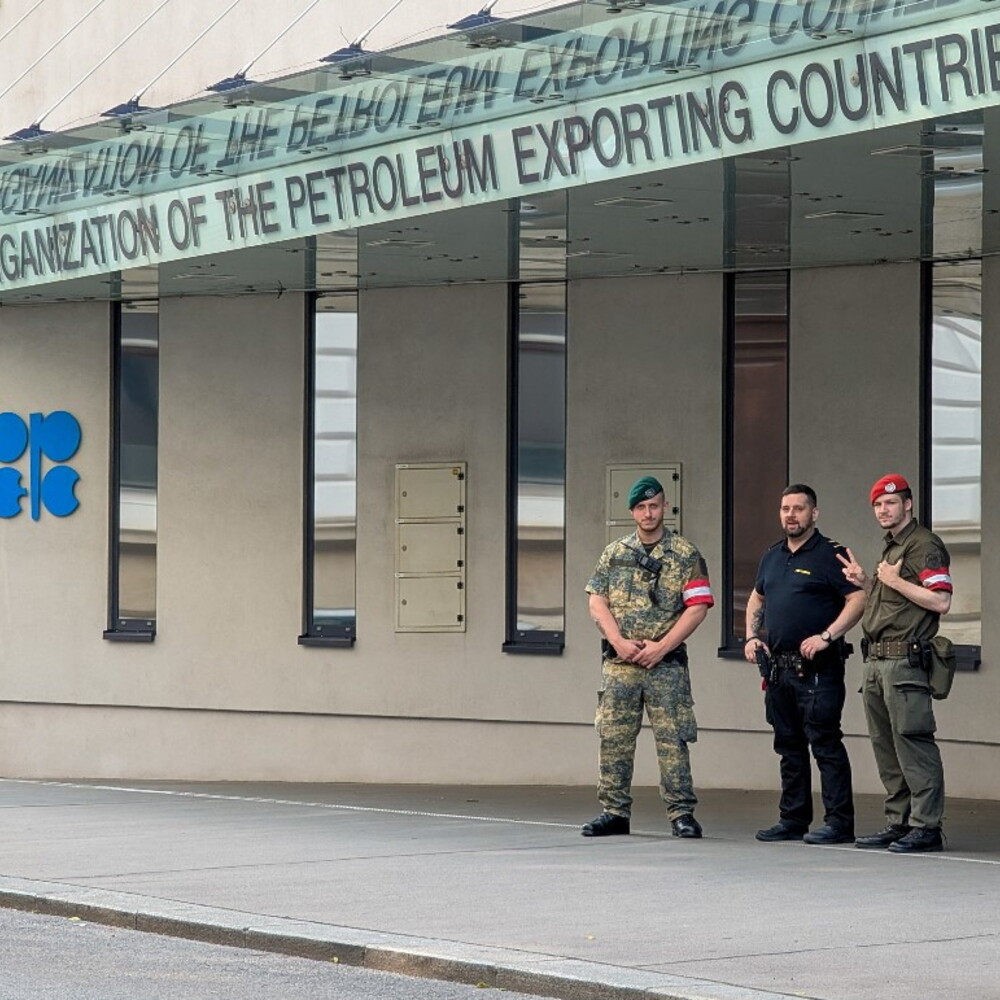
OPEC+ has approved an increase in oil production quotas of approximately 188,000 barrels per day (bpd) starting in September. The producer cartel announced the move, effectively eliminating the voluntary cuts of 1.65 million bpd decided in 2023.
“The seven participating countries have agreed to implement a production adjustment of 188,000 bpd,” a level similar to that of recent months, according to the joint statement released after an online meeting.
Between the end of 2022 and 2023, the group sought to counteract the erosion of crude oil prices and decided to implement significant production cuts, totaling nearly 6 million bpd (mbpd) divided into three distinct tranches. But Saudi Arabia, Russia, Iraq, Kuwait, Kazakhstan, Algeria, Oman, and the United Arab Emirates (prior to their withdrawal from the organization on May 1) subsequently changed their strategy, gradually reintroducing oil to the market starting in 2025.
Market environment and outlook for the end of the year
Due to export disruptions from the Gulf, Russia, and Kazakhstan caused by the wars in Iran and Ukraine, OPEC+’s successive monthly increases for much of this year have remained largely on paper with minimal impact on the market.
Although OPEC+ sources had said before the meeting that the group would likely suspend production increases for the fourth quarter, today’s statement made no reference to what might be agreed upon for the final three months of 2026.
A pause was still a viable option, noted Jorge Leon, an analyst at Rystad. “OPEC+ has completed its voluntary cuts. The next challenge is managing the surplus that could emerge as export flows normalize,” he said. “Having completed the restoration campaign—he reasoned—OPEC+ has little incentive to rush further supply changes. Our baseline scenario is a pause in the fourth quarter as the group prepares for the 2027 quota negotiations.”
Infrastructure Concerns and Future Negotiations
OPEC+ reported that a separate meeting of the Joint Ministerial Monitoring Committee was also held today, which reiterated concerns about the attacks on energy resources in US and Israeli strikes against Iran, stating that they are costly and time-consuming to repair, thus impacting supply.
With the September production increase agreement, OPEC+ still has an additional level of production cuts in place that apply to most members of the group. These cuts of approximately 2 million barrels per day date back to 2022 and are expected to remain in place until the end of this year.
OPEC+ is currently reviewing its members’ oil production capacity, which will be used for the 2027 production baselines. It faces potentially difficult negotiations over new production quotas, with some members, including Iraq, pushing for higher individual quotas. OPEC+ is “preparing for potentially difficult discussions,” according to analysts at DNB Carnegie, as this review is expected to serve as the basis for a review of the organization’s quotas starting next year.
OPEC+ comprises 21 members, including the Organization of the Petroleum Exporting Countries, along with Russia and other allies. In recent years, only the seven major producing countries (and the United Arab Emirates until its departure) have been involved in managing monthly production. The next meeting is scheduled for September 6th to review October’s quotas.
JPRO: Recommendation for a gaming site | Elearning UOU
I want to find a fast and not laggy site where it will be ni
Interesting online games for the even – Alliance For AI
Where can I have fun on the Internet while I have free time?
Job Searching During the Coronavirus
8733414.Htm
Recommend an entertainment area for relaxing after work
Sb5P7J0J8V
Drive & Connect Group | Autolast Ghana
Edmonton Infill Home Generates Surplus Energy Three Years in a Row
Senior transitional care
I want to find a fast and not laggy site where it will be ni
Interesting online games for the evening
Where can I have fun on the Internet while I have free time?
Zephyr & Sandford News
The game –
I want to find a fast and not laggy site where it will be ni
Recommendation for a gaming site – theorchestrafornow.com
Recommend an entertainment area for relaxing after work
Explore How to Transform Your Ride Economically with Used Auto Parts Niagara
6Atmxmlz2
Where can I have fun on the Internet while I have free time?
Recommendation For A Gaming Site 1
I want to find a fast and not laggy site where it will be ni
Présentation publique – Implantation module de jeux