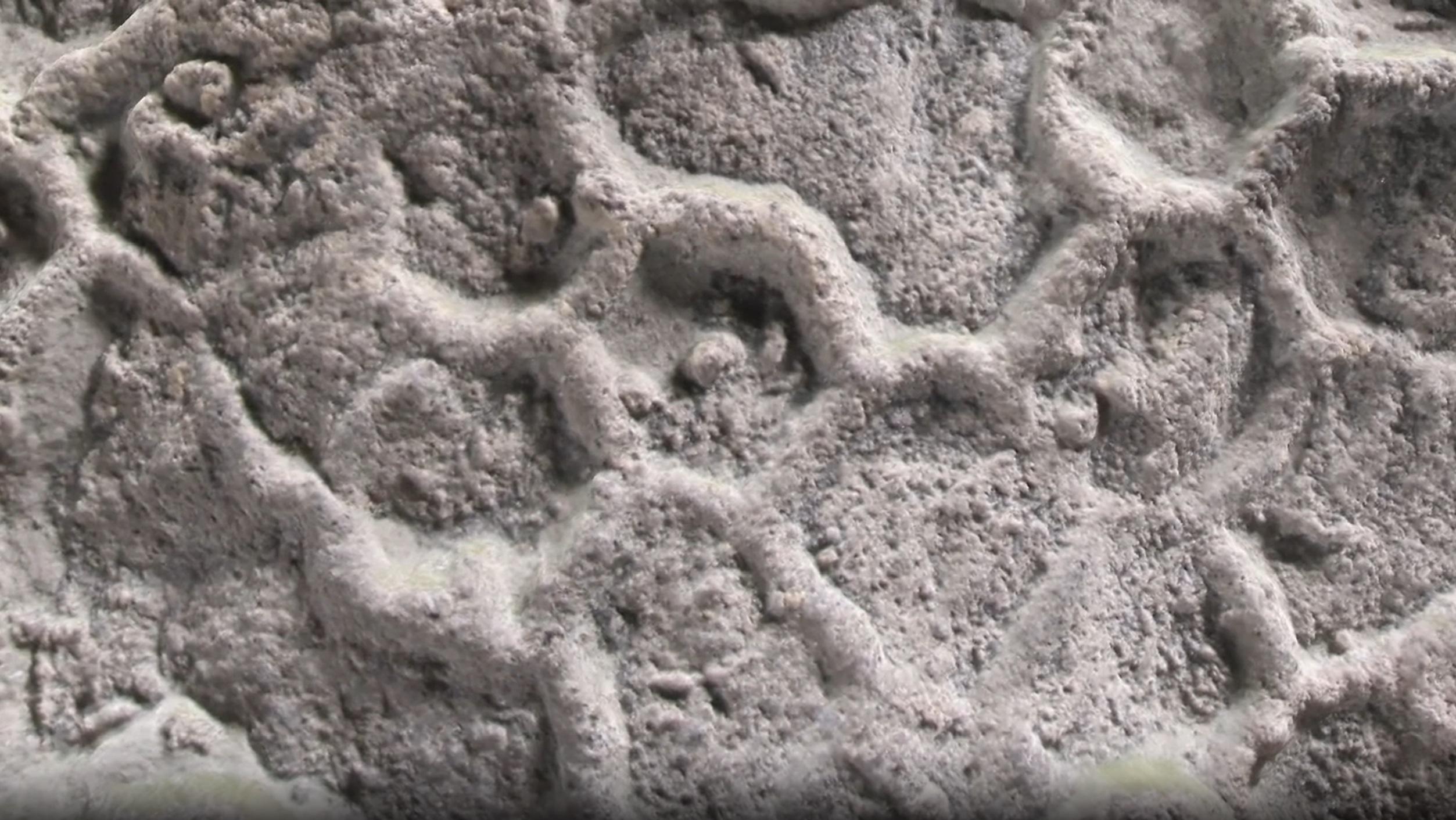
For over five hundred million years, complex tunnel structures characterized by regular hexagonal meshes, known in paleontology by the name of Paleodictyon, have been excavated in the seabeds of the entire planet. Detected up to 3,500 meters deep on the Mid-Atlantic Ridge and even sketched by Leonardo da Vinci, these formations have historically been attributed to algae, sponges, worms or giant amoebae, without the organism responsible for their creation having ever been directly observed.
An international study led by paleontologist Andrea Baucon of the Department of Chemical and Geological Sciences of the University of Cagliari, published in the journal Earth-Science Reviews with the collaboration of the Cnr-Ifac, the University of Genoa, the University of Lisbon, the University of Évora, the Jagiellonian University, the Natural History Museum of Piacenza, the Naturtejo UNESCO Global Geopark and the Sichuan Resources Group Geotourism Technology, reconstructed the morphological structure of the builder, identifying it as an arthropod, probably a small crustacean related to wood pigs.
As illustrated by Andrea Baucon: “Paleodictyon is one of paleontology’s longest-running unsolved cases; the fossils come from the Apennines, Portugal and Poland, while the morphometric analysis was developed at the University of Cagliari. This approach allowed us to use the geometry of the tracks to derive information about the organism that produced them.” The investigation was based on the analysis of fifty specimens and the measurement of 1,314 survey points along the fossil canals preserved in Piacenza, where the tunnels have an average width of 1.6 millimeters and sides that differ on average by just half a millimeter and 8.5 degrees from the ideal geometric shape.
Paleodictyon. Portugal, Cambrian (530 million years)
Girolamo Lo Russo of the Natural History Museum of Piacenza stated: “Not being able to see the animal, we decided to let the geometry of Paleodictyon speak for itself“, while Mattia Alessio Meloni of the University of Cagliari underlines That “in the same cell, the six sides differ on average by half a millimeter: a geometry very close to that of a regular hexagon.” The grooved and sharp-edged walls indicate a mechanical action carried out by articulated appendages supported by a rigid exoskeleton, typical of arthropods.
Regarding the persistence of the phenomenon, Neto de Carvalho of Naturtejo UNESCO Global Geopark highlights: “Those tunnels were dug 460 million years before T. rex and something continues to dig them today, thousands of meters deep, in total darkness“, a concept highlighted by Michele Piazza of the University of Genoa who states: “Those who walk on the Apennines walk on an ancient ocean floor raised and involved in the formation of that mountain range; those rocks were deposited in the same environment where underwater robots today film Paleodictyon, produced in muddy ocean floors.”
In addition to overcoming the hypothesis that the structure served solely as a bacterial culture for food, the research introduces a different functional model, Andrea Barucci of the Cnr-Ifac points out that “the hexagonal mesh could function as a colony’s communication network, along which chemical, hydraulic or acoustic signals could be propagated.” The synthesis of the anatomical and geometric evidence thus allows us to associate the trace with its author, as concluded by Noel Moreira remembering that “for five hundred years scientists have looked at this ‘drawing’ without knowing who signed it; now we know what the author looks like.”