The UAE wants to complete a new oil pipeline project next year, aiming to double export capacity, without needing to cross the Strait of Hormuz.
The above information was announced by the Abu Dhabi media office of the UAE government on May 15. This project is a West-East pipeline, which has never been disclosed before.
Crown Prince Sheikh Khaled bin Mohamed bin Zayed has directed Abu Dhabi National Oil Company (ADNOC) to accelerate the project, which is expected to come into operation next year.
Iran has closed the Strait of Hormuz since late February, when the US and Israel attacked the country. This is the lifeblood of one-fifth of global crude oil trade. Maritime congestion has pushed up energy prices, causing many countries to face a fuel crisis, along with concerns about inflation and economic recession.
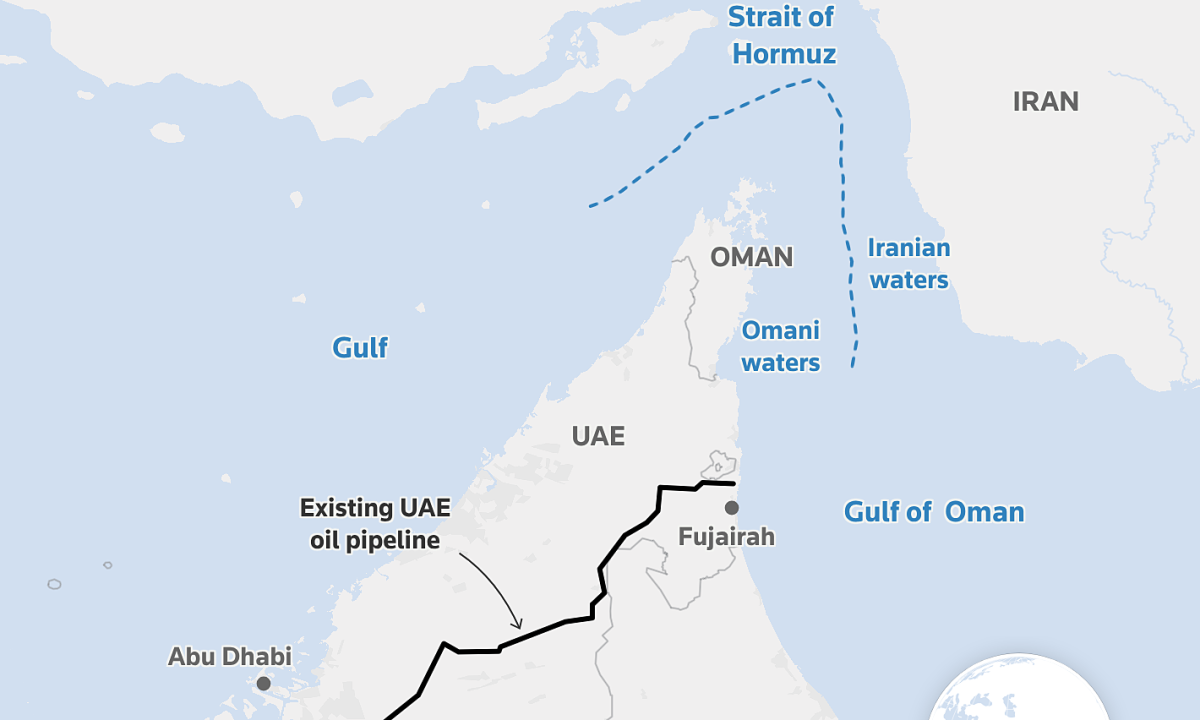
The new oil pipeline will help the UAE “avoid” the above strait, increasing oil exports from the coast of the Gulf of Oman (located outside of Hormuz). This is the country’s second pipeline, after Habshan-Fujairah, and is expected to help them double their export capacity, reaching 3.6 million barrels per day.
UAE’s current oil pipeline. Graphics: Reuters
In the Middle East, they are the second country that can rely on this method of oil export, besides Saudi Arabia. Oman has a long coastline, far from Hormuz. While Kuwait, Iraq, Qatar and Bahrain almost depend on this sea route to transport goods.
The UAE’s decision to rush completion of the oil pipeline came two weeks after it withdrew from the Organization of Petroleum Exporting Countries (OPEC). Leaving OPEC means they are not bound by production quotas, can pump more oil than group members when the Middle East conflict ends and oil trade is normalized.
With the new oil pipeline, they can still pursue their export ambitions, despite the conflict and prolonged blockage of the Strait of Hormuz. This also brings the UAE’s oil exports closer to Saudi Arabia, which sells up to 5 million barrels per day to the world.
Last year, the UAE Energy Minister said that they could increase production capacity to 6 million barrels per day, if needed. Earlier this year, the UAE produced nearly 3.4 million barrels a day, then more than halved when the Strait of Hormuz closed, forcing Abu Dhabi National Oil Company (ADNOC) to stop some production. ADNOC now targets a capacity of 5 million barrels a day next year, three years earlier than planned.
https://romanovka.com/
https://pinup-az.romanovka.com/
https://pinup-online-yukle.com/
https://pinup-casino-yukle.com/
https://northendfish.com/
https://pinup-azerbaijan.pro/
https://chaussures-adrien.com/
https://pin-up.chaussures-adrien.com/
https://mennonerds.com/
https://pin-up-casino.mennonerds.com/
https://pinup.romanovka.com/
https://isaozbay.com/
https://pinup.isaozbay.com/
https://gimns.org/
https://pinup.gimns.org/
https://pinup-az.gimns.org/
https://pin-up.gimns.org/
https://pin-up-az-giris.com/
https://pin-up-az.gimns.org/
https://egitimbulteni.com/
https://pin-up.egitimbulteni.com/
https://pinup.egitimbulteni.com/
https://pin-up-casino.egitimbuLteni.com/
https://pinup-casino.egitimbuLteni.com/
https://pinup-az.egitimbulteni.com/