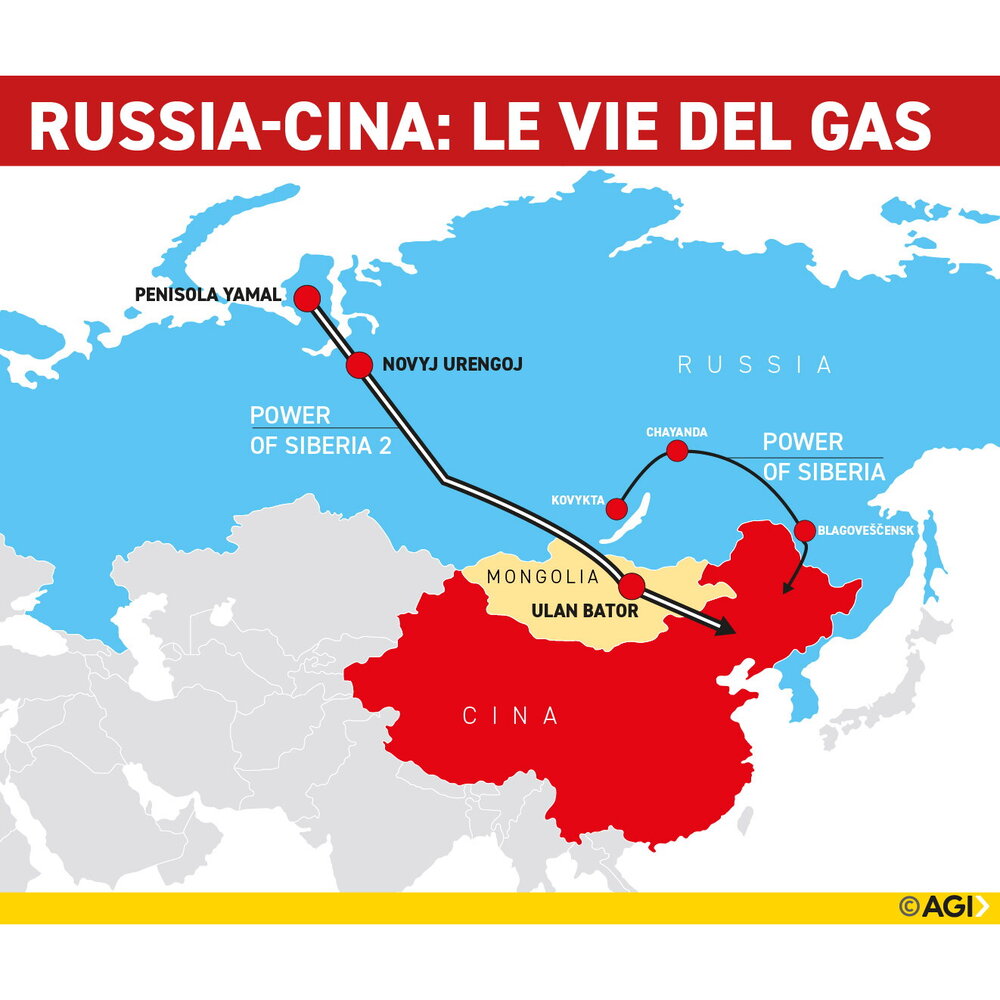
The future of the gas pipeline Power of Siberia 2 is at the center of ongoing talks between Vladimir Putin and Xi Jinping in Beijing. The infrastructure is designed to carry 50 billion cubic meters of gas per year along a route of 2,600 kilometers, connecting the Arctic deposits of Yamal to northern China via Mongolia. The work is strategic for Moscow as an alternative to European markets and would complement the existing Power of Siberia 1, which transported 38 billion cubic meters last year.
The Kremlin has announced “serious and very detailed discussions”, with the Russian president hoping for the finalization of a definitive agreement during his visit in recent days. The negotiations appear favored by the current geopolitical framework: the continuation of blockade of the Strait of Hormuz It directly threatens the maritime routes through which a third of Beijing’s oil and 25% of Beijing’s imported gas transit. This vulnerability has pushed the Chinese government to include the new Russian gas pipeline among its strategic priorities fifteenth five-year plan 2026-2030approved last March.
Moscow’s need and the gas price issue
The pressure for an agreement is also important for Moscow, called to compensate for the drastic drop in exports to Europe, which have collapsed from 157 to just 18 billion cubic meters after the invasion of Ukraine. Gazprom started the first feasibility studies as early as 2020 and signed a thirty-year binding memorandum in September 2025. However, no official confirmation statement was received from Beijing at the time of signing and the construction sites are currently at a standstill.
The main node remains the price. Beijing wants to pay for gas under the same conditions as Russian domestic marketwhile Moscow is aiming for a market formula, similar to that applied for the first Power of Siberia and for the historic supplies to Europe.
Long construction times: start no earlier than 2031
Even in the event of an imminent political agreement, the completion times of the work remain long. The research division of the Chinese state company CNPC estimated last November at at least eight to ten years the duration of the works for projects of such engineering complexity. S&P Global analysts expect an operational start of the infrastructure not before the end of 2031. Currently, China has 5 active gas pipelines covering approximately 19% of domestic consumption.
https://hellokittytoaster.com
https://24th-and-ocean.com
https://thebionaturae.com
https://mobetter-fragrance-oils.com
https://thebugrtey.com
https://thepixata.com
https://jakmean.com
https://master-usa.com
https://theanstoy.com
https://thecoolfox.com
https://hellokittythermos.com
https://theleagera.com
https://xenocam.com
https://theteameffort.com
https://theyootech.com
https://thejiskan.com
https://seticek.com
https://thetopwish.com
https://thetabuproducts.com
https://theviamotion.com
https://theyardwe.com
https://eddie-bauer-home.com
https://thesuitebebe.com
https://thecorbobo.com
https://silentcareboots.com