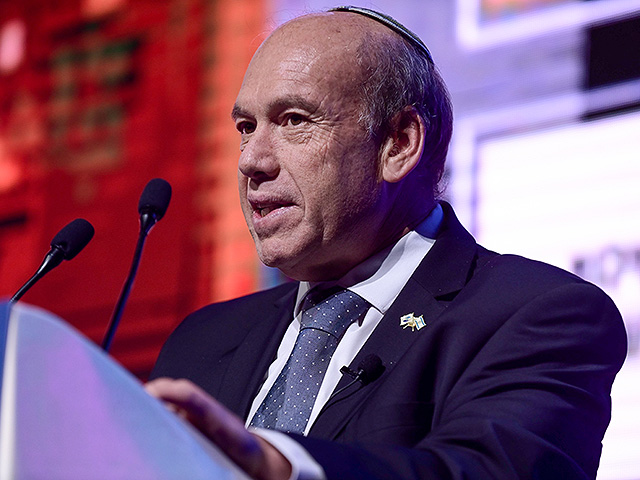
On June 2, State Comptroller and Ombudsman Matanyahu Engelman published a report on an audit of the current accounts of parliamentary factions for 2024. The document revealed systemic violations in the management of public funds allocated to political parties from taxpayers’ money.
State Comptroller Matanyahu Engelman: “All factions are obliged to carefully and wisely use public funds. The violations identified during the audit of the Likud party member registration process, in which the same means of payment were used to register different persons without proper control, are extremely serious. This situation raises suspicions of payment of membership fees by third parties, which may be a criminal offense. The inclusion of such persons in the voter lists can lead to distortion of the results in the selection of candidates in Knesset In addition, it was established that the Labor party acted in violation of the law by receiving a prohibited loan through a party corporation controlled by it. The situation in which 10 active factions have an accumulated deficit totaling 81 million shekels, and 9 defunct parties do not return huge debts to the state in the amount of about 44 million shekels or avoid returning the surplus remaining in their accounts in the amount of about 4 million shekels. is consistent with their obligations to respect the public interest and responsibility. I urge the Knesset to pay attention to this issue to ensure that debts are returned to the public treasury and to prevent similar cases from occurring in the future.”
Likud: negative opinion and fine of 150,000 shekels
The audit revealed two gross violations in the activities of the faction:
Lack of control over dues income: The Party did not verify the identities of registering members and the sources of their payments. It was found that in 41% of bank card payments (16,346 cards) and in 46% of bank transfers, payment was made for more than one person. In thousands of cases, fees were paid from the same wallet for people with different surnames with no obvious connections. This creates a real risk of criminal offenses (payment of contributions by third parties) and undermines confidence in the democratic process. The State Comptroller emphasized that he had already pointed out to Likud the need for control in a previous report, but the party took a passive position, ignoring the obligation to conduct active verification in real time.
Serious violations in the hiring of employees and the provision of benefits: Ineffective personnel management was revealed – bonuses and salary increases for old employees, as well as the provision of assigned cars to administrative activists, some of whom were not even on the faction staff. All these benefits were distributed on the basis of oral decisions, without written documentation and clear criteria.
“Avoda”: negative conclusion and fine of 75,000 shekels
The party violated the law by receiving a prohibited loan through the party corporation Beit Arlozorov Ltd., which was controlled by it, thereby circumventing legislative restrictions aimed at reducing the party’s dependence on the banking system and commercial structures.
The company took out a loan of NIS 1.6 million from a third-party corporation, and NIS 750,000 of this was transferred to the party in September 2024 as income. The party also signed a guarantee for the entire loan. Labor explained this by a cash gap due to the delay in state subsidies for the 2024 municipal elections. However, the audit found that this was not a standard business transaction, and the loan was initially taken for the needs of the party. In 2025, Avoda paid 800,000 shekels to a creditor on behalf of the company, receiving in return a promissory note from its subsidiary, which was recognized as a direct violation of the law.
“Our Home Israel” and “Otzma Yehudit”: financing of personal libel suits
Both factions used government funding to pay for personal defamation lawsuits against their chairmen. This time, the State Comptroller agreed to recognize these expenses as “expenses for propaganda and explanatory work” due to the inextricable association of the names of the leaders with the parties themselves. However, the regulator ordered the parties to immediately approve written regulations for such legal expenses and warned that in the future each such expenditure will be strictly checked for compliance with the law and the principle of preserving public funds.
10 active factions: Significant accumulated deficit
The report documents an alarming trend: the 10 active Knesset factions have accumulated a total deficit of NIS 81.2 million. Because of this, parties are forced to spend current government subsidies not on communication with voters and political activities during their term, but on covering debts from past election campaigns.
9 parties outside the Knesset: millions of unreturned public funds
The report provides a critical picture of the failure to return funds to the budget by parties that are no longer represented in the Knesset. Debts on loans and excess advances (about 43.8 million shekels): 7 parties still have not returned the money: BALAD (338 thousand), Derech Eretz (2.7 million), HaBayt HaYehudi (3.2 million), Greens (3.2 million), Meretz (15.8 million), Atzmaut (4 million) and “Tsomet” https://www.newsru.co.il/ “Tsalash” (15.1 million).
Non-return of fund balances (about 3.7 million shekels): Two more parties – Kulanu (1.4 million) and TELEM (2.3 million) – completed their activities in the Knesset back in 2021 with a budget surplus, but have not yet transferred these surpluses back to the state treasury.
https://web.wnb-shop.com/bonus/200-prozent
https://web.wnb-shop.com/bonus/250-prozent
https://web.wnb-shop.com/bonus/400-prozent
https://web.wnb-shop.com/bonus/300-prozent
https://web.wnb-shop.com/bonus/500-prozent
https://web.wnb-shop.com/casinos/5-euro-einzahlung
https://web.wnb-shop.com/casinos
https://web.wnb-shop.com/casinos/ohne-verifizierung
https://web.wnb-shop.com/casinos/ohne-limit
https://web.wnb-shop.com/casinos/ohne-deutsche-lizenz
https://web.wnb-shop.com/casinos/ohne-lugas
https://web.wnb-shop.com/casinos/schnelle-auszahlung
https://web.wnb-shop.com/casinos/echtgeld
https://web.wnb-shop.com/casinos/ohne-5-sekunden-regel
https://web.wnb-shop.com/casinos/krypto/bitcoin
https://web.wnb-shop.com/casinos/crash-casinos
https://web.wnb-shop.com/casinos/curacao-lizenz
https://web.wnb-shop.com/casinos/oasis-spielsperre-aufheben
https://web.wnb-shop.com/casinos/sic-bo
https://web.wnb-shop.com/casinos/oesterreich
https://forum.teslaservice.kiev.ua/topic/830-%D1%81%D1%82%D0%B0%D0%B1%D0%B8%D0%BB%D0%B8%D0%B7%D0%B0%D1%82%D0%BE%D1%80%D1%8B-%D0%BD%D0%B0%D0%BF%D1%80%D1%8F%D0%B6%D0%B5%D0%BD%D0%B8%D1%8F/
https://replace.org.ua/topic/13885/
https://nouveauxcasinosfiables.girandieres.com