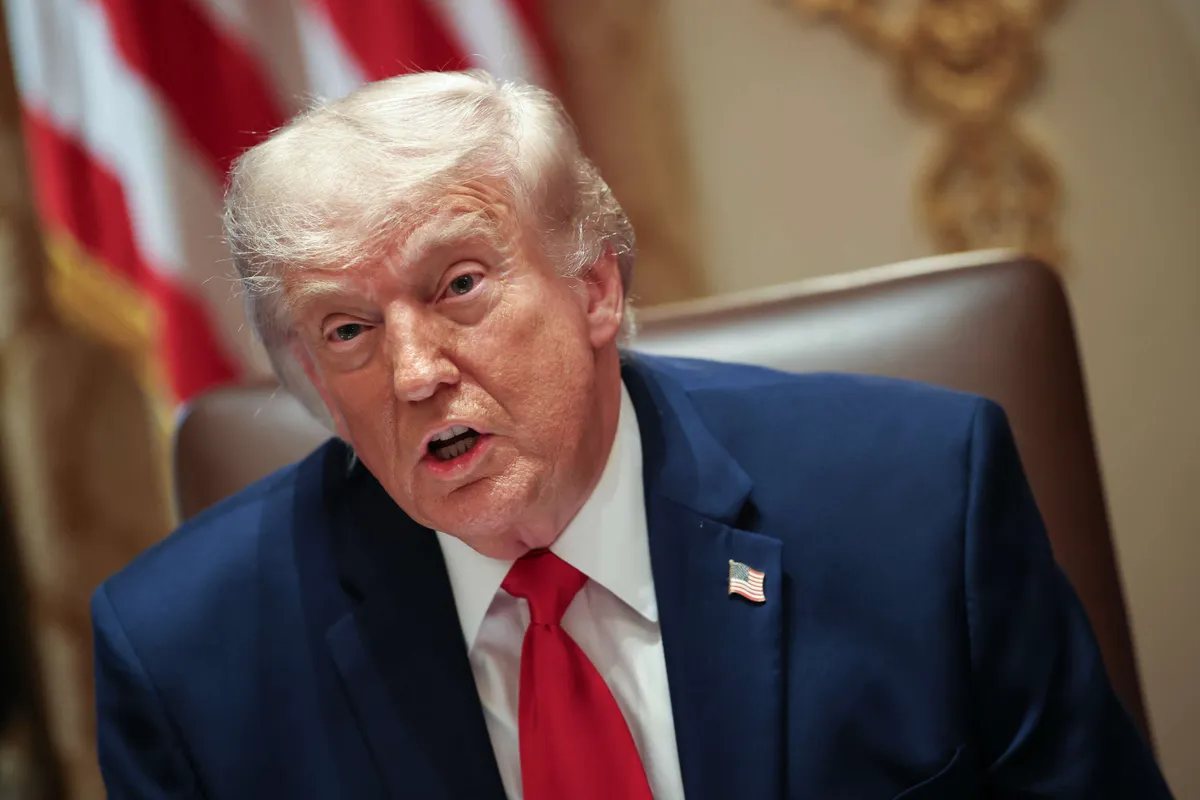
President of the United States Donald Trump has made Europe realize that dependence on other countries’ technology is Europe’s vulnerability.
Trump’s threats to Greenland and the sanctions aimed at European authorities, as well as the use of technology dependence as a means of political pressure, have awakened the EU to understand how vital Europe’s technological self-sufficiency is.
The first warning to Europe already came from the president Joe Biden at a time when this pushed through regulations to limit the export of artificial intelligence chips to some European countries.
In Trump’s second presidential term, another concrete example of the risks of dependence was provided, when the US administration imposed sanctions on officials of the International Criminal Court and excluded them from US payment systems and services.
On Wednesday, the union struck back. Chairman of the Commission Ursula von der Leyen emphasized that Europe can no longer afford to depend on other countries for the technologies that keep hospitals running, energy grids stable and digital services secure.
A self-sufficient cloud
On Wednesday, the European Commission announced a broad technological self-sufficiency package (European Technological Sovereignty Package). Its goal is to strengthen Europe’s digital self-sufficiency and crisis resistance.
As part of the package, Europe wants to create a “sovereign cloud” that prevents the use of the so-called kill switch. A kill switch refers to the concern that an external actor, such as a government or a company, could cut off access to critical systems or limit their operation in order to generate political or economic pressure.
According to the Commission, EU self-sufficiency means that the Union has cloud and artificial intelligence self-sufficiency, especially in critical sectors such as defense.
According to the bill, member states must in the future ensure that non-EU cloud service providers are not used in the most critical sectors.
Currently, the vast majority of the European cloud is offered by American companies. The biggest companies are Amazon, Microsoft and Googlewhich control about 70 percent of the European cloud services market.
The cloud and artificial intelligence sovereignty presented by the Commission is based on four assurance levels, which determine the conditions under which services can be used in the public sector.
The Commission justifies the four assurance level model with safety and operational reliability.
“We don’t want a situation where an external operator has a so-called kill switch for our services. The goal is that we can operate in all conditions,” says the vice-president of the commission Henna Virkkunen.
Virkkunen, the commissioner responsible for technological sovereignty and security, says that in the most critical sectors, the cloud must be managed from Europe.
THE FACTS
Four levels of security
Level 1: Public sector data remains in Europe
Level 2: Advanced measures to prevent third-party access to data and prevent disruptions to service continuity
Level 3: Service providers must be EU owned and controlled by the EU. The Commission can also recognize providers from third countries
Level 4: Full European control of software and data
According to Virkkunen, digital technologies are today a critical part of security, economy and society. It is therefore essential that Europe is able to master the technologies of very important services.
The vice-president of the commission admits that the highest security level, i.e. level four, practically means that American companies such as Google or Amazon, for example, cannot participate.
”Level four criteria are very strict. In practice, it is very difficult for non-EU companies to fulfill them. However, it is good to note that this only applies to a small part of the services,” says Virkkunen.
He emphasizes that level four is intended for particularly critical sectors, such as defense.
According to Virkkunen, the indirect participation of American companies through, for example, European partnerships does not meet level four safety requirements either.
Virkkunen says that the commission has also used similar security level criteria in its own cloud service procurements, and for example the Google–Proximus collaboration only met level two requirements, according to the commissioner.
A comprehensive package
Opened the reform.
Henna Virkkunen, the senior vice-president of the European Commission responsible for technological self-reliance, security and democracy, already told a few journalists about the content of the extensive legal package on Tuesday. Stock photo.
PHOTO: Joel Maisalmi
The technological self-sufficiency package announced on Wednesday is based on two key legal initiatives. The first is the Chips Act 2.0, which updates the Chips Act that entered into force in 2023.
Semiconductors are essential for both artificial intelligence and many everyday technologies. Although the EU has strengthened its position with chip legislation, it is still dependent on other countries, especially in the production and design of the most advanced chips.
“It is estimated that in 2030 already 70 percent of the chip market will concern artificial intelligence chips, and the European Union has no capacity there,” says Virkkunen.
The new chip law aims to respond to this development by increasing production capacity, speeding up licensing procedures and strengthening cooperation with partner countries.
“We are not going to do everything ourselves or work in isolation, but to build more flexible supply chains with reliable partners,” says Virkkunen.
The new chip law emphasizes EU ownership, but Finland’s semiconductor and electronics industry, for example, relies heavily on global supply chains.
“We are not shutting anyone out, but building our technological sovereignty on our own strengths”, Virkkunen emphasizes.
The commissioner praises Finland’s high-level research and design development.
“We have to build on this success and support the design and manufacture of more advanced chips,” says Virkkunen.
Clouds and artificial intelligence
American companies rule.
Amazon, Microsoft and Google control about 70 percent of the European cloud service market. Stock photo.
KUVA: FRIEDEMANN VOGEL
Another key legal initiative is the Cloud and AI Development Act.
It aims to triple data center capacity in Europe over the next five to seven years. At the same time, we want to speed up the introduction of artificial intelligence in companies and the public sector. Part of the law is the creation of a common EU-level framework and assurance levels to assess the strategic importance and security of cloud and artificial intelligence solutions.
In addition to these, the whole of technological self-sufficiency includes an open source code strategy and a road map for the digitalization of the energy sector and the utilization of artificial intelligence.
The open source strategy aims to reduce the EU countries’ dependence on foreign ICT services, for which huge sums of money are spent.
“Europeans buy ICT services for around 260 billion euros from third countries,” says Virkkunen.
There are millions of open source code developers working in Europe, and the goal of the new strategy is to increase the use of European solutions, especially in cloud services, artificial intelligence, cyber security and internet infrastructure.
“Open source code is a good way to speed up our own innovations,” says Virkkunen.
At the same time, the aim is to support companies in the field, develop know-how and ensure the long-term maintenance and security of the software. Guidelines for the wider use of open source code will also be drawn up for the public administration.
The digitalization of the energy sector forms its own entity. High energy prices and growing electricity consumption increase the pressure to improve system efficiency. According to the Commission’s roadmap, artificial intelligence and digital solutions can help optimize energy production and consumption and integrate data centers into the energy system in a sustainable way. At the same time, we want to promote the development of smart electricity networks and speed up the introduction of smart meters, so that consumers can manage their energy use better and reduce their costs.
400 billion investments
The Commission estimates the future need for investment to be very large.
“We are talking about investments of around 400 billion euros in the coming years,” says Virkkunen.
The EU budget is not enough to cover the amount. Therefore, the solution must be found in a combination that includes private funding, national investments and EU-level instruments.
“We have to build public and private sector partnerships,” says Virkkunen.
He also highlights the need to create a European capital fund.
According to Virkkunen, international investors are interested in, for example, Finnish quantum firms, which would be good to be kept under European ownership.
“We lack the opportunity to invest capital in companies at the European level”, admits Virkkunen.
The Commission intends to continue preparations for the development of financing solutions.
Technological sovereignty is not born quickly, because now about 80 percent of technologies come from outside Europe.
Virkkunen believes that in 2030, however, we will already be “in a much better position.”
Next, the bills will proceed to the consideration of the European Parliament and the member states.
THE FACTS
The European technological self-sufficiency package
1) Chips Act 2.0
- Strengthens the EU’s semiconductor capacity, especially for the needs of artificial intelligence
- Speeds up permit processes and increases international cooperation
- Create a mark of excellence for European chip regions
- Supports investments and reduces supply chain risks
- AI components’ share of the market >70% by 2030
2) Cloud and AI Development Act
- Part of the EU’s AI Continent action plan
- The goal is to triple data center capacity (5–7 years)
- A framework for assessing cloud and artificial intelligence sovereignty using assurance levels
- Speeds up data center construction and emphasizes durability
- Supports the introduction of AI, e.g. through the EU central network
3) Open Source Strategy
- More than 3 million open source developers in Europe
- Scale European solutions (AI, cloud, cyber security, chips)
- Supports know-how, startups and infrastructure
- Promotes use in public administration and interoperability
4) Digitalisation & AI in Energy (roadmap)
- Responds to energy price pressures and digitalization consumption
- Integrate data centers more sustainably into the energy system
- Promotes smart grids, meters and AI solutions
- Supports energy AI models based on European data
- Facilitates cross-border energy data and flexible services
https://mforum3.cari.com.my/home.php?mod=space&uid=3406760&do=blog&quickforward=1&id=612043
https://dev.to/mushfiqurrahim/lazy-saturday-wins-in-calabar-1ikc
https://backloggery.com/RahimChowdhury
https://www.arcade-history.com/?page=public&uid=21834
https://exchange.prx.org/series/62585-chicken-road-bangladesh-guide-fun-gameplay-bdt
https://we.riseup.net/eserveli/chicken-road-bangladesh-review-fun-gameplay-bdt-re
https://bitcointalk.org/index.php?action=profile;u=3756880
https://admin.phacility.com/p/ShuvoBiswas/
https://www.deviantart.com/abuhider/journal/Mymensingh-s-Chicken-Road-Adventure-1333365037
https://pixabay.com/users/taijulislam-56006483/
https://www.deviantart.com/abuhider/journal/Dhaka-Bonus-Win-1336881226
https://myanimelist.net/profile/jordonwi
https://mforum3.cari.com.my/home.php?mod=space&uid=3406760&do=blog&quickforward=1&id=612041
https://www.bigoven.com/recipe/another-massive-paradigm-shift/3218747
https://pixabay.com/users/junaidsiddique-56007940/
https://www.deviantart.com/abuhider/journal/Barisal-s-Crazy-Time-Magic-1333001447
https://dev.to/tapashbaisya/rajshahis-mega-wheel-thrills-4pjk
https://codepen.io/ManjuralIslam/pen/MYbvGrN
https://findaspring.org/members/rogersimmmo/
https://lawschoolnumbers.com/giecphangqua
https://www.reverbnation.com/artist/bnedw42f
https://www.bigoven.com/recipe/in-the-evaluation-of-modern-entertainment-architectures/3218745
https://mforum3.cari.com.my/home.php?mod=space&uid=3406760&do=blog&quickforward=1&id=612050
https://mforum3.cari.com.my/home.php?mod=space&uid=3406760&do=blog&quickforward=1&id=612046
https://findaspring.org/members/dorahi/