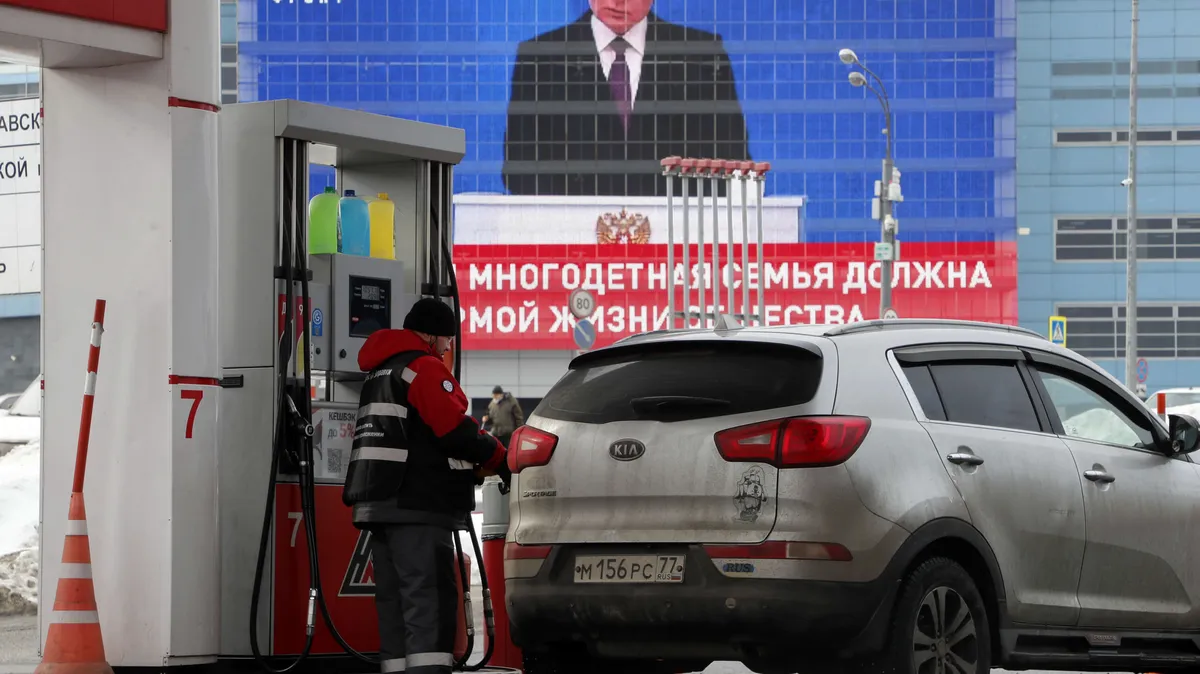
Fuel prices have risen, queues have become unbearably long and some service stations have been closed. This is the reality of a motorist in Russia.
In many regions of Russia, including the capital Moscow, there is, frankly, a fuel crisis. It already has a significant impact on the everyday life of citizens and also affects mental endurance.
Therefore, the effects of the fuel shortage have already been felt Psychologies-a publication that examines the problem from a psychological perspective, of course.
The price fluctuates
For example, the fact that the motorist cannot predict the price at which fuel is available for sale at any given time – if there is any at all – is aggravating.
“At independent gas stations located in the central federal district, which still have fuel left, Ai-92 gasoline is sold at a price of 115 rubles per liter and more expensive, Ai-95 gasoline at a price of around 120 rubles. The price of diesel per liter ranges from 130 to 140 rubles,” the site says.
In euros, the prices in question are around 1.30–1.60. For Russians, these prices are annoyingly high and have risen specifically as a result of the war and the subsequent crisis.
Prices at chain gas stations differ only slightly from those before the crisis: Ai-92 costs 63–66 rubles per liter and Ai-95 costs 70–73 rubles per liter. In our currency, these more moderate prices are around 0.72–0.84 euros.
Some gas stations are indeed closed and others have long queues. In some places, restrictions have been introduced, and a maximum of 20 liters of fuel can be purchased per car.
A common sight.
Fuel shortages, queues, station closures and price problems.
PHOTO: Stella Pictures
This contributes to general restlessness, which is also caused by problems in other areas of life. This is exactly what worries psychologists.
“Deliveries of food and goods are delayed, air traffic and passenger traffic are affected, and in some places prices are already rising. Everything in our lives is so strongly interconnected that disruptions in fuel delivery cannot help but affect business and thus, ultimately, consumers,” the publication writes.
“I woke up at four o’clock”
Therefore, psychologists have shared citizens’ experiences of where queues are shorter, which gas stations are closed and where refueling is more difficult. Experiences have been found on social media.
“We knew that we would have to wait in line, so we set aside time for it on Saturday and brought cherries and an audiobook. In the end, we waited in line at the gas station for 45 minutes – and it went by quickly,” writes one of the commenters.
“We canceled the whole family’s car trip to visit relatives. If you get stuck on the highway like that and run out of fuel. Or spend the whole vacation standing in lines,” writes another.
“I woke up at four in the morning in order to fill up without a queue. I wasn’t the only one so smart. There was a queue, but I got through it in 15 minutes. When I started to drive away, there was already a huge hose behind,” the third shares his experience.
Something good too
Some are looking for positive aspects of the situation for the citizens. One aspect is the reduction of air pollution.
“The possibility to give up the car and switch to the subway makes the air in the capital cleaner and increases the physical activity of the citizens”, believes the former health director of Russia.
Psychologists have found that Internet users vent their emotions – including in the form of humor, which helps to relieve tension and accept what has already happened and is currently happening.
RandyCarpenter#142775 user profile
Carlos Woods.Html
John Howard on Fueler.io
Charles Smith on Fueler.io
3D Warehouse
CAMARO6 – Why User Experience Matters More Than Ever in Modern Online Platforms
Brian Harris on Fueler.io
CODAP
DonaldHarris#142776 user profile
3D Warehouse
CAMARO6 – The Growing Importance of Accessible Digital Experiences
CarlosWoods – Pedal Room
JamesBailey – Pedal Room
Allen Miller – Channel on Coub
3D Warehouse
Characters
Matija Čupić – Channel on Coub
CAMARO6 – Kako se mijenjaju očekivanja korisnika u digitalnom okruenju
Characters
CODAP
Characters
John Francis
Clayton Hall on Fueler.io
CAMARO6 – Zato je jednostavnost postala ključ uspjenih internetskih platformi
Marino Dragić