Consumption increased at World Cup hosts, but the tournament is unlikely to reverse the general decline of the global beer industry.
On the first day Scottish fans flocked to Boston (USA) to watch the World Cup, Boston Beer Company had to make two emergency beer deliveries to Sam Adams Boston Taproom.
“There was a time when we poured a glass of Sam Adams Boston Lager every 12 seconds. They were truly wonderful guests,” recounted Mr. Jim Koch, Founder and CEO of Boston Beer Company – the maker of Samuel Adams beer.
The 2026 World Cup attracts millions of fans around the world to cheer on the national team, bringing a boost to the American beer industry. In Philadelphia, where six matches took place, spectators drank a total of 290,000 beers at the stadiums, according to FIFA.
The American Beer Institute said that in the first four weeks of the tournament, beer sales at bars, restaurants, stadiums and other venues in host cities increased 14% compared to the same period in 2025.
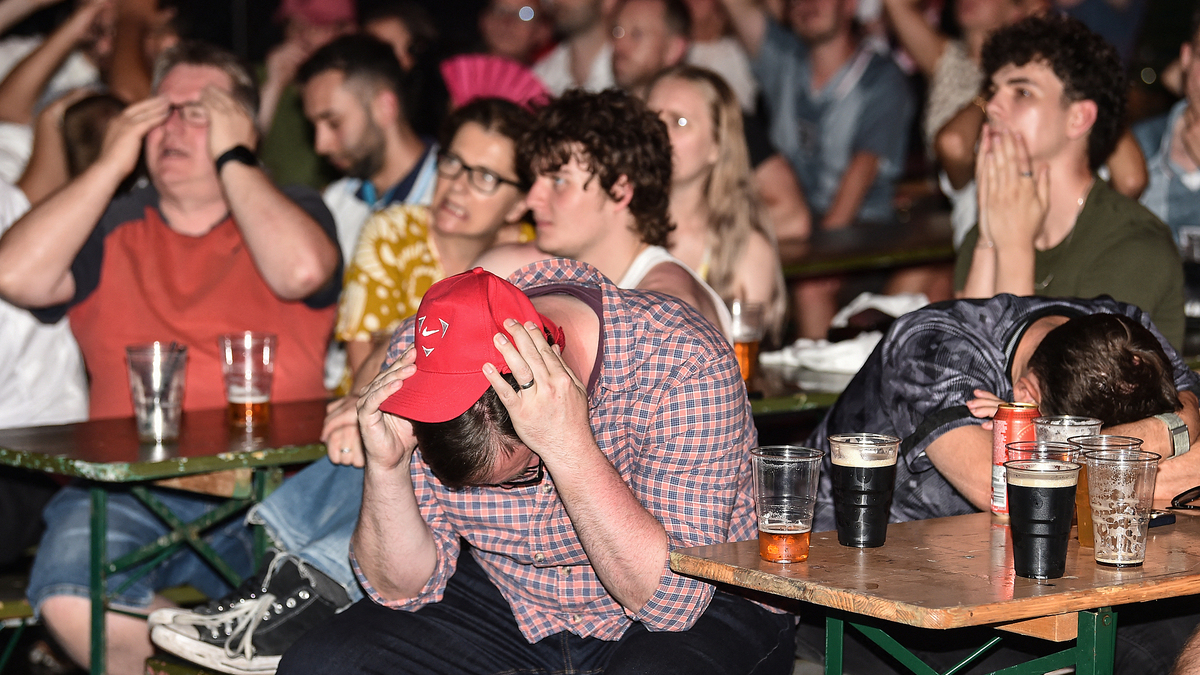
British fans react after Argentina scored an equalizer while watching live the 2026 World Cup semi-final between England and Argentina, at Camp and Furnace stadium in Liverpool, July 15. Image: AFP
Previously, beer companies also invested heavily in this year’s tournament. AB InBev, which owns Budweiser and Michelob Ultra, is the official beer sponsor of the World Cup. The company has marketed and organized approximately 200,000 group football viewing sessions in 40 countries.
Or Chicago-based beer company Molson Coors increased its marketing budget by 60% in June and July compared to last year, and introduced a special edition soccer ball that can hold 12 cans of Miller Lite.
However, the biggest football tournament on the planet only stimulates beer consumption on match days and in host cities. According to the American Beer Institute, nationwide sales during the four weeks of the World Cup increased only 4%.
Even before the season ended, beer consumption in some markets was down. Morgan Stanley estimates that the World Cup will help global beer consumption increase by 17 basis points (0.17 percentage points), 24 basis points lower than the previous forecast. The main reason is because the teams from major consuming markets such as Brazil, Germany and Colombia were eliminated earlier than expected.
The bank also warned that brewers may have to adjust output in the third quarter to match actual demand. The risk of having to adjust inventory is rated highest in Brazil, Germany, Portugal and the Netherlands.
In terms of brand, Carlsberg is considered to be the top beneficiary, thanks to teams in its important markets such as England, France, Switzerland and Norway advancing deeply. Heineken and Royal Unibrew generally did not change much, as positive and negative influences in the market offset each other.
Meanwhile, shares of AB InBev and Constellation Brands – the company that holds the right to distribute the Corona and Modelo brands in the US – simultaneously fell after the Mexican and Brazilian teams were eliminated.
Ms. Maybell Romero, Professor of Law at Tulane University, clearly felt the atmosphere change in Mexico City after the Mexican team was eliminated. “The whole city seemed to fall into a quiet state and people went out less,” she said.
Theo APit is unclear whether the World Cup can reverse the downward trend in the beer market, even though the tournament is hosted by three countries with 16 host cities. Morgan Stanley estimates beer sales in the US increased just 2.2% during the season.
In recent years, beer sales have been struggling globally. The American Brewers Association says beer consumption has declined steadily over the past decade. Canada recorded a similar trend, according to the national statistics agency. Brewers of Europe says the situation is no different.
Many consumers cut down on alcohol for health reasons. Last year, for the first time in a Gallup survey, 53% of Americans said that drinking “one or two drinks a day” is bad for their health. Sales of non-alcoholic beer are growing but currently only account for about 1% of the market, according to the American Beer Institute.
Economic concerns also affected sales. Beverage market research firm IWSR said overall alcohol consumption in the US fell 5% last year, partly due to cost of living pressures.
In addition, Mr. Craig Purser, President and CEO of the US National Beer Distributors Association, said that smartphones and Netflix have also caused people to gather less to drink beer. “If people become more withdrawn and spend less time together, that will definitely affect beer consumption,” he said.
The beer industry still holds out hope. In May, the US National Collegiate Athletic Association (NCAA) ended the ban on alcohol advertising during the March Madness basketball tournament. From next season, beer, wine and spirits companies will be allowed to sponsor the tournament for the first time.
Boston Beer Company CEO Jim Koch isn’t too worried. He said that beer has accompanied human society and civilization for 10,000 years. “Beer will always be a part of helping people enjoy life and the time we have on Earth,” he declared.