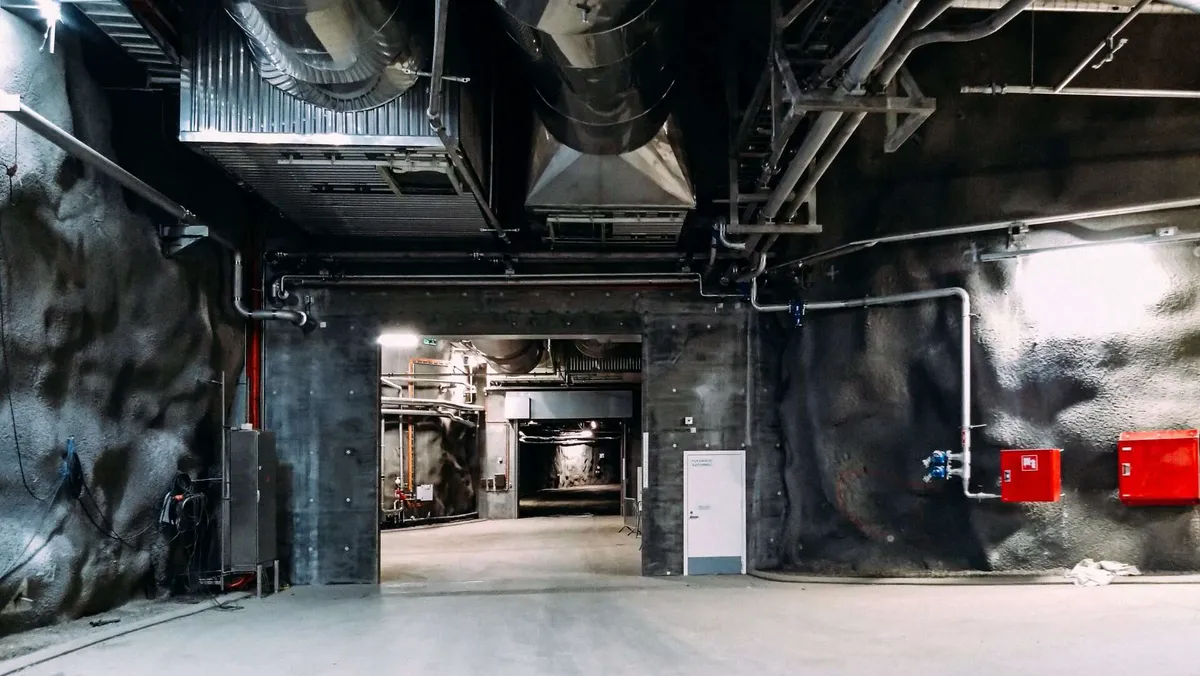
Nuclear waste may soon begin to be dumped into the ooze of the island of Olkiluoto, located in the Eurajoki.
Radiation Protection Center (STUK) advocate for those operating in the area for Posiva Oy permits to use the excavated spent nuclear fuel disposal site for storing nuclear waste. This would be Posiva, founded in 1996 according to the world’s first industrial-scale spent nuclear fuel disposal facility.
Posiva has not been able to develop a nuclear waste storage solution for free. Kauppalehti’s analyst Ari Rajalan according to the company, a good 1.6 billion euros have been spent on the project.
“Posiva is not an ordinary market-oriented company, but an implementer of its owners’ nuclear waste management. Its task is to take care of the owners’ statutory obligations regarding the final disposal of used nuclear fuel. The company’s total turnover therefore shows how much the nuclear waste disposal site has paid so far,” says Rajala.
They are the owners of Posiva Teollisuuden Voima Oyj as well as Fortum Power and Heat Oy. The latter is a minority owner with 40 percent of the A shares.
Fortum Power and Heat is a part Fortum Suomi Oyj, of which more than half is owned by the Finnish state.
Posiva’s communications manager Ville Kulmala states in an e-mail to Kauppalehti that the calculated expenditure of around 1.6 billion is estimated to be lower.
“The research work related to the final disposal of spent nuclear fuel has already started in Olkiluoto in the early 1980s. Thus, the calculations of the total costs used so far are around two billion euros.”
According to Kulmala, the company does not take a position on what kind of sums would be spent annually to operate the disposal site. According to him, the costs depend on, for example, the amount of nuclear fuel used and the excavation work.
“During the operational phase, costs arise from, for example, encapsulation and final disposal activities, maintenance and the use of underground facilities and excavations, as well as the continuous development of operations.”
Kulmala explains in more detail what it means in practice when nuclear waste is stored in the ground.
“The final disposal of spent nuclear fuel is based on the multi-barrier principle. Fuel cooled for decades is isolated from the environment by means of several complementary technical and natural barriers deep into the bedrock.”
After all, according to Kulmala, the encapsulated fuel is placed in bedrock excavated at a depth of about 430 meters.