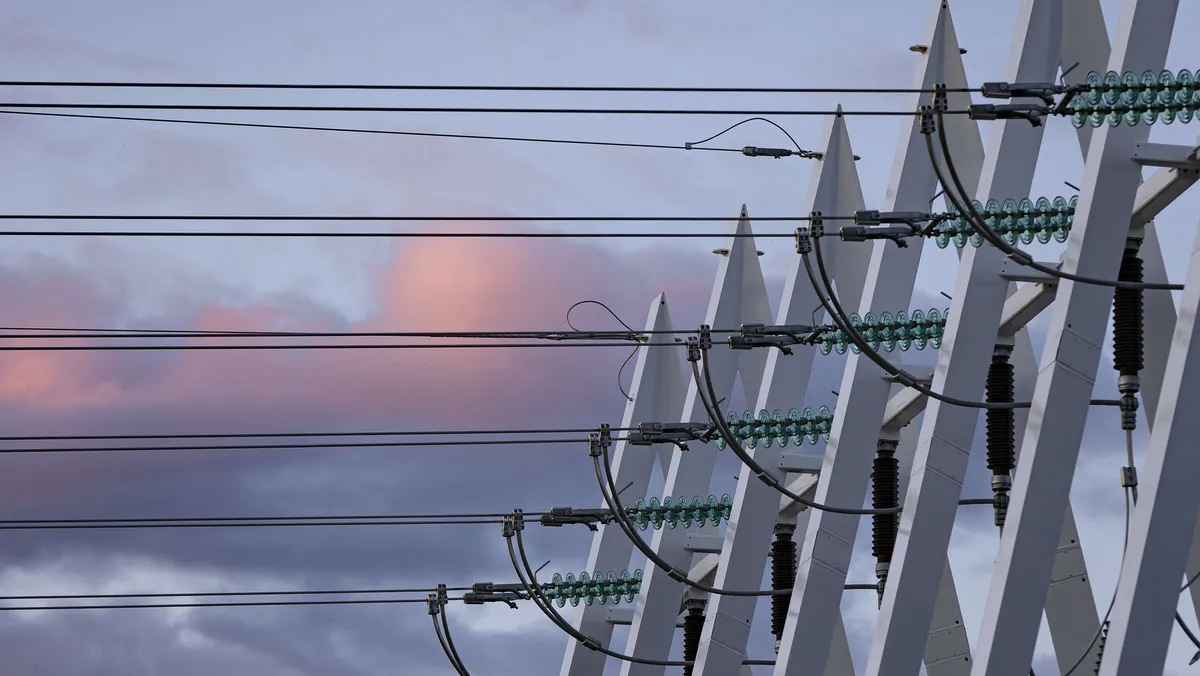
Data centers and, to a significant extent, electricity network investments related to their needs are being built in Finland at such a huge pace that politicians are forced to make political decisions on the matter.
Finland’s electricity network is still in a reasonably good situation, but the capacity will be met quickly if the grid company Fingrid’s the warning about a 40 percent increase in Finland’s electricity consumption in five years will come true. The reason is the huge data center and electric boiler projects.
For example, the Netherlands has become a horror example of a country where the electricity grid has suffered from an ever-worsening overload and the lack of transmission capacity.
All of this shows that the functionality of the electricity network cannot be left solely to market forces. Now the situation is that those joining the electricity network go wherever they want, and Fingrid or the local electricity network company builds the network according to the needs of the subscriber.
It is clear that Finland must make the most of the global data center boom, but Finland must be able to play its chips correctly. There is no reason to close the investment cloths, but you should use common sense to implement them.
Politicians are responsible for this, because we need legislation to ensure that the network investments required by the market can be made rationally from the point of view of the whole.
Fingrid’s 5.2 billion euro investment program will certainly make it possible for a huge amount of new electricity production, consumption and storage to be added to the Finnish electricity system in the next ten years. So not everything meets the needs of data centers.
However, the political question is where these investments are physically located.
Now there is no such binding legislation. Last week, the minister responsible for energy affairs Sari Multala (kok) said that the government is rapidly preparing an amendment to the Electricity Market Act, which aims to enable the prioritization of those joining the electricity network in a situation where the network capacity is limited.
At the same time, the goal is to achieve the greatest possible cost efficiency, so that the financial pressure on households and other business activities arising from the construction of networks remains as small as possible.
The Australian federal government, for example, has outlined the “causer pays” principle, meaning that large data centers themselves must pay for connecting to and strengthening the electricity grid.
Should we think about it differently? Australian Federal Government has, for example, outlined the “causer pays” principle, i.e. large data centers themselves must pay the entire costs of connecting to the electricity grid and its reinforcement. This is aimed at ensuring that infrastructure costs in the billions are not transferred to households or other companies.
As a counter-argument, it can be said that no other industry has paid separately for the fact that the electricity grid has been strengthened and built throughout the country, but everyone has been involved in the infrastructure works.
However, that cannot be the reason why the issue should not be resolved in the same context, when the Electricity Market Act is opened anyway.