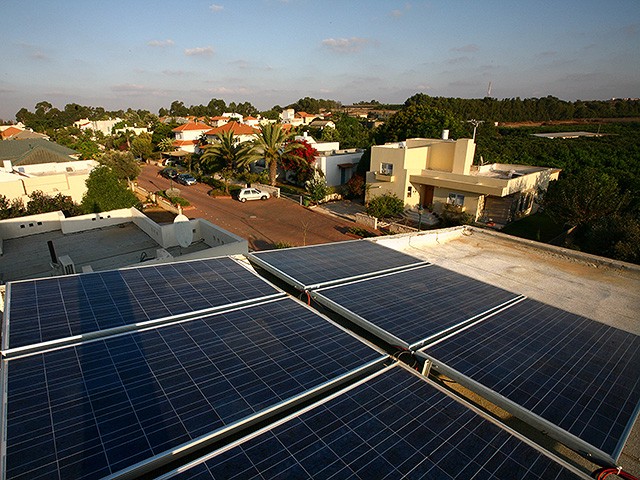
The Electricity Authority has published a draft decision on the transition to a new system of payment for electricity generated by rooftop solar installations.
The changes will only affect new installations that will appear starting in 2027; owners of existing ones will retain the high tariff guaranteed to them for 25 years.
Currently, solar subsidies account for about 10% of electricity bills, and the agency intends to reduce it given the sharp decline in the cost of solar panels and the strengthening of the shekel against the dollar.
According to the project, from 2027 to 2030, the tariff for installations with a capacity of up to 15 kW, which includes almost all private houses, will be reduced annually by 5%, that is, by a total of about 20%. In addition, half the change in the shekel-dollar exchange rate from the base level of 3.5 shekels per dollar will be added to or subtracted from the reduction. If the rate remains around 3.1 shekels, the tariff for installations in 2027 will be about 43 agorot, and by 2030 it will drop to 35.5 agorot. The duration of the guaranteed tariff in 2027 will be reduced from 25 to 20 years and will continue to decrease, so that the deadline for receiving it will remain 2047.
Owners of medium-power installations, up to 100 kW – for example in schools and small shopping centers – will be able to choose between a guaranteed tariff and a direct contract with a private electricity supplier at a market price with a premium from the state, which will decrease over the years.
So, in 2028, they will be able to choose between a guaranteed tariff of about 33 agorot per kWh and an agreement with a private supplier with a premium of about 15 agorot. From 2028, applications for connecting installations with a capacity of more than 15 kW to the network will not be approved automatically: priority will be given to those who voluntarily waive most of the surcharge.
The project also provides for the abolition of current incentives for energy storage systems: the management explains this by reducing the cost and the emergence of more efficient alternatives. Comments on the project will be accepted until November 10.