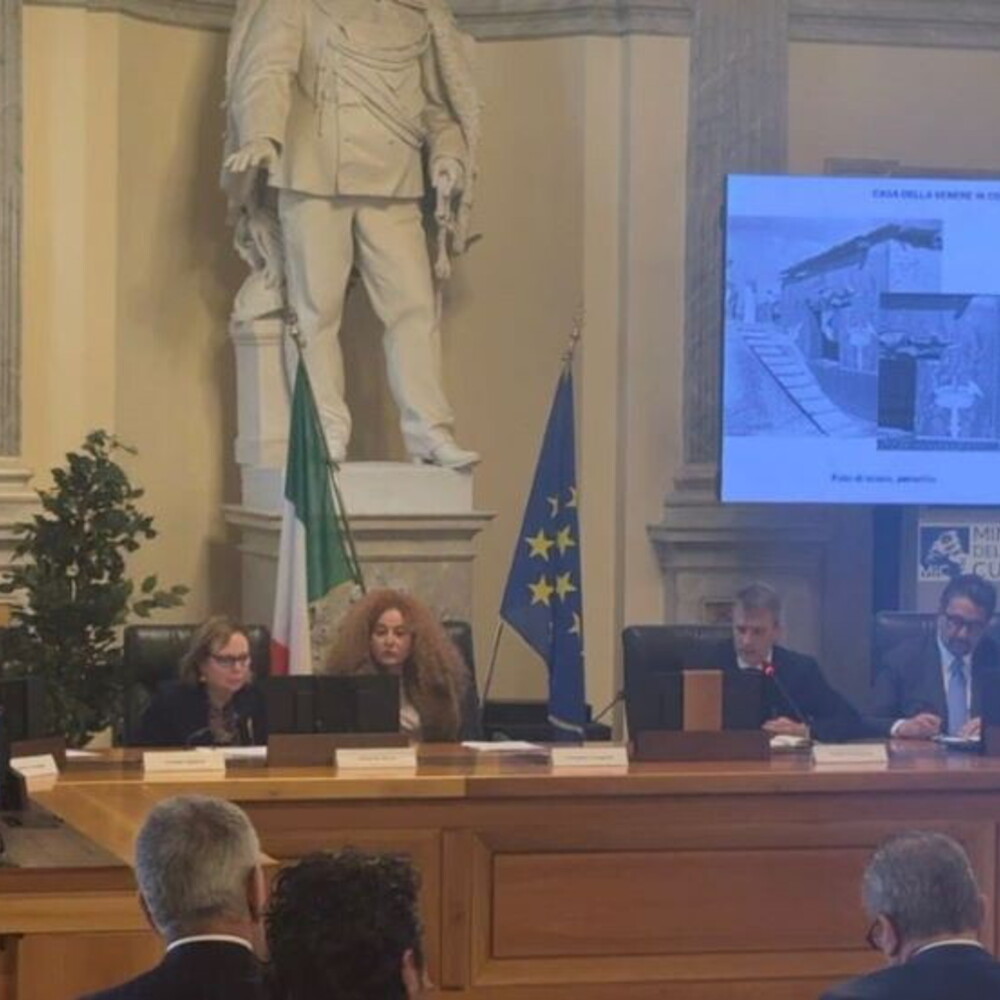
The precise monitoring of the entire ancient city of has been completed Pompeiiwith aunprecedented mappingof the state of conservation ofarchaeological site. After over 8 months of field activities, conducted by multidisciplinary teams of architects, engineers, restorers and archaeologists, have been developed more than70 thousand cardsrelating to approximately 13 thousand environments belonging to 1,200 units including homes and shops.
The mapping of Pompeii
The investigation made it possible to systematically identify and classify the different ones forms of degradation and risk affecting structures, surfaces and decorative devices, thanks also to the adoption of an ad hoc digital platform. The system, based on aweb appallows continuous monitoring and real-time reporting of critical issues, providing a complete and updated cartography of the entire site.
From emergency to prevention
The data collected were organized according to criteriapriority and urgencywith the aim of plan routine maintenance interventions and extraordinary on a three-year basis. An approach that marks the transition from emergency management to onepreventive strategy and programmed, also thanks to the use of advanced IT tools and analysis systems.
Alfonsina Russo: “A fundamental step”
For the head of the Department for the Valorisation ofthe cultural heritage of the MiC,Alfonsina Russo, the completion of the monitoring represents “a fundamental step” which allows us to plan more effective interventions, while at the same time improving use and expanding the areas accessible to the public.
The director of the archaeological park: “Pompeii is in good health”
In detail, the director of the Archaeological Park Gabriel Zuchtriegel explained the integration between advanced technologies and field work: “There are satellites that can measure even small movements, for example a wall that is tilting. There aredrones, There arerobot which give us images that we can compare, every month we do a drone flight, we do a drone flight after every exceptional weather event, we can compare the images also using artificial intelligence, but the most important thing is the people who go into the field and see”.
“And they describe what they see and do even more. Thatindicator of attention it is already a first evaluation. I strongly insisted on this aspect because I said it is useless for us to carry out a merely descriptive activity which then remains at the level of research and perhaps disappears in a drawer, but we already make an initial assessment of priorities, which allows us to move directly from monitoring to treatment”.
Zuchtriegel also highlighted how the first results are encouraging: “The state of health of Pompeii is better than what we thought we would find when we started this monitoring.”
A replicable model for conservation
The project, carried out in collaboration with the University of Salerno and the company Visivalab, aims at a model that can also be replicated in other contexts, based on preventive maintenance, sustainability and integrated management, with the aim of guaranteeing the conservation of one of the most complex and fragile archaeological sites in the world over time.