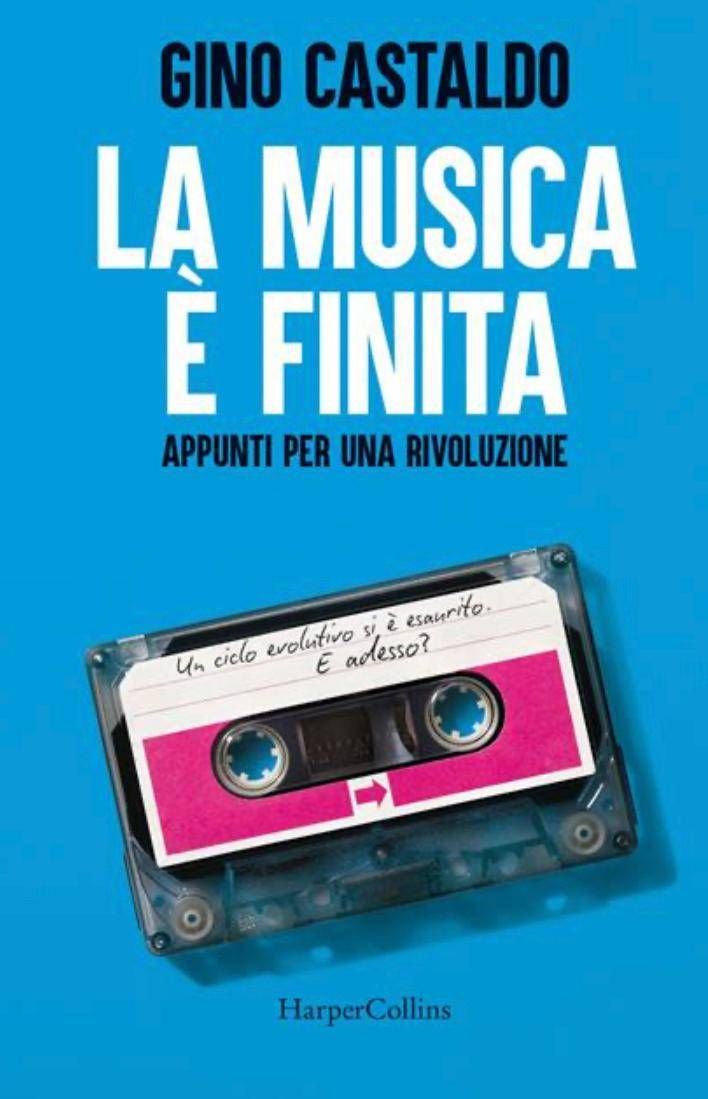
The question that runs through the new book by Gino Castaldo‘The music is over – Notes for a revolution’ (HarperCollins208 pages, due out April 28, 2026price 9.99 euros), is simple only in appearance: Is the music we knew and loved in the twentieth century still alive, or has it already concluded its evolutionary cycle, leaving room for a completely new horizon? It is from this question, and from a frustration developed over the years, that the volume was born. “The idea for this book developed little by little, driven by frustration with what I saw happening in music and also by thinking about my children and their generations.“, says Castaldo. A frustration that is not nostalgia, but awareness of being faced with the greatest mutation of the musical phenomenon of recent decades.
Castaldo observes how the transformation does not only concern sounds, but the entire musical ecosystem: the creative process, the ways of production, distribution, consumption. From analogue to digital, from vinyl to streaming platforms, up to the irruption of artificial intelligence, technology has redefined our relationship with music, transforming it from a collective experience to individual consumption, from imperfect and vibrant art to a packaged and immediately replaceable product. “Then there was great enthusiasm from HarperCollins,” he says, explaining how the project immediately found a publishing house ready to support it.
Another element also pushed him to write: the questions that come to him from people of all ages and backgrounds. “They ask me: will today’s artists last? But what is happening? It’s a widespread curiosity, almost a collective anxiety about the fate of music.” And Castaldo has no doubts: something has cracked.”A crime is taking place. There is a music system that tends to devastate artists too. The recurrence of the psychological breakdowns of young singers depends on the rhythms of the new system of stardom, which does not give you time to mature according to nature’s times. Social media is devastating: it’s like being on stage 24 hours a day, every day”.
In the book, Castaldo identifies three revolutions. The first is the one that allowed the music to be reproduced, freeing it from the “live only” constraint. The second is the digital revolution, which has delivered us to a binary code that knows no nuances. The third, the current one, is the most dangerous for him: “Now the third revolution is devastating: it presents itself through the algorithm, a colossal deception that makes you believe it is helping you and instead leads you to do what it wants. And it comes with boredom and loss of beauty. Once the dark side was revealed, we understood that we are in the hands of five oligarchs.”
The book was also created to provide answers to those who are not in the profession. Castaldo talks about a little test he often does: “When someone asks me where music is going, I ask if they know who’s on the charts today. Nobody, I mean nobody, has any idea. And when you give them the names of the top ten, they fall from the clouds. They don’t know them. This thing is not so normal.” The explanation, according to him, is simple and disturbing: “It’s a bubble, a system that produces a lot of money for platforms and record companies, but little for artists. A bubble that is totally self-sustaining. And it’s also quite impenetrable to anyone who tries to do anything else.”
Yet, despite the provocative title, ‘Music is Over’ is not an obituary. It is an invitation to look reality in the face and imagine a way out. Castaldo closes the book with an appeal: “The world of music is by definition a world of individuals, separated from each other, and because of this they often lose track of what immense power they would have if they just tried to act as a community. There is no need to go back to the stone age. But to find my lost mind again, yes. And if by chance the wisdom had fled to the ‘dark side of the moon’, we must imagine a journey to go and recover it and bring it back to us.” And he concludes with a phrase that echoes a manifesto that changed history: “Musicians of the world, unite”.
‘Music is over – Notes for a revolution’ is a book that does not limit itself to describing a change: it questions it, challenges it, lays it bare. And it reminds us that music, to continue to be alive, needs listening, awareness but above all courage.