Open letter to the President of the Biennale Foundation Pietrangelo Buttafuoco with the list of artists detained or dead in prison in Russia, with the request not to reduce dissent to a cocktail, not to “continue to reduce dialogue to a superficial performance”, as he is accused of wanting to do with the ‘Dissent and Peace’ initiative organized in response to criticism for Russia’s return to the International Art Exhibition, scheduled in Venice from 9 May to 22 November. Initiative which includes, among others, a speech by director Aleksandr Sokurov. The letter was signed by Italian and Russian academics, activists and artists, including Nadia Tolokonnikova, one of the founders of Pussy Riot and former political prisoner, the Oscar-winning film maker with ‘Mr Nobody Against Putin’ Pavel Talankin, the President of ‘Memorial Italia’ Giulia De Florio, the vice president of the organisation, Andrea Gullotta, the translator and writer Elena Kostyoukovitch and the artist and activist Katia Margolis.
“We urge you to open this initiative to those who are actually being persecuted for their dissent and to honor the legacy of 1977 (the year in which the Biennial of Dissent was held, ed.) as a space for discussion, not its simulation. You have often insisted that the Biennial must be open to all voices. We ask you to be consistent with your statements. ‘Dissent and Peace’ honors and gives voice to dissent real, not its simulacrum”, he asks in the letter which presents the list of 26 Russian artists, writers, musicians and performers currently detained for expressing anti-war and dissident positions, and the names of the five artists who have died in prison in recent years. “The price of dissent is being paid, right now, in prisons, in exile, in tombs. These are voices that a Biennial of dissent must make visible.”
“We are writing to you in response to the announcement of the initiative ‘Dissent and Peace'”, a cycle of three meetings at Ca’ Giustinian (home of the Venice Biennale, ed.) dedicated to dissent and peace in the days of the inauguration of the International Art Exhibition. At a time when the news of the Russian Pavilion has been greeted by determined opposition from the international community and Russian artists and dissidents, the Minister of Culture sends his inspectors and the European Union revokes its funding, and even the International Jury has announced its resignation, a Biennial, which claims to want dialogue, cannot continue to reduce it to a superficial performance.” “It cannot become yet another cover, a staged event in which dissent is presented behind closed doors, by invitation only (as are the three conferences organized by the Biennale, ed.), while those who pay the real price are kept out and ignored”.
‘ Tolerated criticism is not dissent. And the distinction is not abstract. Artists in Russia are persecuted and imprisoned’
“Almost half a century after the 1977 Biennial of Dissent, an open and confrontational initiative, it would be more than an irony – it would be a reversal – if dissent were to return as a spectacle: controlled voices, polite conversations, cocktails at Ca’ Giustinian and the comfortable presence of those who many, not without reason, would call dissidents under control”, it is denounced.
“The choice of Aleksandr Sokurov for the inaugural meeting on May 6 as the emblematic voice of dissent for the inaugural meeting represents the problem well. We are not talking about a person. But about a principle: can dissent be represented by those who operate safely between systems of power and international prestige, while others are detained, tortured or killed?”. “It is not a question of artistic merit, but of truth. Tolerated criticism is not dissent. And the distinction is not abstract. Artists in Russia are prosecuted and imprisoned. Dissidents in exile in Europe face intimidation and transnational repression. Investigators continue to denounce organized structures of abuse and targeted violence against opponents of the regime. In this context, aestheticizing dissent means ignoring its real meaning”, denounce the signatories of the letter.
And again: “If ‘Dissent and Peace’ is to be taken seriously, it must include those for whom dissent is not a posture but a condition of life, that is, representatives of detained anti-war artists and political prisoners, persecuted queer and feminist resistance movements, representatives of peoples colonized by the Russian imperial government, dissident artists in exile who cannot return home. And also Ukrainian artists and cultural workers who speak from the reality of destruction and loss, and who commemorate slain colleagues by the Russians. Otherwise, ‘Dissent and Peace’ will not be, even on a formal level, an opportunity for awareness and dialogue. But an exercise in institutional self-preservation: decorum despite moral compromise, an empty imitation of the very tradition it invokes – a parody.”
Buttafuoco is then presented with the names of 26 Russian artists detained at the moment: among them, there are Anastasia Berezhinskaya, actress and theater director, sentenced to eight years in prison, detained since November 2024 and Evgenia Berkovich, theater director, poet and writer, sentenced to five years and seven months, in prison since May 2023. The musician Ivan Ladchenko, sentenced to eleven years in prison. Lyudmila Razumova, artist sentenced to seven years in prison, against whom new charges have been formalized. Musician and photographer Grigory Skvortsov sentenced to 16 years in prison. Vadim Cheldiev, opera singer, Mariinsky soloist, sentenced to ten years. Davyd Volodin, artist sentenced to 12 years and six months.
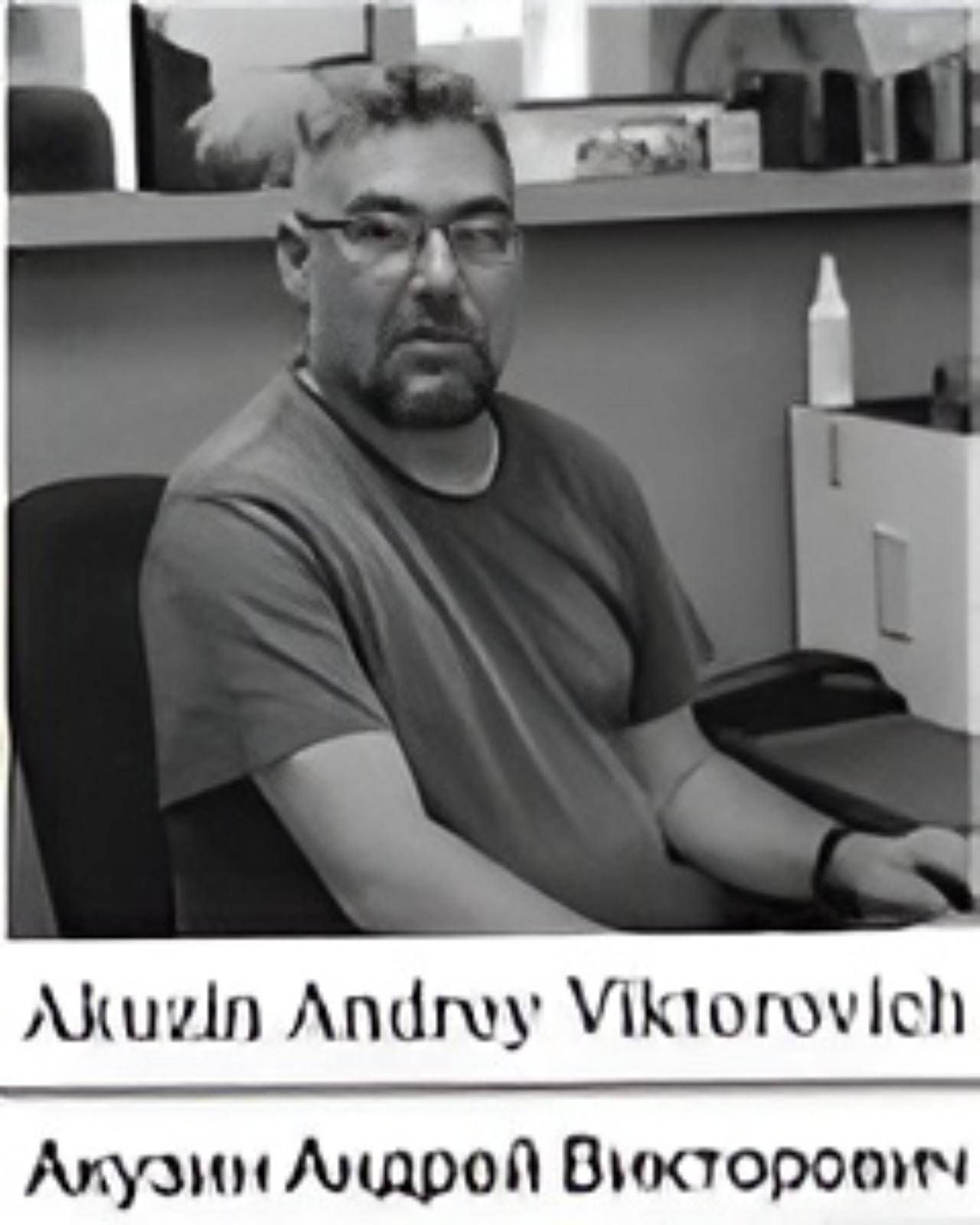
The letter also reports the names of five artists who recently died in prison in Russia: Andrei Akuzin, an artist from Khabarovsk, who died last April 8, at the age of 53, in the prison where he was detained awaiting trial, officially by suicide. Anatoly Berezikov, activist and musician, died in June 2023, aged 39, after having reported having suffered torture. Alexander Dotsenko, goldsmith artist, died in prison at the age of 65 last February. Pavel Kushnir, pianist, writer and activist, died in prison during a hunger strike, aged 39, in July 2024. Vadim Stroykin, musician and poet, died at the age of 59 during a security operation in February 2025, officially by suicide.
“These are the voices that meetings organized by the Biennale on dissent and peace should honor, defend and make visible. These artists know the real meaning of words like ‘dissent’, ‘peace’ and ‘Russia’, because they pay the full price for them,” the letter concludes.