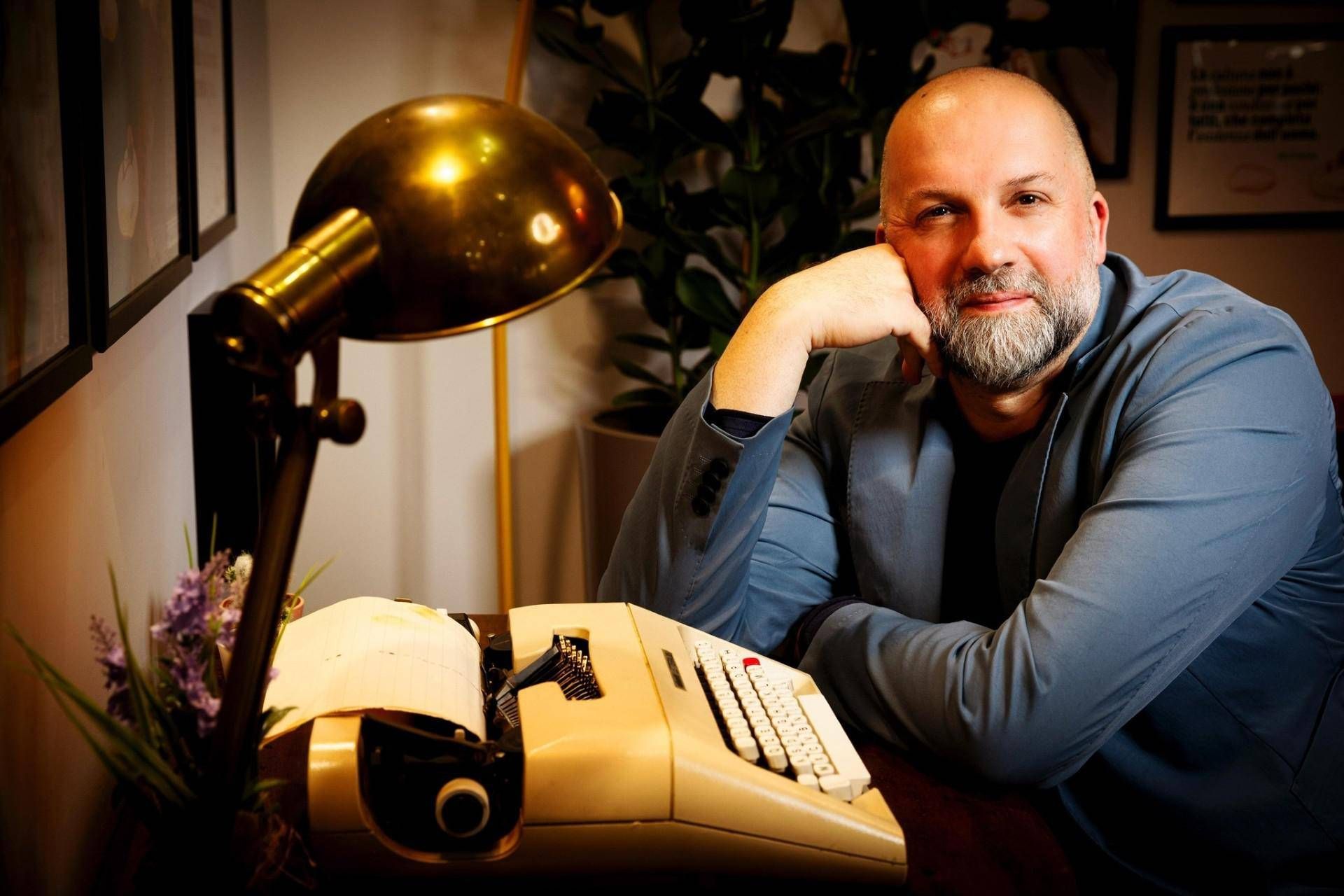
“In recent years, the Premio Strega has tried to find readers everywhere. And so it will happen tomorrow in Palermo, where the six finalists have never stopped. We are trying to reach the major cities of the peninsula. I believe that today literature is precisely a genre to be ‘dealt’ door to door. It is essential to create direct contact between those who write and those who read”. Speaking to Adnkronos is Stefano Petrocchi, director of the Maria and Goffredo Bellonci Foundation and secretary of the Steering Committee of the Premio Strega Award. Tomorrow, in the spaces of Villa Filippina in Palermo, the Sicilian public will have the opportunity to meet the authors who make up the final sestina. A moment that anticipates the first edition of the “Logos-Parole dal Mediterraneo” festival, directed by the writer Nadia Terranova and scheduled from 24 to 27 September.
In these 80 years, the Strega has chronicled the changes, crises and rebirth of the country. An Award that was born almost in conjunction with the Republic, celebrated a few days ago by the Head of State. “The Strega Prize was born in 1947 with a different structure compared to the literary prizes that existed until then, because it was created following the referendum of 2 June, which had taken place just the year before and which had decreed the Republic. This is because Maria Bellonci wanted to give this new literary prize a jury that she called ‘broad and democratic’, therefore outside the literary conventicles, but which reflected the point of view of the readers. In fact, the first edition was awarded by a jury of 170 people. Which was much more than the 12/13 literary prizes that usually constituted the literary prizes that existed up until then”, says Petrocchi, who carries out an intense activity in disseminating contemporary Italian literature. .
“In that first edition, the book by Ennio Flaiano won, a book that was written specifically to compete for the Strega prize. It was an intuition of Longanesi, who asked him in the winter of 1947 to quickly write a book in order to participate in this new literary prize that was being organized in Rome. Flaiano managed to complete the undertaking thanks to the fact that he told a story that he had personally experienced, that is, his stay in Africa during the war of the 1930s. So, also based on a diary, in a short time, he put together a novel that has remained over the years, namely ‘Time to Kill’. What I can hope for is that this year’s winner will have the same literary fortune, that is, that it will become a classic of Italian literature”, underlines Petrocchi.
‘Maria Bellonci would have appreciated that the prize in recent years has intercepted books that go beyond the literary sphere’
The Bellonci foundation today preserves the spirit of its founder. But today, what would Maria Bellonci think of the Italian literary panorama and how the Strega has managed to remain the most coveted, and sometimes even most discussed, prize. “I believe that Maria Bellonci would have appreciated the fact that in recent years the prize has managed to intercept, from time to time, some books that have in some way gone beyond the literary sphere and which have become part of the history of the company. It happened in her time with the Leopard or with the Name of the Rose. And it happened with us for example with the book and with the book ‘M’ by Antonio Scurati, and it happened with ‘The solitude of prime numbers’ by Paolo Giordano, which is It was probably the best-selling book after the Prize,” explains the director of the Bellonci Foundation. “It was a transversal book that everyone read. In that summer of 2008 it was common to see it on trains, on ships, obviously under umbrellas, even though it was anything but a ‘summer’ book. I think this shows that the Prize still carries out its function very well”, he adds.
Then he reiterates: “Maria Bellonci today would instead be struck by the fact that literary society has completely exploded, it is divided into 1,000 niches, where social media have somewhat overturned the perspective between the cultural elite and society – she says – I imagine that as a woman born in 1902 she could only be a little disoriented, but perhaps she would also grasp some positive aspects in this situation. In fact, today’s Italy, compared to that of the Leopard of 1959 is an Italy that doubled its voters. It was 20% of society at the time at the end of the 1950s, today it is around 40%”.
Book Tok, for example, for Petrocchi “is a very particular phenomenon which, in some way, “is important, numerically, for Italian publishing. We need to understand whether those who start reading those books will also read other books in the future or not. This is something we will discover over time.”
‘We were happy to accept Nadia Terranova’s invitation to Palermo’
In 80 years, readers, publishing, but also language have changed, starting with social media. But how do you balance the responsibility of maintaining a tradition such as the Strega Prize, which is so prestigious, with the need to open up to new forms of contemporary narration? “I think it can be done, I believe that literary forms are evolving and literary quality can also be achieved in forms that are less conventional today – Stefano Petrocchi continues – I think that the important thing for the prize is to maintain its effectiveness in spreading quality literature and that can be measured, concretely, with the fact that every year the winner of the Strega Prize appears in fourth, fifth, sixth place, depending on the year, of the best-selling books of the year. Together with books that have nothing to do with literature to do, with romances, with genre literature, understood in the broadest sense, such as essays, which are the most popular. There is always that title that signals the fact that through the Strega prize there is a book of contemporary literary fiction that goes beyond the number of regular readers and also reaches readers who are normally distracted by other things or who don’t read at all”.
Tomorrow afternoon the Strega prize will therefore stop in Palermo with the sixth group in the final, for the first time in its history. “We accepted with great joy the invitation of the Logos festival, directed by Nadia Terranova”. The author from Messina was last year a finalist in the Premio Strega with the novel “What I know about you”. Previously, she had entered the dozen and reached the final (five) also in the 2019 edition with the book “Goodbye ghosts”. “The Strega Prize has been missing from Palermo for many years. In 2003 we went to present the 12 candidates at the Spasimo and this year for the first time we are going with the five +1 in an important year for us, for the 80 years, in which we also touch other cities – says Petrocchi – For example, we will have another important meeting in Milan. We are really trying to reach the major cities of the peninsula and I believe that today literature is precisely a genre to ‘dealing’ door to door, that’s it. It’s essential to create direct contact between the writer and the reader.”
Sicily has given a lot to the world literature prize, for example Tomasi Lampedusa, Sciascia, up to the most recent successes. What does the Maria Bellonci Foundation expect? “Palermo is a great city of culture with extraordinary historical traditions, therefore, I am curious to see the venue of the Logos Festival, which I don’t know. And I expect there to be attention towards our authors, but active attention, capable of soliciting questions. I am very happy to come to Palermo, because it is one of the characterizing stages of this Strega”. In September Petrocchi will come to the Logos festival to present his book on Maria Bellonci. If you could make a wish for the next 80 years of the Strega Prize, what would be the goal or transformation you would like to see achieved? “Certainly the figure of the author remained central, from a literary point of view. Artificial intelligence risks attacking the literary citadel from the side of authorship and it would not be a good deal. And, therefore, I hope that the Prize can continue to lend a hand in this sense, that is, to keep the figure of the author and male and female authors central.” (by Elvira Terranova)
https://CanaanLandscaping.us/lawn-care/artificial-grass-installation
https://CanaanLandscaping.us/lawn-care/dethatching-lawn
https://CanaanLandscaping.us/lawn-care/fertilizing-lawn
https://CanaanLandscaping.us/lawn-care/hydroseeding
https://CanaanLandscaping.us/lawn-care/lawn-aeration
https://CanaanLandscaping.us/lawn-care/lawn-edging
https://CanaanLandscaping.us/lawn-care/lawn-grubs-control
https://CanaanLandscaping.us/lawn-care/lawn-installation
https://CanaanLandscaping.us/lawn-care/lawn-leveling
https://CanaanLandscaping.us/lawn-care/lawn-mowing
https://CanaanLandscaping.us/lawn-care/lawn-renovation
https://CanaanLandscaping.us/lawn-care/lawn-seeding
https://CanaanLandscaping.us/lawn-care/sod-installation
https://CanaanLandscaping.us/lawn-care/weed-control
https://CanaanLandscaping.us/yard-clean-up
https://CanaanLandscaping.us/yard-clean-up/green-waste-disposal
https://CanaanLandscaping.us/yard-clean-up/gutter-cleaning
https://CanaanLandscaping.us/yard-clean-up/junk-removal
https://CanaanLandscaping.us/yard-clean-up/leaf-removal
https://CanaanLandscaping.us/yard-clean-up/tree-removal
https://CornwallLandscaping.us
https://CornwallLandscaping.us/gardening
https://CornwallLandscaping.us/gardening/brush-removal
https://CornwallLandscaping.us/gardening/flower-bed-maintenance
https://CornwallLandscaping.us/gardening/flower-planting