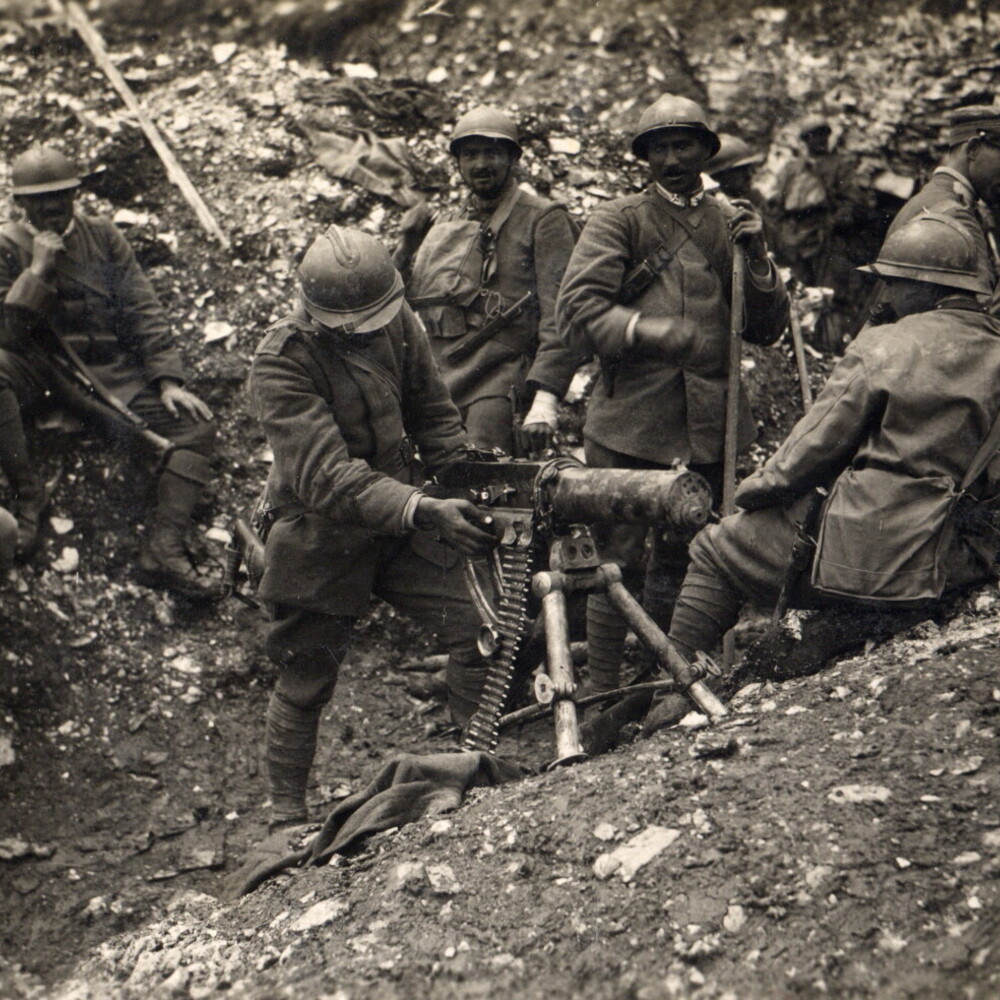
In the absence of common borders and open disputes, and due to the need to obtain supplies of coal by purchasing that of German Silesia, Italy was careful not to declare war on the Second Reich when it opened hostilities against Austria-Hungary on 24 May 1915. It was a decidedly anomalous situation that had arisen in the clash between the central empires and the Entente to which the kingdom of Italy had joined which from 1882 fought in the Triple Alliance. On 28 August 1916 the last veil of hypocrisy of that watered-down opportunistic neutrality fell due to pressure from France and Great Britain, which made Rome glimpse, in exchange for the anti-German military commitment, an equal and no longer marginal role within the Entente. A promotion to power in the field, in short, which was what the young kingdom wanted, committed to completing the Risorgimento process with Trento, Trieste and the unredeemed lands still in the Austrian empire.
The problem of the “all enemies” clause in the London Pact
Germany was the muscular and technological element of the military power that opposed the Entente. It was the real danger coming from the central empires, and it drained the Franco-British (as well as Russian) commitment which found itself faced with a fearsome and numerous army on the Prussian model, well trained, at the forefront in every sector, including science and military industry. When Italy had changed sides in 1915, France had been able to move divisions from the Alpine sector to more effectively oppose William II’s army, and Russia had seen the Austro-Hungarian troops weaken due to the need to cover the southern front subjected to the Italian offensive. But this, in fact, was an exclusively Austro-Italian aspect of that world conflict, and for the diplomacies of London and Paris it was necessary to extend hostilities to Germany as well. It did not escape Rome that the real alignment with the Entente passed from war to kaiser, in order to then be able to enforce all the clauses delivered to the London Pact at the time of victory and the peace treaty. In Article 2, Italy had in fact undertaken to use all its resources against “all enemies” of the Entente, and therefore Germany could not remain outside, with the risk of invalidating the clauses on territorial claims.
The “hostile acts” to justify the intervention after the diplomatic rupture
The Foreign Ministry headed by Sidney Sonnino therefore elaborated a series of “hostile acts” carried out by the Germans which justified Italy’s entry into the war: military assistance to Austria-Hungary, not only with supplies but also with contingents of Alpine units deployed to reinforce the Habsburg troops and support for naval units in the Adriatic; the return of prisoners of war escaped from Austrian camps who had fled to Germany; the limitations that penalized citizens and workers in the Reich. If a large part of the Italian press welcomed the entry into war, which “healed” a strange situation to say the least, the German press not only rekindled the xenophobic campaign on the Italian betrayal of 1915, but also mocked the inconsistency of the royal army in that clash between giants. And he also sharply highlighted Italy’s subordination to the interests of France and Great Britain.
Immediate measures and countermeasures
A few days before the declaration of war, Italy had celebrated the conquest of Gorizia (on 17 August) which was largely due to the initiative of General Luigi Capello, who had put a prestigious victory on the table of domestic and international public opinion. Sonnino, who was already in favor of the anti-German turn, took the opportunity to insert the diplomatic move into a military context, on the same day as Romania’s entry into the war on the side of the Entente with the opening of another front in the Balkans. The first obvious reactions occurred on the economic front. Rome and Berlin cut off every possible commercial link, starting from the confiscations and blocking of supplies, as well as emoluments (seizures of salaries, pensions, savings and remittances) from Italians in Germany who were also subjected to expulsions, internment, residency obligations and forced labor; and by the expulsion of the Germans from the large capitals of the banks and industries in Italy, in addition to the obvious countermeasures such as the expropriations of real estate. Entry into the war meant the strategic unity of the Entente, with the simultaneous commitment of enemy troops on the various fronts without the possibility of moving them if necessary to the crisis areas, and also that of Italy’s movement into the Franco-British supply chain.
At the Paris Conference as a minor ally and the marginality of reparations
In the early stages, the German contribution to Austrian strategic management, which in any case existed in small but qualified numbers of officers and soldiers, was initially very little noticed on the Alpine front. But the weight of the war machine would certainly be felt at the end of October 1917, when the imperial offensive at Caporetto, conceived and led by the Germans, brought Italy one step away from general disaster and an immediate exit from that conflict, foiled by the resistance on the Piave line. A year later, on 4 November 1918, in Vittorio Veneto, Italy will win “its” war against its centuries-old enemy Austria, also dragging Wilhelmine Germany into the disaster which will collapse on the 11th. At the Paris Peace Conference, despite the formal role, Italy will play the role of minor ally and France and Great Britain will not only write the treaty, but will decide on the reorganization of the world, to their advantage, also dividing up the colonies of the defeated. The “beautiful gesture” of the withdrawal of the Italian delegation in protest, in the total indifference of the winners and the vanquished, and the painful retreat that did not even save face, became irrelevant, triggering, however, in a country devastated by the war effort and disjointed in its already fragile social stability, the D’Annunzio myth of the “mutilated victory”. The equal role between allies and powers, at the basis of the declaration of war on 28 August, proved to be an illusion. Of the monstrous war damage compensation figure of 132 billion gold marks imposed in 1921 on Germany, just a tenth (52% to France, 22% to Great Britain, 8% to Belgium) will be virtually assigned to Italy, which will have a minimal share in coal and various materials, and with a part predestined to pay off debts with London. The game, suspended in 1932 due to the Great Depression, will be closed only in 2010, sanctioning with the cancellation of debts even the defaults that had also occurred after the Second World War.