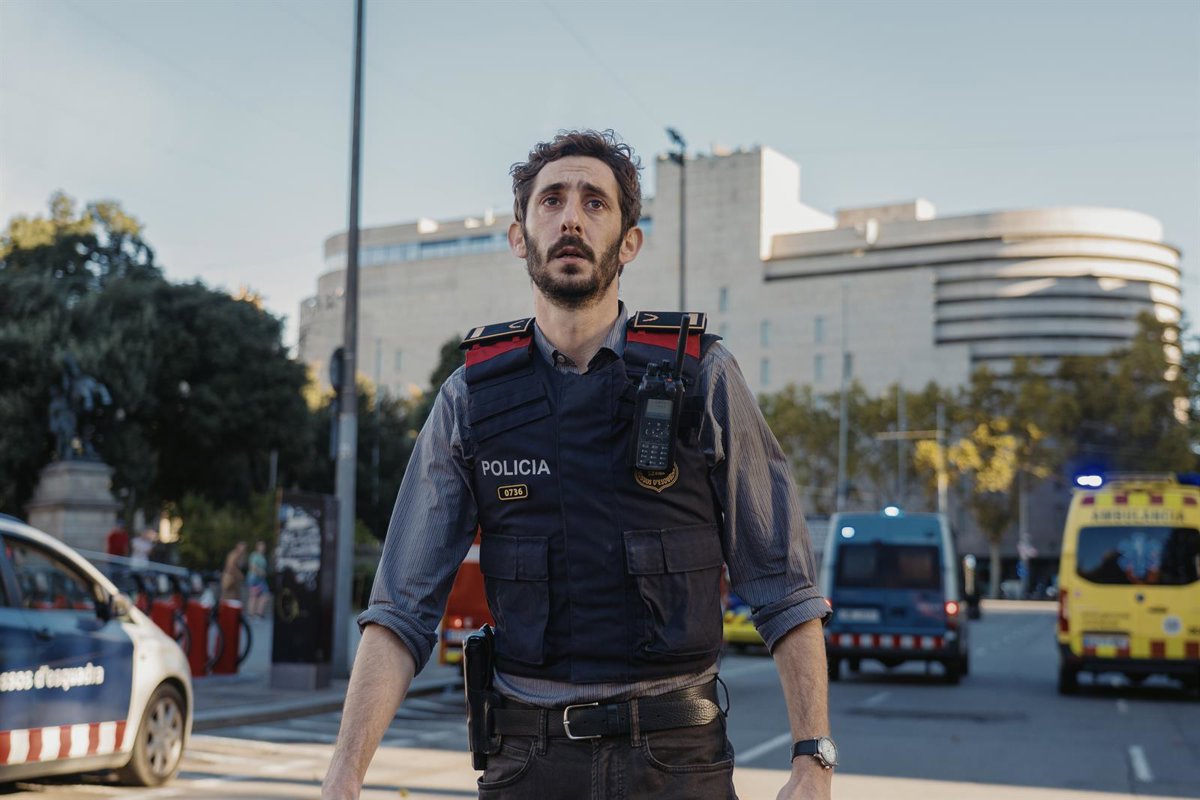
The actor Enric Auquer stars in the feature film ‘CRONOS’, about the attacks of 17-A 2017 in Barcelona and Cambrils. In that sense, the Catalan considers that since then Spain has “very radicalized” and has set the example of what happened in the city of Ceuta.
“Spain has become very radicalized, look at Ceuta now, look at (Sílvia) Orriols, look at Vox. All that is generated is hate speech and blaming others for not reviewing your own privilege, of how you manage. That will end up generating more hate, more violence, more pain, even more death,” He stated when asked in an interview with Europa Press about the accusation that the Islamic community in Spain suffered after the attacks.
Thus, the Catalan interpreter has indicated that, in his opinion, the origin of radicalization in towns such as Ripoll (Gerona) – where the terrorists were citizens – requires “a deep review of integration.”
“If there are some Catalan kids who attempt to speak Catalan among themselves against other Catalans and an imam from Ripoll who is capable of radicalizing these kids, it is because There is something we have done wrong among all of us, something that has failed,” he added.
For his part, director Fernando González Molina has been cautious in establishing parallels with the current situation in Ceuta, and then warning about the instrumentalization of this type of episode.
“They are two very different cases but I do see a mirror in how people’s misfortunes are sometimes used –whether they are coming or those that are there– with political zeal,” he concluded.
The feature film hits theaters this coming September 4 to recreate the security device and the police operation deployed after the attacks. In fact, it is based on a journalistic investigation by Nacho Carretero and Arturo Lezcano, in the 124 hours of the management of the event through the security forces and institutions, covering the emergency, the political tensions and the impact on social coexistence.
The director of the film has assured that he approached the film from the responsibility of approaching an event of this nature while refusing sensationalism.
“Being very careful to avoid morbidity and maximum responsibility with respect to the victims. It didn’t make sense to focus there. (in the victims), because there was little story beyond the horror they had gone through,” he added.
Likewise, González Molina has highlighted the value of humanizing the agents who made up the response. “To escape from the American action hero, police officer, who is not in the movie at all, but also humanize him. You have normal people, yes they are police officers but they have never faced this, “They’ve never shot anyone,” has specified.
THE “INTEGRATION”, “COMPLETELY BROKEN”
On the other hand, and from the field of investigation, journalist Nacho Carretero has explained that the field work was conceived directly as the basis of the feature film and, regarding the consequences of 17-A on the social fabric, he has pointed out that the “harmony” e “integration” that was in Ripoll is “completely broken” although the tension with jihadist terrorism is not like then.
“This tension regarding jihadist terrorism is not such or at least it is not perceived that way in society. Instead there is a migratory tension that then, even though it was very recently, did not exist in that way. And Ripoll is a good example of that. Ripoll was a town where there was harmony, where there was coexistence and a reasonably good integration of the Maghrebi community that today it does not exist. It’s completely broken and extremist parties that previously did not have a presence there have been promoted,” he explained.
Lezcano, for his part, has stressed the role that the film can have as a tool to rescue the memory of the attacks within the political context of the moment.
“Such a brutal attack was quickly forgotten by a large part of society, but above all by a large part of the media because a month later the process began and that caused a large part of the media echo and memory to be swallowed up by it,” he concluded.