Respiratory syncytial virus (RSV) is the leading cause of bronchiolitis, bronchitis and pneumonia in young children, especially premature infants. According to the World Health Organization (WHO), each year more than 3.6 million children are hospitalized due to RSV and more than 100,000 children die, of which about 50% are children under 6 months old.
In Vietnam, viruses circulate year-round, often increasing sharply at the time of season change, rainy season or cold season. RSV is mainly transmitted through droplets when an infected person talks, coughs, sneezes or through contact. Currently, there is no specific treatment for the disease caused by RSV. Treatment is mainly supportive and relieves symptoms, helping the body recover on its own. While the disease in young children often progresses quickly, can easily become severe and unpredictable.
Premature babies have immature respiratory and immune systems, RSV is more likely to cause severe respiratory failure than full-term babies, and takes longer to recover. The risk of hospitalization and severe complications is especially high in babies born very prematurely (before 32 weeks of gestation) and extremely prematurely (before 28 weeks).
RSV can cause premature infants to suffer from acute respiratory failure, collapsed lung, pneumothorax, bacterial superinfection… Diseases caused by RSV can also leave long-term sequelae such as pulmonary fibrosis, impaired respiratory function, recurrent wheezing or chronic bronchial asthma.
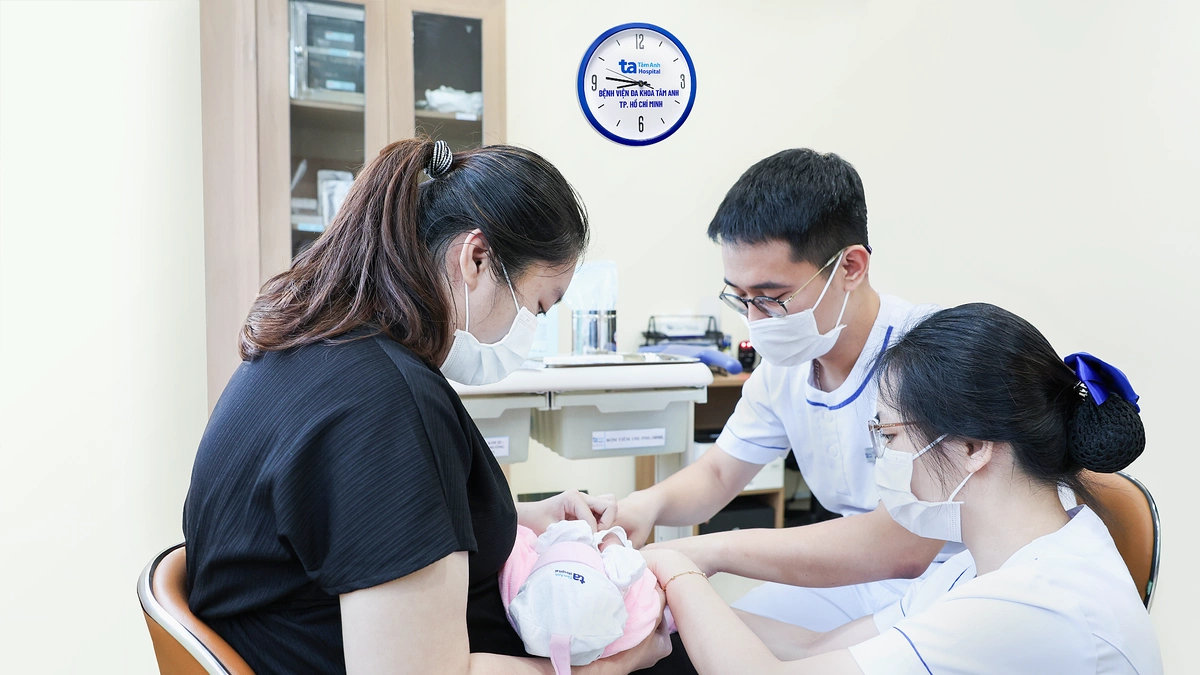
Premature babies were injected with RSV monoclonal antibodies at Tam Anh General Hospital. Illustration photo: Huyen Vu
Due to the dangerous nature of the disease, all healthy premature babies should be injected with monoclonal antibodies to prevent RSV before leaving the hospital as prescribed by the doctor. In case the child has not been vaccinated when discharged from the hospital, parents can still take the child for additional vaccinations. So take your baby for vaccination as soon as possible.
Monoclonal antibodies are indicated for injection in children from one day old to less than 24 months old, providing passive immunity during the peak season of RSV circulation (6 months), helping to reduce the risk of severe illness and hospitalization in infants and young children. For healthy full-term children, vaccination time depends on the time when RSV circulates strongly in the locality (the South from May to November, the North from August to April of the following year), the mother’s vaccination history and the child’s level of risk.
Before vaccination, the child will be examined by a specialist to assess health status, weight, allergy history, and underlying disease, from which the appropriate type of antibody and injection dose will be prescribed. If your child has a high fever, acute illness or unstable chronic illness, vaccination can be postponed until his health stabilizes.
After antibody injection, children are monitored for acute reactions for at least 30 minutes. When returning home, parents continue to closely monitor the child’s health for the next 24-48 hours. Factors to note include breathing rate, body temperature, whole body skin manifestations and the skin area around the injection site.
Parents should not apply leaves, oil, plasters, alcohol or hot compresses on their children’s injection sites because they can easily cause infection. Keep the injection area clean and dry. If the child’s injection site is red and swollen, parents can apply a gentle cool compress around it with a clean towel. If the child shows any unusual signs, parents should take the child to the hospital immediately.