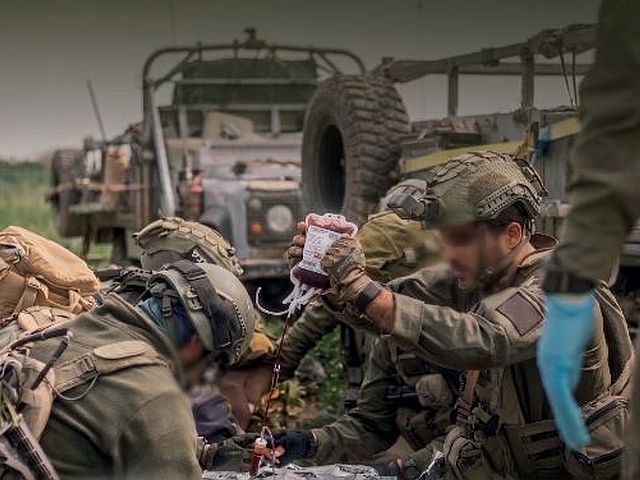
For the first time, the IDF Medical Service published the complete version of the Manual of Trauma and Combat Medicine, combining 22 chapters with updated recommendations based on the experience of treating thousands of wounded during the current war. The publication of about 350 pages became publicly available – the book can be read online, printed or downloaded from this link (the manual is written in Hebrew).
Previously, the chapters were published separately, but now they are collected in one document. The guide includes recommendations for the treatment of musculoskeletal injuries, the use of antibiotics in the field, the care of service dogs by non-veterinarian personnel, and other issues.
According to the head of the research department of the combat medicine directorate of the IDF medical service, the purpose of the publication is to make up-to-date recommendations available to everyone, from doctors and paramedics to ordinary soldiers who may need to save lives in a combat situation.
One of the main changes was the new X-CARE casualty care scheme, which replaced the previous SABCDE protocol. The first letter of the new scheme means Extract (“evacuation”) – the primary removal of the wounded from the zone of immediate danger, after which an initial assessment of the condition is carried out with an emphasis on stopping the bleeding as early as possible.
Analysis of combat operations showed that the main cause of death of the wounded on the battlefield is blood loss. Thanks to the change in approach, the proportion of seriously wounded people reaching hospitals alive has tripled in the current war compared to previous military campaigns, and the overall mortality rate among the wounded has been reduced by almost half.
Another important innovation was the widespread introduction of whole blood transfusions already at the level of maneuver battalions. Previously, plasma or packed red blood cells were typically used due to storage difficulties in the field. However, the study showed lower mortality among patients receiving whole blood, after which it was decided to expand its use as much as possible.
Changes also affected the treatment of injuries to the respiratory tract and chest. Based on data analysis and consultations with Israeli and foreign experts, it was found that artificial ventilation with positive pressure in patients with massive blood loss can worsen their condition. In addition, needle chest decompression is completely excluded from the protocol, as the procedure can lead to serious complications if performed incorrectly.
The IDF notes that all changes were developed directly during the war, based on medical reviews of each case and data from the wounded monitoring system, which has been in operation since 1996.
ellaOne skutki uboczne – co jest częste, kiedy do lekarza
Escapelle (lewonorgestrel) – działanie, do 72 godzin, recepta online
Mounjaro (tirzepatyd) – e-recepta online, cena i dawkowanie
Blog o Mounjaro – tirzepatyd, dawkowanie, porównania
Czy Mounjaro uzależnia – fakty o tirzepatydzie
Mounjaro a alkohol – czy można pić w trakcie leczenia
Mounjaro a badania krwi – co kontrolować w trakcie leczenia
Mounjaro a inne leki – interakcje i o czym powiedzieć lekarzowi
Mounjaro a Ozempic – różnice, skuteczność, cena i wybór
Mounjaro a tarczyca – przeciwwskazania i o czym powiedzieć lekarzowi
Mounjaro cena – ile kosztuje i czy jest refundacja
Mounjaro dawkowanie – schemat od 2,5 do 15 mg
Jak długo brać Mounjaro – czy to leczenie na stałe
Jak odstawić Mounjaro – bezpieczne zakończenie leczenia
Mounjaro jak wstrzykiwać – technika zastrzyku krok po kroku
Mounjaro opinie – czego naprawdę doświadczają pacjenci
Mounjaro pierwsze efekty – kiedy zacznie działać
Mounjaro pominięta dawka – co zrobić, gdy zapomnisz zastrzyku
Mounjaro skutki uboczne – jak sobie z nimi radzić
Mounjaro w ciąży i przy karmieniu – co trzeba wiedzieć
Mounjaro zamienniki – czym można zastąpić tirzepatyd
Pierwsze tygodnie na Mounjaro – jak się przygotować
Mounjaro (tirzepatyd) – działanie, dawkowanie, cena i recepta online
Mounjaro cena i refundacja – e-recepta online
Mounjaro dawkowanie – schemat 2,5-15 mg, jak wstrzykiwać