Two remote robotic surgeries were performed simultaneously between Hanoi and Can Tho, marking the first time Vietnam has successfully deployed a two-way remote robotic surgery model.
On August 3, the Hanoi Department of Health and Vinmec Healthcare System announced the success of two remote robotic surgeries taking place simultaneously between Hanoi and Can Tho. This is the first time Vietnamese doctors have fully mastered two-way robotic surgery technology, meaning experts in two locations more than 1,700 km apart can take turns controlling the system to perform the surgery.
In the first surgery, a team of experts at Vinmec Smart City Hospital (Hanoi) controlled a robot to remove an ovarian tumor from a 15-year-old female patient in the operating room of Vinmec Can Tho Hospital. Doctors preserve as much ovarian tissue as possible to maintain future fertility.
The second surgery took place in reverse. Can Tho doctors control a robot to remove liver cancer for a 42-year-old male patient in Hanoi.
Dr. Nguyen Trong Dien, Director of the Hanoi Department of Health, commented that this is an important milestone affirming the capacity of Vietnamese surgical clinics in applying high technology to medical examination and treatment. This event proves that domestic doctors have completely mastered modern surgical techniques.
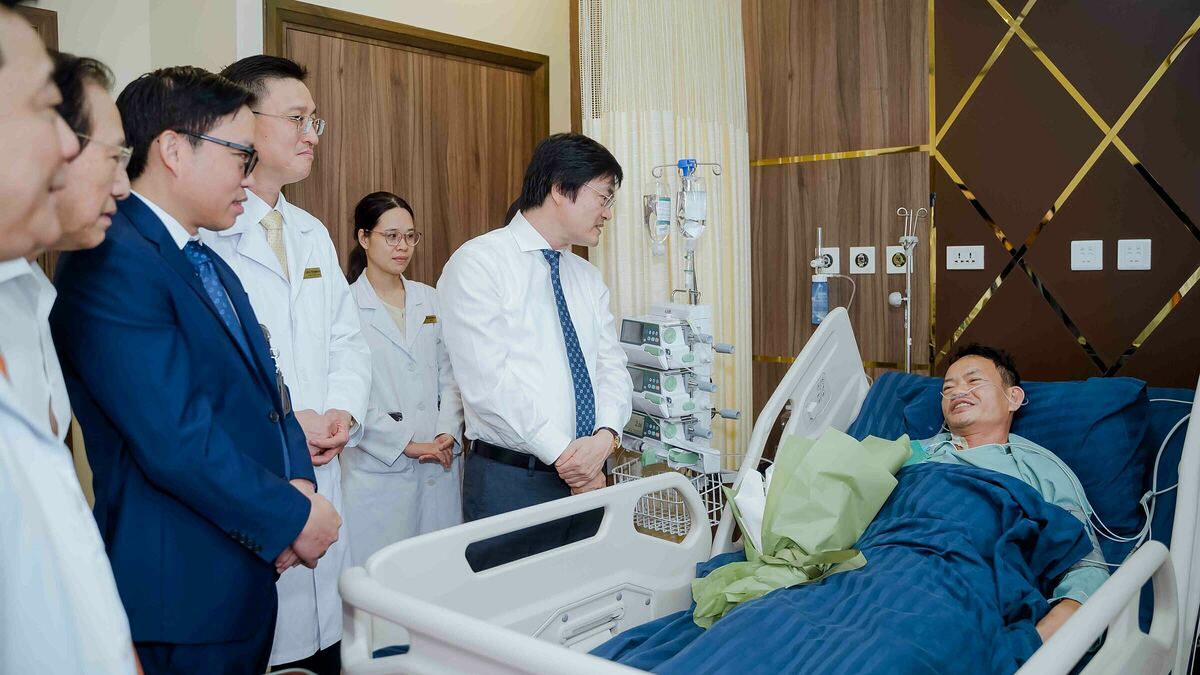
Dr. Nguyen Trong Dien, Director of Hanoi Department of Health (white shirt), visits patients in early Hanoi. Photo: Manh Cuong
According to Associate Professor Dr. Pham Van Binh, Director of Vinmec Times City Hospital, the robot only accurately transmits the surgeon’s operations to the mechanical arm, and does not replace the doctor. During the surgery, the surgical and anesthesia recovery team are always present directly in the operating room, ready to intervene if necessary, ensuring maximum safety for the patient.
This new model opens up a different approach to treating complex diseases. Instead of patients having to travel far to see specialists, top doctors can participate in the surgery even though they are at another medical facility. Thanks to that, the health system not only reduces referral pressure but also shortens the gap in access to high technology between localities.
“We have realized the goal of borderless surgery. Patients anywhere can receive surgery directly from leading experts through a remote robot system,” Associate Professor Binh said.
Leaders of the Hanoi Department of Health said the city is promoting the development of high-tech medical examination and treatment models, strengthening human resource connections between the public and private health systems, and building mechanisms for remote medical services, including robotic surgery.