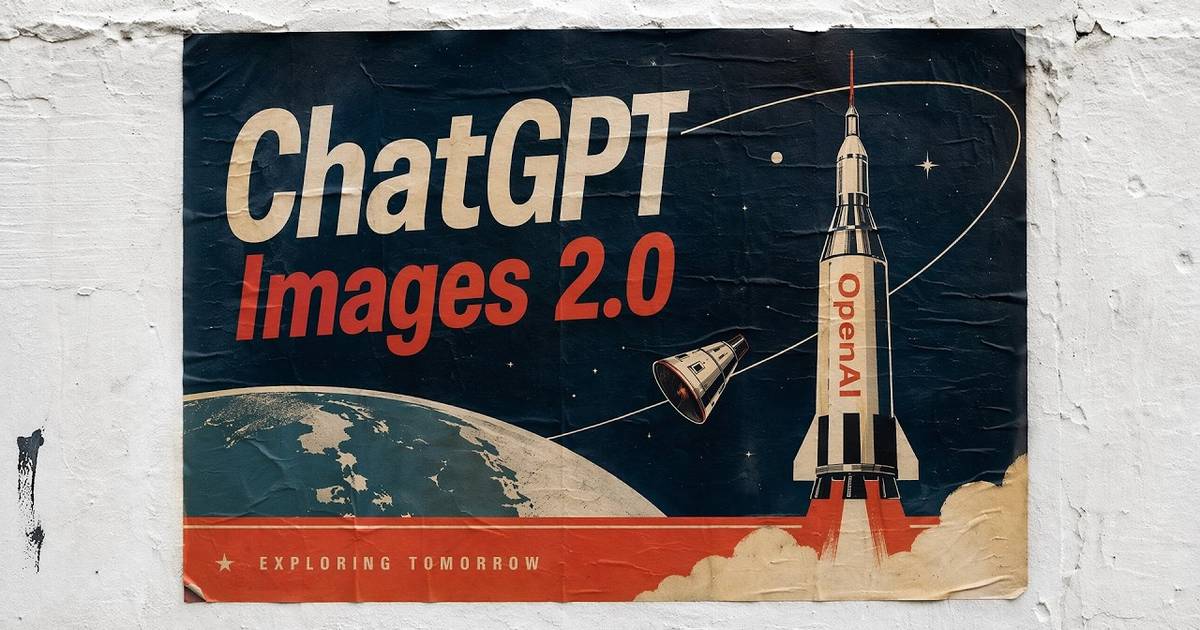
OpenAI has introduced a significant upgrade to its image generation tool. The new version, called ChatGPT Images 2.0, brings a change in the way the AI chatbot processes visual requests, moving from quick interpretations to an approach more akin to thoughtful design. Images now behave more like answers, built on an understanding of what was requested, rather than a free approximation.
At the uživo presentation, OpenAI CEO Sam Altman and his team pointed out that the new model represents a big step forward.
- Images 2.0 is a huge step forward. It’s like we suddenly went from GPT-3 to GPT-5. His ability to create extremely beautiful things is amazing. The team really did a great job with this and we can’t wait to see what you will create – said Altman.
More accurate and consistent visuals
The most significant improvement is visible in the areas that were previously a problem. Text within images is the most obvious example. Generating posters, menus, slides, and anything else that relies on word readability has traditionally been unreliable. The letters would be distorted, the spaces would be uneven, and the meaning would be lost. ChatGPT Images 2.0 shows significant progress in generating clear and correctly written text, even in multiple languages.
The model also handles the structure more reliably. If you request a layout with certain elements in certain places, the result is more likely to reflect that intent. Č the model seems to treat the instruction less as a suggestion and more as a set of instructions. This can be seen even in smaller details. Multiple images generated from the same idea remain visually consistent, whether it’s character recognition or maintaining a common style throughout the set.
Users can now generate images in up to 2K resolution and in a wider range of aspect ratios, making the tool more suitable for different design needs.
The key innovation is the “thinking” step
The biggest change that ChatGPT Images 2.0 brings is the addition of a “thinking” step before the generation itself, which allows the model to process the instruction before deciding on the final result.
In practice, this means that it can break down a request into parts, decide how those parts should fit together, and then produce an image that reflects that internal plan. It can also rely on additional context, such as uploaded files or other Internet sources. Although the image generation takes a bit longer, the result is better and probably saves the user time because it reduces the need for repeated attempts.
This is where image generation starts to resemble the behavior of advanced text models. The process is no longer exclusively reactive, but interpretative. The output reflects a series of decisions, not just one pass. This change is most important when the request has multiple layers, such as a multi-part design or narrative sequence.
Stronger competition to Google’s Gemini
As competition in the field of multimodal artificial intelligence intensifies, OpenAI can now highlight ChatGPT Images 2.0 as a stronger rival to Google’s Gemini model. Gemini strongly focused on connecting text, images and context into a single system. While some feel that competing models may still have the edge in photorealism, ChatGPT seems to excel at following instructions, rendering text, and creating structured layouts.
Better “thinking”, especially with text, means that ChatGPT can approach Gemini’s strengths in complex, multimodal tasks. Although this does not make him a clear winner, it puts him on a more equal footing.
Impact on creative professions and ethical issues
Advances in image generation tools are fueling discussions about the future of creative professions. While some professionals are afraid of losing their jobs, others see these tools as powerful assistants that can improve creativity and simplify work processes.
At the same time, the ability to create highly realistic, AI-generated images contributes to the crisis of trust in digital content. It is becoming increasingly difficult to distinguish real from synthetic media, which has significant implications for the spread of disinformation. OpenAI states that they have implemented security protocols and use C2PA metadata to provide proof of origin of images created.
https://cockxtraxl.com/questions/
https://cockxtraxl.com/recordings/
https://curvyflawless.com/
https://curvyflawless.com/about/
https://curvyflawless.com/pictures/
https://curvyflawless.com/questions/
https://curvyflawless.com/videos/
https://dirtypub.com/
https://dirtypub.com/get-in-touch/
https://dirtypub.com/media/
https://dirtypub.com/pictures/
https://dirtypub.com/profile/
https://dirtypub.com/questions/
https://ehotlovea.online/
https://ehotlovea.online/gallery/
https://ehotlovea.online/get-in-touch/
https://ehotlovea.online/media/
https://ehotlovea.online/profile/
https://ehotlovea.online/questions/
https://emilyjoneschat.net/
https://emilyjoneschat.net/bio/
https://emilyjoneschat.net/pictures/
https://emilyjoneschat.net/videos/
https://emyii.online/
https://emyii.online/about/