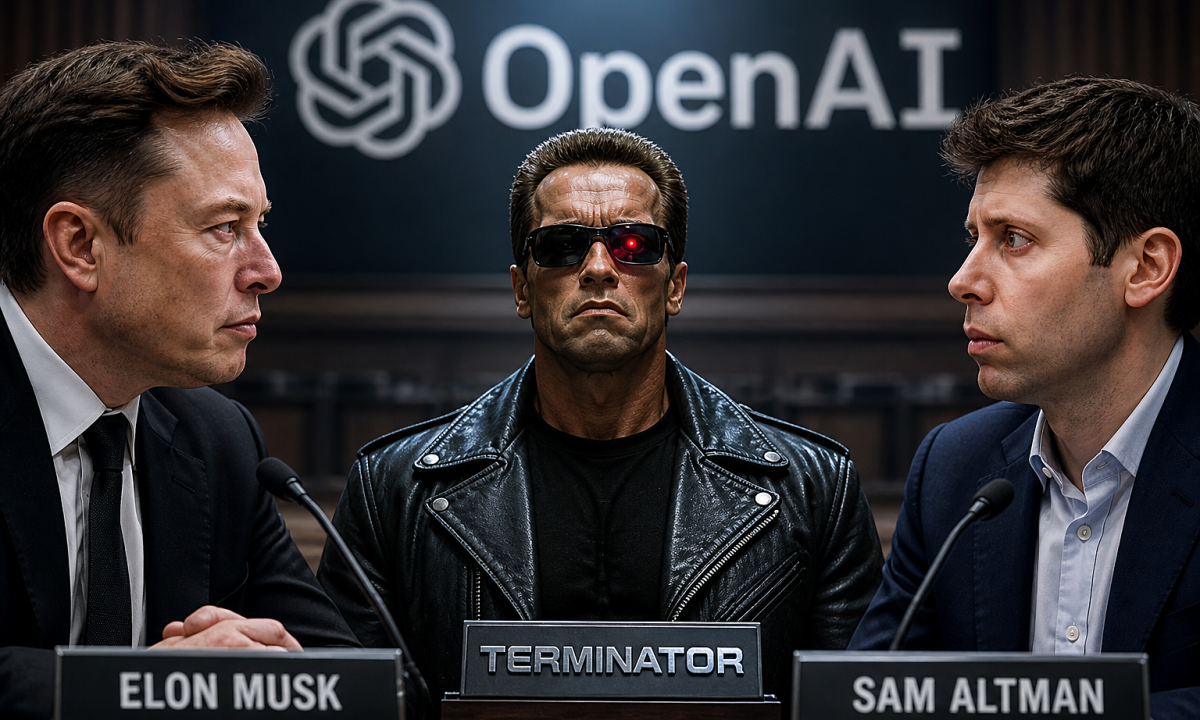
Elon Musk repeatedly mentioned the scenario that AI could become a “destroyer” when testifying in court in the lawsuit against OpenAI.
Theo Reuters, On May 1, Musk returned to the witness stand in a trial in California federal court, related to the dispute between him and OpenAI CEO Sam Altman and related parties.
Here, Elon Musk – also the CEO of Tesla and SpaceX – answered questions related to robot development and his previous statements about “building a robot army”.
“No, we do not produce weapons,” Elon Musk said, and affirmed that he did not want a “Terminator”-style scenario to appear, referring to the famous Hollywood movie “Terminator”. When asked more specifically, Musk said that this movie’s scenario “is not a good situation”, adding that “the worst case scenario could be AI destroying us all”.
More than once, Elon Musk repeatedly mentioned the scenario of AI becoming a “destroyer” when testifying in court. In response to that answer, judge Yvonne Gonzalez Rogers interrupted and asked him not to mention “extinction” scenarios in this case, she said before the break.
The movie “Terminator” is mentioned in the legal battle between Elon Musk and Sam Altman and OpenAI. Image: ChatGPT
During the interrogation, OpenAI’s lawyer questioned Musk’s motive for filing the lawsuit, saying the case could be intended to disadvantage a competitor in the AI race. The focus is on xAI – the company founded by Musk.
In response, Musk asserted that xAI is the “smallest” among current AI companies, with a scale only about one-tenth the size of OpenAI. He ranked Anthropic as the largest AI company at the moment, followed by OpenAI, then Google, then open source models from China.
However, Musk has made many moves to strengthen xAI, including merging with SpaceX earlier this year. Recently, he also announced an agreement allowing SpaceX the right to acquire AI programming startup Cursor for $60 billion.
Another witness in the trial was Jared Birchall, Musk’s asset manager. Birchall claimed Musk has contributed about $38 million to OpenAI through about 60 grants, while also supporting monthly office rental costs.
When questioned by OpenAI’s lawyer, Birchall said there were no specific instructions from Musk on how to use the funds. “There was a tacit understanding between Elon and the other founding members,” he said.
At the trial, the lawyer also mentioned the 2018 agreement between OpenAI and Neuralink – another company founded by Elon Musk, about sharing offices. Birchall confirmed that each proposal to arrange armed guards at the building due to OpenAI’s increasing attention, and the costs were paid jointly by both parties.
Another issue mentioned in the trial was the personal notes of OpenAI President Greg Brockman. One of those documents states that OpenAI’s founding team “was not honest” with Musk about their plans to transition to a for-profit model without him. Another paragraph said that such a conversion was “quite unethical”, and also commented that Musk “is not a fool”.
In response to these documents, OpenAI believes that the logs were selectively quoted. On the other hand, Elon Musk asked the court to force Chairman Greg Brockman and CEO Sam Altman to leave their executive positions and give up their shares in OpenAI if they are determined to be legally responsible.
The trial then ended early. Greg Brockman – co-founder and Chairman of OpenAI is expected to testify in court next week.
The lawsuit stems from billionaire Elon Musk accusing his former company, CEO Sam Altman and Microsoft – the original investor in OpenAI – of betraying the non-profit mission. He wants the company to return to its previous model, and remove Altman and Brockman from their management positions and board of directors.