Ask.com, a search engine and online question and answer service that was once popular with many users, announced that it would cease operations from May 1.
On its website, InterActiveCorp (IAC), Ask.com’s parent company, said the closure is aimed at restructuring business operations. “We have decided to discontinue search, including Ask.com,” the announcement read.
Ask, originally named Ask Jeeves, was first launched in 1996 by Garrett Gruener and David Warthen, headquartered in California (USA), with a focus on answering conversational questions using natural language. According to TechCrunchAsk can be considered the forerunner of today’s AI chatbots. However, for most of its 30-year history, the platform has been overshadowed by other search products, especially Google.
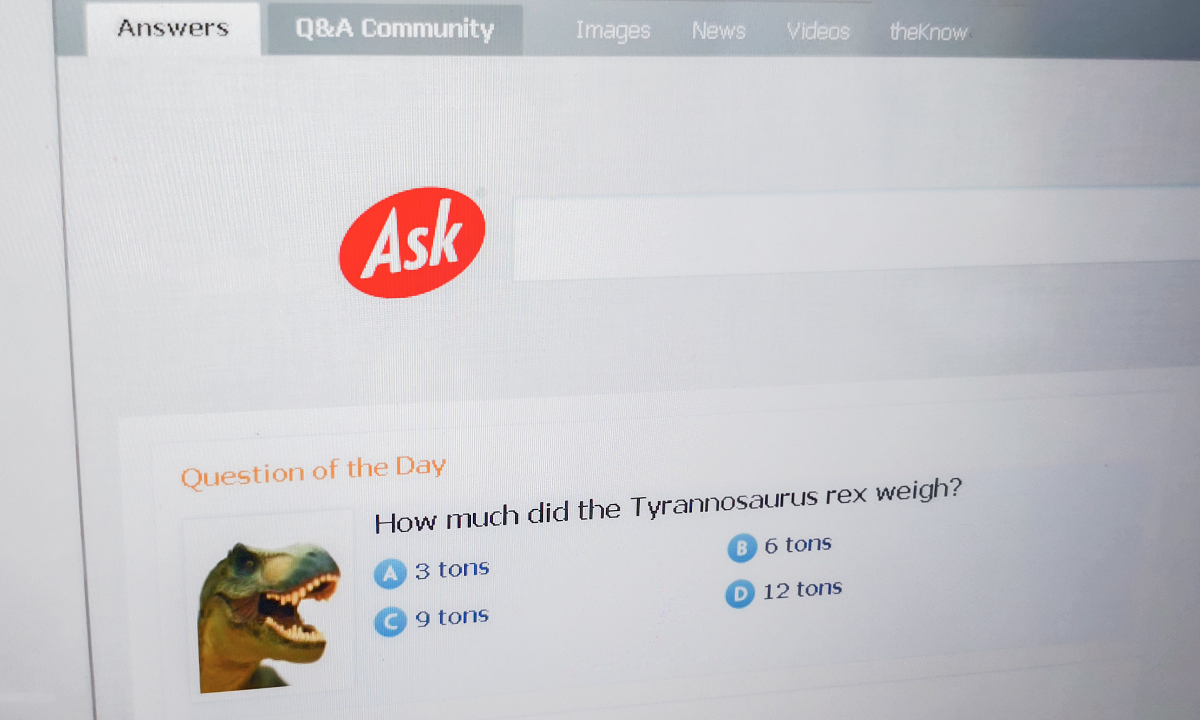
Ask.com search interface. Image: Bao Lam
In 2005, IAC acquired Ask Jeeves and dropped “Jeeves” from the name. A year later, the search feature was upgraded, with its own web crawler and algorithm.
However, by 2010, IAC narrowed its features, focusing mainly on Q&A. At the TechCrunch Disrupt event the same year, IAC Chairman Barry Diller said Ask.com “doesn’t compete with Google and is not highly valued in IAC’s portfolio”.
Throughout its history, Ask.com has been especially famous for answering questions about math, vocabulary, and unit conversions. Authors also contribute general articles on a variety of topics, similar to the Wikipedia encyclopedia, which includes articles on thousands of topics making it easily accessible to readers.
Besides, Ask.com also has many pioneering features. In 2006, the platform developed a “binocular preview” function into search results, allowing users to preview the page they are about to visit instead of having to click on the link. In 2007, the interface received a modern and pioneering 3D design at that time, as well as the launch of the AskEraser function to help users protect their privacy by opting out of tracking search queries, IP addresses and cookies.
At its peak in 2012, Ask.com reached 100 million global users each month. This tool also appears as an option next to Google, Yahoo, Bing… on the browser. Still, according to Mashablethe inability to compete with the “big guys” caused IAC to gradually reduce functions before “dissolving” the product.