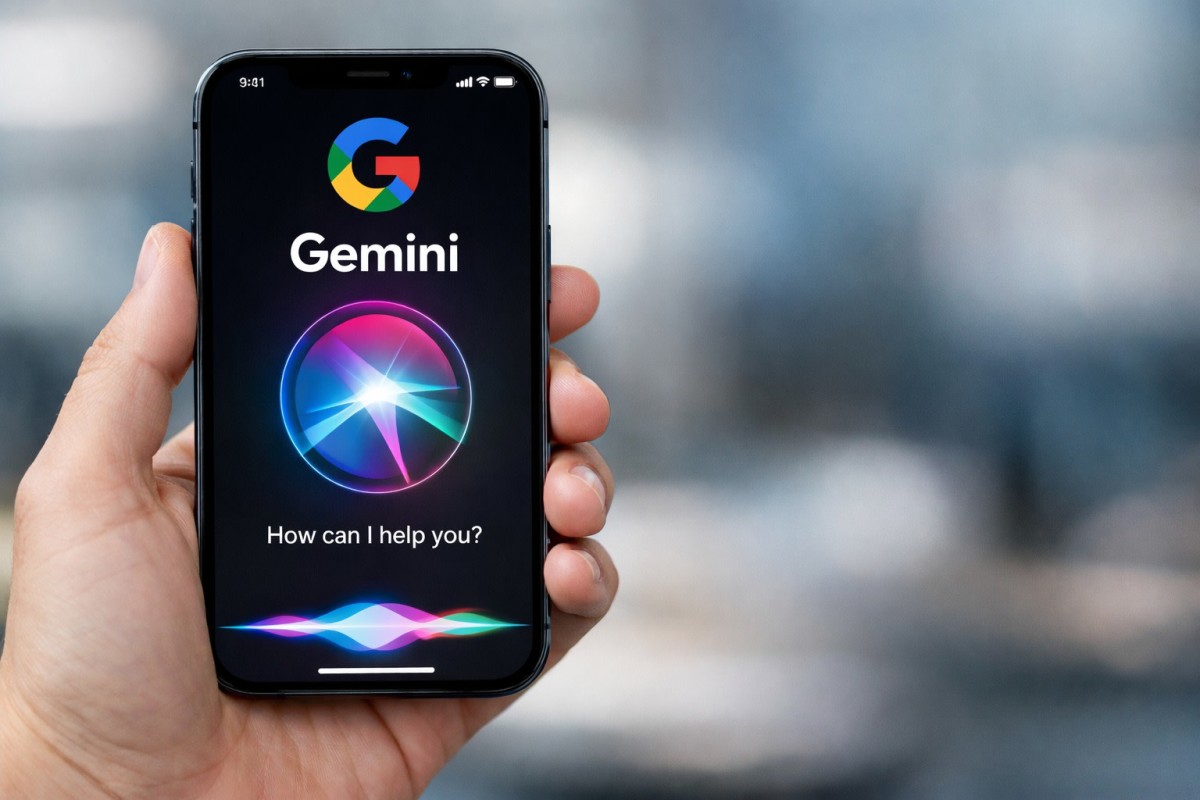
The conference will last until June 12, will be mostly online and free, and will also include a physical event in Apple Park for developers, students and selected industry people. On the face of it, this is a routine developer conference. In practice, this may be a test point not only for the next iPhone, but for Apple’s ability to show that its closed and meticulous system is able to cope with the pace of development of ChatGPT, Gemini and other artificial intelligence tools that have already changed the world of technology.
Apple has confirmed that the conference will deal with updates to its platforms, advances in the field of artificial intelligence, new software tools and development tools for developers. The company also announced that the week will include more than 100 video tutorials, group labs, forums and conversations with Apple engineers and designers. These are the official details. Almost everything else, and especially what is related to Siri, iOS 27 and the integration of external models, is still in the stage of reports, leaks and evaluations.
The main star of the conference is expected to be Siri. For years she was one of Apple’s biggest symbols, the voice assistant that made users feel like their phone understood them. But in recent years it has also become one of the company’s signs of weakness. While new artificial intelligence tools have learned to conduct a conversation, compose texts, understand context and perform complex tasks, Siri remains in the eyes of many users a basic tool for starting a timer, dialing a contact or checking the weather forecast. This year Apple is expected to try to change the image.
According to reports published on sites specializing in Apple and technology, iOS 27 may include a significant redesign of Siri. Among the options reported: a new conversational interface, a more prominent appearance in the dynamic island area at the top of the iPhone screen, an “ask or search” style request box, and possibly a first standalone app for Siri. If this move is indeed introduced, it will mark a deep perceptual change. Siri will not be just a voice that appears above the system, but an independent action center, one that allows you to write, speak, search, open previous conversations and perform more complex actions.
According to the leaks, the possible application of Siri may look more like a modern chat tool: a writing window, an option for a voice conversation, conversation history, search in previous conversations, favorites and maybe also showing files or links as part of the conversation. It is important to emphasize: Apple has not confirmed at this stage that there will be an independent application for Siri. Therefore the exact wording is that this is a possibility that came up in the reports, not a definitive fact.
The more significant innovation is not just what Siri looks like, but what she will be able to do. According to estimates, Apple is trying to bring Siri closer to the model of an artificial intelligence agent, meaning a tool that not only answers a question, but understands personal context, knows what appears on the screen, connects applications and performs actions on behalf of the user.
Such a scenario could include, for example, a request from Siri to find a certain photo, edit it, send it to a contact, add a reminder in the calendar or summarize relevant emails, without the user having to switch between several applications himself. Here too, these are estimates based on reports, and not an official promise from Apple.
This is a subject that needs to be specially qualified: Apple has not officially announced such a combination at the upcoming conference, and such a decision also depends on privacy, commerce, regulation and image. For Apple, which prides itself on having full control over the user experience, opening the door to external models is both an opportunity and an admission that the current race is too big to manage alone.
Alongside Siri, Apple Intelligence is expected to receive a wider expansion. According to reports, Apple may upgrade its image creation tools, including Image Playground and Genmoji, add new capabilities to create wallpapers, improve writing tools, offer smarter grammar checking and expand artificial intelligence capabilities in apps such as Photos, Camera, Safari, Wallet and Shortcuts.
One of the interesting estimates is that Apple’s shortcut tool will be able to build actions using natural language. Instead of creating a manual and cumbersome sequence of actions, the user will be able to write a normal request, and the system will try to build the process for him.
The Photos app may be one of the major beneficiaries of the upgrade. According to reports, the company is testing new tools for editing photos with the help of artificial intelligence, beyond the cleaning tool that already exists. The assessments include options such as image enlargement, smart editing, reframing and automatic detail enhancement. In the camera app, a new Siri-related mode was reported, along with more customized menus. The possible meaning is clear: Apple wants the artificial intelligence to be present not only in the conversation with the voice assistant, but also in the moment when the user takes pictures, edits, searches and shares.
In iOS 27, innovations are also expected that are not directly related to artificial intelligence. According to reports, Apple may redesign the AirPods settings menu, which has become more crowded in recent years due to audio features, gestures, customizations and hearing capabilities.
Another reported update concerns Europe: due to regulatory pressure, Apple may allow users in the EU to choose an alternative streaming protocol by default instead of AirPlay, for example Google Cast. It’s an ostensibly technical change, but it fits into a broader trend in which European regulators are pushing Apple to open up more parts of its closed system.
iPadOS 27, macOS 27, watchOS 27, tvOS 27 and visionOS 27 are also expected to be part of the event, although Apple has not yet officially released the list of versions and their names. The iPad may especially benefit from smarter keys and natural language shortcuts, as the device continues to try to convince users that it can replace a laptop in many situations.
On the Mac, similar improvements are expected in Apple Intelligence, along with interface polishing, stability and performance. In watchOS, the estimates are more modest: performance improvements, new watch faces, interface fixes and perhaps some improvements in health measurements, but there is currently no solid basis for expecting a major medical revolution in the watch.
In the field of accessibility, Apple has already revealed some of the innovations that will come later this year. The company announced improvements to VoiceOver and a magnifying glass using Apple Intelligence, more detailed image descriptions, improved natural language voice control, subtitles created on the device itself, improvements for Vision Pro users, and the ability to control compatible electric wheelchairs using Vision Pro and eye movements.
These are less flashy innovations from the point of view of the general public, but they demonstrate well the direction that Apple is trying to present: artificial intelligence as a useful tool that helps people perform actions in the real world, not just create an amusing picture or formulate a message.
And what about hardware? WWDC is a software and developer conference, not the traditional fall iPhone event. Apple can surprise with hardware, as it has done in the past, but most estimates point to an event that focuses mainly on operating systems, artificial intelligence and development tools. Therefore it is not correct to write that Apple is “certainly expected” to present a new iPhone, a new Mac or a new smart home product. It can be noted that there are rumors of future products, but there is no official confirmation of this and they are not the focus of the expected event.
Behind all innovations is also criticism. Apple cannot afford another event where it presents vague promises and too few ready-made capabilities. Competitors have already accustomed users to natural conversation, smart search, content creation and action agents. Apple comes with huge advantages: control over hardware, software, chips, privacy and a huge ecosystem of devices.
But precisely because of this the expectation from her is higher. On June 8, at 20:00 in Israel, she will have to show that the new Siri and Apple Intelligence are not just a shiny layer on top of an existing system, but a new basis for using the iPhone, Mac, iPad and watch in the coming years.
https://www.abclinuxu.cz/lide/connornelson91
https://forum.bug.hr/forum/user/matthewroberts47/148763.aspx
https://www.openrec.tv/user/JaydenRogers55/about
https://triberr.com/MichaelMurphy24
https://pennylane.ai/profile/ThomasWright65
https://theexplorers.com/user?id=aac60746-bb34-4e22-8f21-439b85580678
https://log.concept2.com/profile/2952844
https://www.elephantjournal.com/profile/nxesrdmigb/
https://jobs.windomnews.com/profiles/8316424-isaac-murphy
https://photohito.com/user/profile/232818/
https://formulamasa.com/elearning/members/leocruz54/?v=96b62e1dce57
https://gratisafhalen.be/author/TheodoreMitchell38/
https://sfx.thelazy.net/users/u/GabrielAllen57/
https://www.codewars.com/users/LiamAnderson10
https://dreevoo.com/profile.php?pid=1722781
https://www.fanart-central.net/user/iqnapzjkrt/profile
https://files.fm/iqnapzjkrt
https://schoolido.lu/user/iqnapzjkrt/
https://hedgedoc.envs.net/s/MX-Br4fbu
https://graph.org/httpswwwdoubleresultscomvaikelaen-05-28
https://bestadsontv.com/profile/528925/iqnapzjkrt-iqnapzjkrtd
https://www.siteinspire.com/profile/27359-doubleresults
https://www.callupcontact.com/b/businessprofile/doubleresults/10107313
https://telegra.ph/httpswwwdoubleresultscomvaikelaen-05-28-2
https://www.tumblr.com/resonantsiegeprotector/817859436472418304/v%C3%A4ikelaen-doubleresults-laenud?source=share